
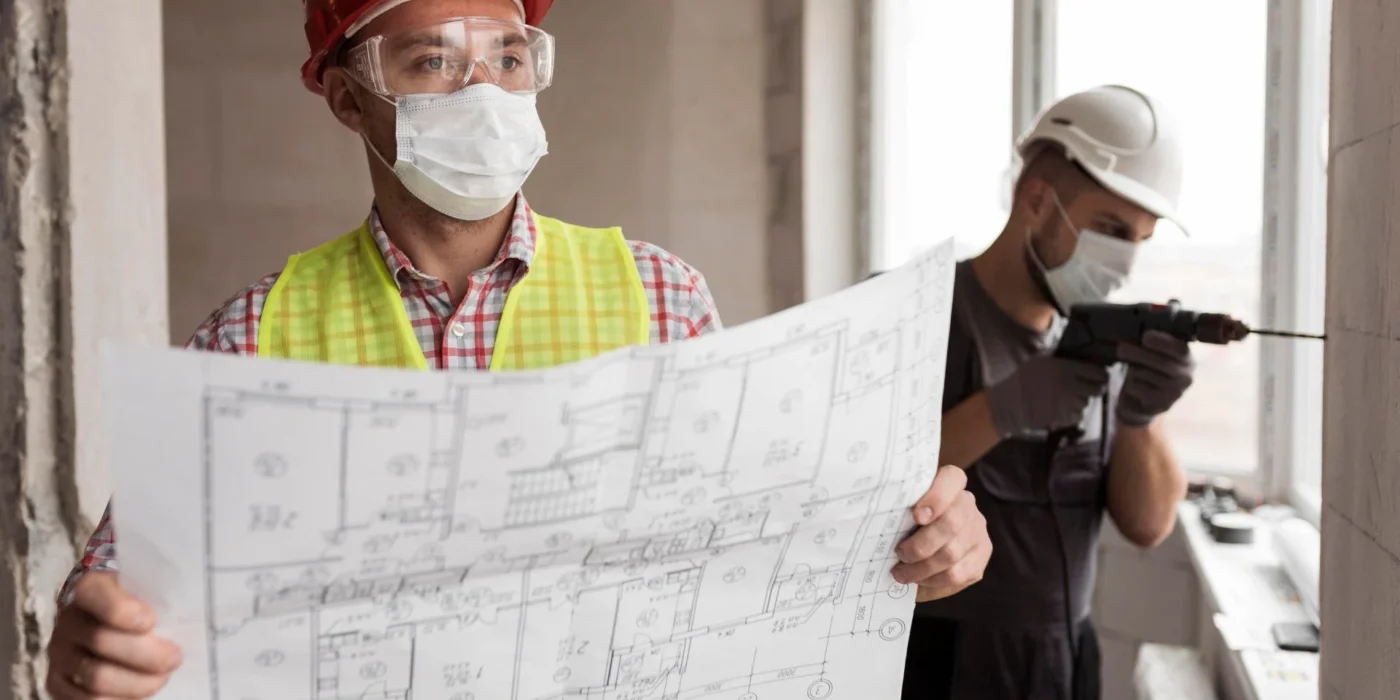
In any large-scale build, quality and timelines rarely fail because of ambition. They usually falter due to how the work is sequenced. The order in which activities unfold on-site quietly determines whether a project moves forward with control or constantly plays catch-up. This is especially true in complex residential developments where multiple teams, materials, and approvals intersect daily and timely Villa project delivery.
A well-structured construction execution plan is often the difference between a site that feels calm and predictable and one that feels rushed and reactive. When phasing is done right, progress becomes visible, risks are reduced naturally, and quality has room to settle in rather than being forced at the end.
This blog explores how thoughtful construction phasing influences build quality, reduces delays, and supports smoother Villa project delivery across long project timelines.
What Construction Phasing Really Means on Site
Construction phasing is not just a schedule broken into parts. It is a strategic decision-making framework that determines when each activity begins, overlaps, pauses, or concludes. Good phasing considers more than dates. It accounts for labor availability, material lead times, inspections, weather exposure, and even site logistics.
In practical terms, effective phasing ensures that:
- Teams are not stacked on top of each other competing for space
- Materials arrive when they can be installed, not stored indefinitely
- Quality checks happen progressively, not as a rushed final step
This approach allows work to flow rather than pile up, which has a direct impact on consistency and safety.
Why Poor Phasing Leads to Compromised Quality
When construction phases are compressed or misaligned, quality often suffers quietly at first. Structural work may be rushed to accommodate finishing timelines. Services like plumbing and electrical may be forced into partially complete spaces. Finishing trades then inherit problems they did not create.
Some common quality risks from poor phasing include:
- Inadequate curing time for concrete and masonry
- Rework caused by overlapping trades
- Surface finishes applied before moisture levels stabilize
- Limited access for proper inspections
These issues do not always show immediately, but they surface later as maintenance complaints, performance failures, or structural fatigue.
Phasing as a Tool for Risk Management
Construction sites are dynamic environments. Weather shifts, supply delays, and workforce changes are inevitable. Strong project execution planning uses phasing to absorb these disruptions without derailing the entire timeline.
For example, dividing work into clearly defined structural, services, enclosure, and finishing phases allows adjustments within one phase without cascading into others. It also makes contingency planning more realistic, since each phase has its own dependencies and buffers.
When risks are isolated instead of spread across the site, corrective action becomes faster and more precise.
The Role of Phasing in Timely Delivery
Timely Villa project delivery is rarely about speed alone. It is about predictability. Projects delivered on time typically follow a rhythm where progress is steady and measurable rather than dramatic and uneven.
Effective phasing supports this rhythm by:
- Creating realistic milestones that reflect site conditions
- Preventing idle time caused by unresolved prerequisites
- Allowing parallel work only where coordination is strong
In residential projects, especially villa construction, phasing helps align external works like roads and landscaping with internal finishing so handovers feel complete rather than rushed.
How Phasing Improves Coordination Across Teams
Construction involves dozens of specialized teams. Without clear phasing, coordination becomes dependent on constant supervision and firefighting. Phasing replaces guesswork with clarity.
When teams know exactly when their scope begins and ends, accountability improves. It also reduces friction between contractors, since responsibilities are defined by phase boundaries rather than verbal instructions.
Well-communicated phasing plans typically lead to:
- Fewer disputes over site readiness
- Better adherence to quality checklists
- Improved morale due to reduced uncertainty
This clarity matters over long project durations, where fatigue and confusion can otherwise build up.
Project Adjustments Without Chaos
No project follows its original plan perfectly. What matters is how adaptable the structure is when change becomes necessary. Phasing allows adjustments without dismantling the entire workflow.
For instance, if material delivery for a specific finish is delayed, a phased plan may allow work to progress in adjacent areas without affecting critical paths. Without such segmentation, delays tend to ripple unpredictably.
This flexibility is one reason why strong construction execution plans are often revisited and refined during the build, not treated as static documents.
Quality Control Embedded Into Phases
One of the most overlooked benefits of good phasing is how naturally it supports quality control. Inspections, testing, and approvals become part of the workflow rather than interruptions.
Instead of inspecting everything at the end, quality checks can be aligned with phase completions, such as:
- Structural audits after framework completion
- Services testing before wall closures
- Waterproofing inspections prior to finishes
This layered approach catches issues early, when corrections are still manageable.
Long-Term Performance Begins with Phasing
Buildings age based on how they were constructed, not how quickly they were completed. Proper sequencing allows materials to perform as intended, systems to integrate cleanly, and finishes to settle without stress.
In residential developments, this directly affects long-term comfort, maintenance costs, and structural integrity. Phasing may feel like an internal planning detail, but its outcomes are visible for decades.
Why Phasing Deserves More Attention Early On
Many project issues traced back to execution could have been avoided with more attention to sequencing during planning stages. Phasing decisions made early influence procurement, staffing, and even design coordination.
Strong project execution planning treats phasing as a strategic tool, not an administrative one. It aligns ambition with realism and ensures that quality is built progressively rather than inspected at the end.
Conclusion
Construction success is rarely accidental. It is built phase by phase, decision by decision. When sequencing is thoughtful, quality becomes consistent and timelines become reliable. When it is neglected, even well-funded projects struggle.
A robust construction execution plan creates the structure needed for teams to perform at their best, particularly in complex builds like villa construction where coordination and finish quality matter deeply. By respecting the role of phasing, projects are not only delivered on time but delivered with confidence, durability, and intent.