
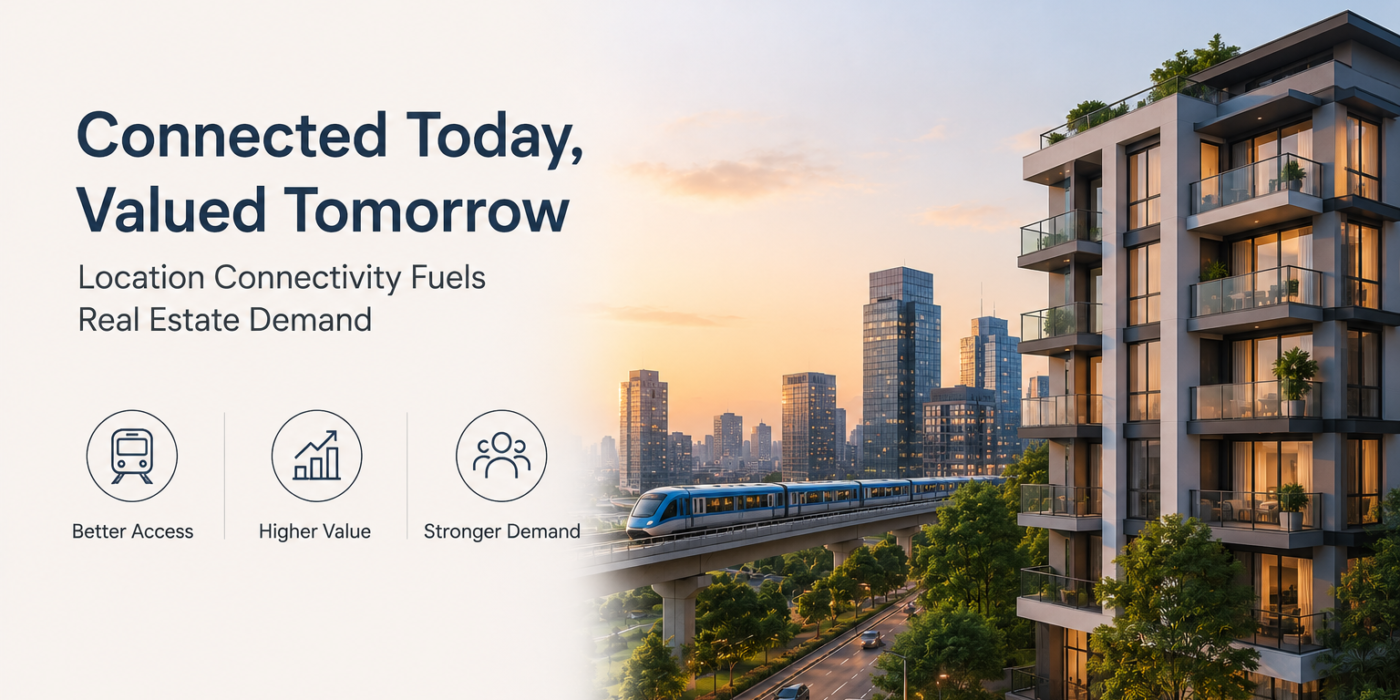
When it comes to buying property, location remains one of the strongest decision-making factors, and a major reason is the relationship between gated connectivity and property value. People may be attracted by architecture, amenities, or pricing, but how easily they can reach workplaces, schools, healthcare facilities, and daily necessities often has a greater influence on long-term satisfaction and investment potential.
This trend has remained remarkably consistent despite changes in buyer preferences over the years. Larger homes, lifestyle amenities, and community living have all gained importance, yet accessibility continues to sit near the top of the priority list. After all, a beautiful property loses some of its appeal if daily commuting becomes exhausting.
This blog explores why location connectivity continues to shape real estate demand and influence property values across growing urban markets.
Connectivity Is About More Than Convenience
Many people associate connectivity simply with shorter travel times.
That is certainly part of it, but the concept goes much deeper.
A well-connected location allows residents to move efficiently between different parts of their lives. Work, education, healthcare, shopping, recreation, and social activities all become easier when transportation networks and road infrastructure support smooth mobility.
The result is not just convenience. It is improved quality of life.
In most cases, buyers are not only purchasing a home. They are investing in a daily routine.
Why Homebuyers Prioritize Connected Locations
The reasons are fairly practical.
Properties located near major roads, employment hubs, and essential services often provide advantages that continue for years after purchase.
Some of the key benefits include:
- Reduced commuting time
- Easier access to schools and colleges
- Better healthcare accessibility
- Improved public transportation options
- Faster emergency response access
- Stronger long-term resale demand
These factors affect everyday life in tangible ways.
A few extra minutes saved during a daily commute may not sound significant. Over months and years, however, those savings become meaningful.
The Connection Between Accessibility and Property Appreciation
One of the most important drivers of real estate growth is infrastructure development.
Road expansions, metro networks, flyovers, and improved transportation corridors often increase demand in surrounding areas. As accessibility improves, more buyers become interested in those locations.
This increased demand frequently supports higher property values.
Why Connected Areas Often Appreciate Faster
- They attract a wider range of buyers
- Businesses and services develop nearby
- Employment opportunities become more accessible
- Rental demand tends to strengthen
- Future infrastructure investments often follow existing growth patterns
That said, appreciation is never guaranteed. Multiple factors influence real estate performance.
Still, connectivity consistently remains one of the strongest contributors to long-term demand.
Workplaces Continue to Influence Buying Decisions
Remote work has changed some aspects of residential preferences, but employment centers still matter.
Quite a lot, actually.
Many professionals continue to work in hybrid environments that require regular office visits. Even those working remotely often prefer locations that maintain reasonable access to business districts and commercial zones.
This is one reason why villas near IT hubs Bangalore continue to attract attention from homebuyers. The ability to combine spacious living with manageable commuting distances creates an appealing balance.
People may work from home several days a week. They still need to reach the office when required.
Infrastructure Creates Confidence
Buyers often view infrastructure as a signal of future growth.
When governments and urban development authorities invest in transportation networks, connectivity improvements, and public services, confidence in the surrounding real estate market typically increases.
Here’s where it gets interesting.
The impact is not always immediate. Sometimes infrastructure projects influence demand years before completion because buyers anticipate future benefits.
This expectation alone can affect market activity and pricing trends.
Areas with visible infrastructure development often generate stronger buyer interest simply because they appear poised for growth.
Everyday Lifestyle Benefits Matter More Than People Expect
Investment potential is important, but daily convenience remains equally valuable.
A well-connected location can reduce stress, improve time management, and create more opportunities for leisure and family activities.
Consider what strong connectivity often provides:
- Faster access to entertainment destinations
- Easier grocery and shopping trips
- Better healthcare access during emergencies
- More flexibility in choosing schools
- Greater social mobility
These benefits accumulate quietly.
Most homeowners may not consciously think about connectivity every day. They notice its absence immediately when travel becomes difficult.
Why Connectivity Supports Stronger Resale Demand
Future buyers evaluate many of the same factors current buyers consider.
This is one reason connected locations often maintain stronger market appeal over time.
A property with excellent access to transportation networks, employment centers, and social infrastructure usually appeals to a broader audience. More potential buyers often means stronger demand when the time comes to sell.
At the same time, connected areas frequently attract both end-users and investors, creating additional market activity.
That broader demand base can support long-term value stability.
The Growing Importance of Emerging Corridors
Urban expansion continuously creates new growth corridors.
As city centers become denser, buyers increasingly explore developing areas that offer a combination of lifestyle benefits and future connectivity improvements.
One example frequently discussed in Bangalore’s real estate market is Sarjapur Road connectivity. Continued infrastructure development, proximity to major employment zones, and expanding social infrastructure have strengthened interest in this corridor over the years.
The appeal extends beyond current accessibility.
Many buyers are also considering future growth potential.
How Buyers Can Evaluate Connectivity
Not all connected locations offer the same advantages.
Before purchasing property, buyers should assess several factors:
Questions worth asking:
- How close are major employment hubs?
- What schools and hospitals are nearby?
- Are road networks improving?
- What future infrastructure projects are planned?
- How accessible are public transportation options?
Looking beyond current conditions often provides a clearer picture of long-term value.
In many cases, future connectivity improvements become just as important as existing infrastructure.
Conclusion
Real estate markets evolve, buyer preferences shift, and new lifestyle trends emerge. Yet location well gated connectivity continues to remain one of the most influential factors driving demand. It affects daily convenience, commuting efficiency, lifestyle quality, future growth potential, and resale appeal. Few property characteristics have such a broad and lasting impact.
The relationship between connectivity and property value remains strong because accessibility influences both how people live and how markets perform. While amenities and design certainly matter, a well-connected location often delivers benefits that homeowners continue to appreciate year after year. In real estate, convenience rarely goes out of style.