
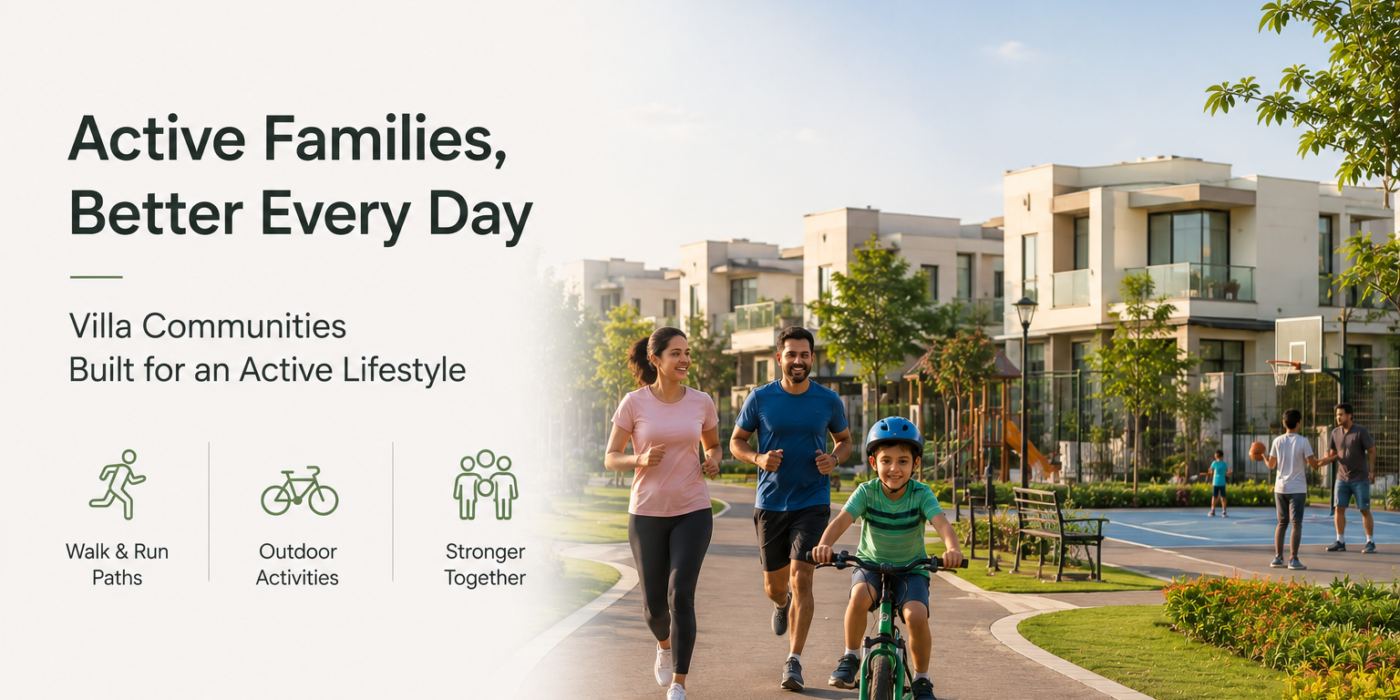
For many families, staying active is not really about joining a gym or following a strict fitness plan. It often comes down to the environment they live in. Well-designed active lifestyle villa communities make physical activity feel natural, almost effortless, by creating spaces that encourage movement throughout the day.
This shift is becoming increasingly relevant as modern lifestyles grow more sedentary. Long work hours, screen-heavy routines, and limited access to outdoor spaces can make it difficult for both adults and children to stay physically engaged. A thoughtfully planned villa community can quietly solve some of those challenges without requiring major lifestyle changes.
This blog explores how villa communities encourage everyday movement and support healthier family routines over the long term.
Activity Becomes Part of Daily Life
One of the biggest advantages of living in a villa community is that activity is built into the environment.
Residents do not always need to schedule time specifically for exercise. Walking to community spaces, spending time outdoors, cycling within the neighborhood, or accompanying children to play areas naturally increases daily movement.
Small activities matter.
In fact, health experts often point out that consistent moderate movement throughout the day can be just as valuable as occasional intense workouts. Villa communities create more opportunities for this kind of regular activity.
Safe Outdoor Spaces Encourage More Movement
Safety plays a surprisingly important role in physical activity.
Families are generally more willing to spend time outdoors when they feel comfortable doing so. Well-planned gated villacommunity layouts, internal roads, pedestrian pathways, and dedicated recreational zones make outdoor activity more accessible.
Some common features include:
- Walking and jogging tracks
- Landscaped open spaces
- Children’s play areas
- Cycling-friendly pathways
- Community parks
- Sports courts
When these facilities are nearby, residents tend to use them more often.
The barrier to getting active becomes much lower.
Why Children Benefit the Most
Children are often the biggest beneficiaries of active community environments.
Unlike confined living spaces where play opportunities may be limited, villa communities provide room to explore, socialize, and stay physically engaged. Outdoor play becomes a regular part of daily life rather than an occasional weekend activity.
Common benefits for children include:
- Increased physical activity
- Reduced screen time
- Better social interaction
- Improved motor skill development
- Stronger connection with outdoor environments
That said, parents benefit too. Many appreciate being able to supervise children in a safer and more community-oriented setting.
The result is a healthier routine for the entire household.
Walking Becomes a Lifestyle Habit
Many people underestimate the impact of walkability.
A community that encourages walking naturally promotes healthier habits. Residents may choose to take evening walks, stroll through landscaped pathways, or simply spend more time outdoors because the environment feels inviting.
Here’s where it gets interesting.
People are far more likely to maintain physical activity when it feels enjoyable rather than mandatory. Walking through green surroundings often feels less like exercise and more like relaxation.
That subtle difference can have a significant impact on long-term consistency.
Recreational Amenities Support Wellness
Physical activity does not always need to revolve around traditional exercise.
Many villa communities now incorporate recreational facilities that make movement enjoyable for different age groups and interests.
Some examples include:
- Swimming pools
- Multi-purpose sports courts
- Outdoor fitness stations
- Yoga decks
- Clubhouses with fitness facilities
- Open lawns for recreational activities
These wellness amenities in villas provide flexibility. Residents can choose activities that suit their preferences and schedules rather than following a one-size-fits-all approach.
This variety often increases participation.
Family Activities Become Easier
One challenge many families face is finding opportunities to spend active time together.
Villa communities help address this by providing shared spaces that support family-oriented activities. Whether it is an evening walk, a game of badminton, cycling with children, or simply spending time outdoors, these experiences become more convenient.
At the same time, they strengthen family connections.
The healthiest routines are often the ones that fit naturally into daily life. Family activities within the community tend to become habits because they are easy to access and enjoyable to repeat.
The Connection Between Green Spaces and Activity
Green spaces influence behavior more than many people realize.
Research consistently suggests that people spend more time outdoors when attractive natural surroundings are available. Landscaped gardens, tree-lined pathways, and open recreational areas create environments where movement feels inviting rather than forced.
Why Green Spaces Encourage Activity
- They create visual appeal
- They reduce stress
- They improve outdoor comfort
- They encourage longer walks
- They support recreational activities
In most cases, people simply enjoy being outdoors more when the surroundings feel pleasant.
And when people spend more time outdoors, physical activity often follows naturally.
Supporting Healthy Habits Across Different Age Groups
One of the strengths of villa communities is their ability to support residents at different stages of life.
Young children need safe play spaces. Teenagers benefit from sports and recreational facilities. Adults appreciate walking paths and fitness options. Older residents often enjoy peaceful outdoor areas that encourage light activity and social interaction.
A well-designed community can accommodate all of these needs simultaneously.
This is where the idea of healthy family living becomes especially relevant. Wellness is not limited to a single age group. It involves creating an environment that supports everyone.
Consistency Matters More Than Intensity
There is often a tendency to associate health with structured exercise programs.
Yet daily movement may be even more important.
Walking to community amenities, spending time in outdoor spaces, engaging in recreational activities, and participating in neighborhood events all contribute to a more active lifestyle. These activities may seem small individually, but their cumulative impact can be substantial.
Many residents find themselves becoming more active simply because the environment encourages it.
No elaborate plan required.
Conclusion
Villa communities do more than provide homes. They create environments that influence how people live every day. Through walkable layouts, outdoor recreational spaces, family-friendly amenities, and thoughtfully designed green areas, they make physical activity a natural part of daily routines rather than an added responsibility.
As families increasingly prioritize health, wellness, and quality of life, active lifestyle villa communities continue to stand out as a practical solution. They support movement across all age groups, encourage outdoor engagement, and help establish habits that can benefit residents for years. Sometimes, staying active starts with choosing the right place to live.