
CategoriesUncategorized

Infrastructure: Why the Area Around Your Villa Deserves as Much Attention as the Villa

Infrastructure: Why the Area Around Your Villa Deserves as Much Attention as the Villa

Buyers often spend weeks comparing floor plans, finishes and clubhouse facilities, then give the surrounding infrastructure a single glance from the car window on the way in. That imbalance is understandable, because the villa is the part you can see and touch on a site visit. It is also backwards.

Almost everything inside a villa can be changed later. The water source, the drain running past the boundary wall, the condition of the road to the gate and the civic body responsible for fixing all three cannot. Those are settled the day you buy, and they shape both your daily life and what the home is worth when you eventually sell.

This blog covers why the surrounding area matters so much, the civic systems worth checking, who actually maintains them, and how to tell delivered infrastructure from announced infrastructure.

Why Does the Infrastructure Around a Villa Matter So Much?

Because it sets the ceiling on everything else. A beautifully built villa on a road that floods every monsoon is still a villa you cannot leave during heavy rain. A well-finished kitchen still depends on tanker deliveries if the community has no reliable water connection.

It also decides resale value. Future buyers price the neighbourhood as much as the house, and a community known for waterlogging or unreliable supply will sell slower and for less than an identical one a few kilometres away.

The simplest way to think about it: the villa is the part you control, and the area is the part that controls you.

The Civic Systems Worth Checking Around Any Villa

Infrastructure near Sarjapur Road has improved considerably in recent years, but improvement is uneven from one pocket to the next, so these checks apply to the specific address rather than the corridor.

Water Supply: A Pipeline Is Not a Connection

This is the clearest example of the gap between available and delivered. Cauvery Stage 5 brings 775 million litres a day towards Bengaluru’s peripheral areas, yet reporting in March 2026 noted that new connection uptake has been a fraction of what was planned. A trunk line passing near a project tells you very little on its own.

Ask whether the community itself has a live connection, what share of supply currently comes from borewells, and how often tankers were needed last summer. Then confirm the answer with a resident rather than the sales team.

Stormwater Drainage and Flood History

Flooding in parts of East Bengaluru is well documented, and the causes are specific: encroachment on natural stormwater drains, and sewage entering the drainage network. Civic bodies have been responding, and mitigation work including new roadside drains and culverts began on Sarjapur Road during 2026.

For your own shortlist, check the plot’s elevation relative to the surrounding roads, whether a lake or major drain sits nearby, and how the approach road behaved during the last heavy downpour. Residents and local news archives answer this far better than a brochure.

Sewage Treatment and Waste Collection

Ask whether the community operates its own sewage treatment plant, whether it is actually functioning, and where the treated water goes. Then ask who collects waste and how often. Both are invisible on a site visit and very visible within a month of moving in.

The Last Kilometre of Road

Commute times are usually quoted from the main road. The stretch between the main road and your gate is what you actually drive twice a day. Check whether it is paved, lit, wide enough for two cars and a school bus to pass, and passable in the rain.

Who Maintains the Roads and Drains Outside Your Gate?

Fewer buyers ask this, and it matters a great deal. Bengaluru’s civic structure changed in 2025, when the Greater Bengaluru Authority replaced the BBMP and the city was reorganised into five corporations covering roughly 712 sq km, with council elections due by December 2026.

Parts of the outer corridor, however, sit beyond those limits and remain under panchayat administration, where budgets and service standards differ. Which body owns the road, the drain and the water line outside a community determines who you call when something fails, and how quickly it gets fixed. Ask the developer directly, and also confirm whether internal roads stay with the residents’ association or eventually pass to a civic body.

Delivered Versus Announced: Reading Sarjapur Infrastructure Development

The corridor has a long list of promised projects, and the discipline that protects buyers is pricing each one according to its actual stage.

Metro Phase 3A is the useful example. The 36.59 km Sarjapur to Hebbal line, estimated at ₹28,405 crore, has state approval but is still awaiting Union Cabinet sanction, with operations estimated somewhere between 2030 and 2033. That is real and meaningful long-term upside. It is not a reason to pay today as though the station were already open.

A sensible rule: value what is operational at full weight, what is under construction at partial weight, and what is approved but unfunded as a bonus rather than a basis. Projects that have missed repeated deadlines belong firmly in that last category.

Conclusion

The infrastructure around a villa deserves the same scrutiny as the villa itself, because it is the one part of the purchase you cannot renovate later. Water connection, drainage, sewage, the last kilometre of road and the civic body responsible for them will shape your daily experience long after the novelty of the interiors has worn off.

None of these checks take long. A conversation with two residents, a visit during or just after rain, and a direct question to the developer about connections and jurisdiction will tell you more about a community than any number of renders. They are also the checks that keep protecting you for as long as you own the home.
CategoriesUncategorized

Schools Nearby: How School Commute Time Can Shape Family Routines

Schools Nearby: How School Commute Time Can Shape Family Routines

Families searching for schools nearby are usually asking a question about quality, but the variable that ends up shaping daily life most is time. A school forty minutes away and a school twelve minutes away can be equally good and produce completely different households.

This gets underestimated because commute time feels like a logistics problem rather than an education one. The research suggests otherwise. Long school commutes are consistently associated with less sleep, higher absenteeism and weaker academic outcomes, and the effect appears whether the child walks, rides a bus or is driven.

This blog covers what the evidence actually shows, how a long commute reshapes a family’s day, what counts as reasonable, and what to check locally before committing.

How Much Does School Commute Time Actually Affect Children?

Studies across several countries have found that longer school commutes are associated with lower grades, poorer self-reported physical and mental health, higher body mass index and increased absenteeism. Notably, the effect holds after controlling for commute mode, so an hour of walking is not meaningfully better than an hour on a bus.

The mechanism is mostly sleep. Given a long commute, teenagers sacrifice sleep before they sacrifice anything else, and daytime sleepiness is significantly associated with impaired attention, reduced learning motivation and lower academic achievement.

Attendance suffers too. One large dataset found attendance rates fell by around 17% for students on long-distance bus commutes and nearly 28% for very long ones, with long-term absenteeism rising alongside. These are population-level associations rather than predictions about any individual child, but the direction is consistent enough to take seriously.

How a Long Commute Reshapes the Whole Family’s Day

Mornings and the Sleep Debt

A 6:45 am pickup means a 5:45 am wake-up, which means a bedtime most children resist. School start times bind sleep tightly: research on delaying start times found that 30 and 60 minute delays increased sleep duration by roughly 15.6 and 22.8 minutes respectively.

The knock-on effect is that the entire household shifts earlier. Parents wake to manage breakfast and the bus stop, so a child’s commute quietly becomes everyone’s schedule.

Evenings, Homework and Activities

The evening is where the cost becomes visible. A child home at 4:30 has a manageable stretch for homework, play, dinner and a reasonable bedtime. A child home at 5:45, tired from the ride, is compressing all four into a shorter and more stressful window.

Extracurriculars are usually the first casualty. Music lessons, sport and unstructured play get pushed to weekends, which changes what a childhood looks like over several years.

The Parent Load

Someone has to absorb the variability: the missed bus, the early pickup on a sick day, the school event at 3 pm on a Wednesday. In dual-income households, that load lands unevenly and compounds. A shorter commute does not eliminate it, but it makes each instance cost twenty minutes instead of ninety.

What Counts as a Reasonable Commute?

Research on school bus travel commonly groups rides into bands of 30 to 45 minutes, 45 to 60 minutes and over 60 minutes. As a practical rule, under 30 minutes door to door is comfortable, 45 minutes is where the trade-offs start showing in daily routine, and beyond an hour each way you are making a significant lifestyle decision rather than a scheduling one.

Two cautions on measuring it. Map distance is not door-to-door time, because bus routes loop through several communities before yours, and afternoon traffic rarely matches morning traffic. Test the actual drive on a weekday at 8 am and again at 4 pm before you commit to either the school or the home.

Checking Schools Near Sarjapur Road Before You Commit

The corridor has genuine depth. UDISE+ data for 2024-25 records 14 registered schools on Sarjapur Road, all private, with CBSE accounting for around 43%, State Board 36% and ICSE 14%, alongside a well-established international cluster within reach.

When shortlisting schools in Sarjapur, ask the transport office for the actual route serving your address and the real pickup time, not the advertised average. Ask where the pickup point sits, since a stop outside the community gate is a different proposition from one inside it, particularly for younger children in the monsoon.

One more filter worth applying early: the corridor’s international schools diverge after Grade 10, with some continuing into the IB Diploma and others into Cambridge A Levels. If you have a preference, it narrows a long list quickly. Then talk to parents already in your community who use that route, because they know what the bus timing looks like in practice.

Conclusion

Looking for schools nearby is worth doing carefully, because commute time is one of the few variables in a home purchase that touches every single weekday for more than a decade. It shapes sleep, evenings, extracurriculars and how much of the load parents carry.

The practical version is simple enough. Shortlist on education quality first, then measure the real door-to-door time for each option at the hours you will actually travel, and treat anything beyond 45 minutes each way as a decision that deserves a second conversation rather than a shrug.

CategoriesUncategorized

Living in Sarjapur: What Families Should Know Before Moving Here

Most of what gets written about living in Sarjapur is written by people selling homes there, which means it is accurate about the schools and quiet about the drains. Both halves matter if you are moving a family.

The corridor genuinely earns its popularity. It sits within reach of three major employment clusters, it has an unusual density of good schools, and the gated community stock is among the best in east Bengaluru. It also carries real civic strain, and the difference between a good experience and a frustrating one usually comes down to which specific pocket and which specific community you choose.

This guide covers what daily life is actually like, the three factors that shape it most, which areas suit families, and what to verify before you commit.

What Is Daily Life Actually Like in Sarjapur?

Better than the complaints suggest and harder than the brochures imply. On the positive side, the corridor has a strong presence of international and CBSE schools, multi-speciality hospitals, malls, supermarkets and coworking spaces, plus proximity to Bellandur, the ORR belt, Whitefield, Electronic City and Koramangala.

The strain is equally documented. The East City Corporation commissioner has acknowledged that rapid urban growth in east Bengaluru outpaced infrastructure planning, producing flooding, traffic congestion and waste management problems. Encroachment on natural stormwater drains and sewage entering drainage systems have made the flooding worse.

The practical conclusion for a family: your quality of life here depends less on the corridor as a whole and more on your specific road, your water source and your community’s management.

The Three Things That Shape Daily Life Here

Traffic and the Real Commute

Sarjapur Road is a 21 km arterial stretch running from the Agara-Iblur-Bellandur junction on the ORR toward Dommasandra, and it experiences congestion through most working hours rather than just at peaks. The Iblur Junction to Agara and Kasavanahalli stretch is consistently the worst.

For families, one figure matters more than any other: school buses on the Varthur–Sarjapur corridor now spend up to 180 minutes a day in commute. That is three hours of a child’s day, and it is the number to ask current parents about before anything else. The airport sits around 87 minutes away, which is worth weighing if you travel often or have family visiting from abroad.

Water Supply and Civic Infrastructure

This is the issue residents raise most. Water rationing, choked drains and inefficient sewerage are common complaints, and many pockets still lack Cauvery connections, leaving households dependent on borewells and tankers, particularly through summer. As recently as mid-2026, commuters were reporting worsening waterlogging and dug-up stretches near Junnasandra.

There is a workable answer, though, and it is community-level rather than civic. Rainbow Drive, a gated layout on Sarjapur Road, achieved tanker independence by metering supply, charging for it and banning private borewells across the community so that everyone shared one managed system. That model is a reasonable benchmark to hold any community to.

Schools, Healthcare and Everyday Amenities

The genuine strength of the area. School choice is deep across international and CBSE boards, multi-speciality hospitals are within practical distance, and retail and daily errands are well covered. The caveat is the same as above: measure school access in bus minutes rather than kilometres, because the two diverge sharply here.

Which Sarjapur Residential Areas Suit Families Best?

The inner belt around Kasavanahalli, Harlur and Doddakannelli is the most mature, with walkable amenities and the shortest distance to the ORR offices. It also carries the heaviest traffic and the highest costs.

The mid belt around Carmelaram, Kodathi and Gunjur tends to be the most balanced for households with school-going children, with the school cluster close by and a railway station at Carmelaram. Among family-friendly areas in Sarjapur, this stretch usually offers the best compromise between access and breathing room.

The outer belt toward Dommasandra and Sarjapur town gives you space, quieter surroundings and newer gated stock, in exchange for a longer commute and social infrastructure that is still filling in.

What It Costs and What to Verify Before You Move

Sarjapur Road carries the highest average quoted rent among key Bangalore areas at roughly ₹29,000 to ₹41,000 a month, with capital values near ₹9,300 per sq ft. The Sarjapur-Attibele stretch recorded 71% price appreciation between 2022 and 2025, so the cost reflects demand rather than an anomaly.

Four checks are worth doing before you sign. Ask the community exactly where its water comes from and how many tanker loads it bought last summer. Ask neighbours about the specific road’s monsoon flooding history. Drive your actual commute at 9 am on a weekday. And find out whether the residents’ association is formally handed over, funded and active, because that single factor determines how well the community handles everything above.

Conclusion

Living in Sarjapur works well for families who choose deliberately and badly for families who choose by brochure. The schools, hospitals and community stock are genuinely strong, and the civic pressures are genuinely real, which means the specific address does almost all the work.

Spend a weekday morning and a wet-season evening in the areas you are considering, and talk to residents who have been through a full summer and a full monsoon there. They will tell you in ten minutes what no listing page will.

CategoriesUncategorized

Complete Guide to Buying Villas in Sarjapur: What First-Time Buyers Should Know

Any complete guide to buying villas in Sarjapur has to start with the number nobody puts on a brochure: what the villa actually costs once every statutory charge, tax and deposit is added. For most buyers that figure lands 15 to 20% above the advertised price.

Knowing this early changes how you shop. A villa quoted at ₹1.8 crore is really a ₹2.1 crore commitment, and a meaningful chunk of that difference has to be paid in cash rather than through your home loan. First-time buyers who discover this at registration rather than at shortlisting end up scrambling.

This blog covers the real cost of purchase, the financial details buyers routinely miss, the step-by-step process from booking to possession, and the documents to check before any money moves.

What Will a Villa Actually Cost Beyond the Quoted Price?

Start with the statutory layer. Karnataka stamp duty is slab-based at 2% below ₹20 lakh, 3% between ₹20 and 45 lakh, and 5% above ₹45 lakh, which is where essentially every villa sits. Registration was raised from 1% to 2% effective 31 August 2025, the first revision in over two decades. Add cess and surcharge and the total statutory cost comes to roughly 7.5 to 7.6% of property value. On a ₹2 crore villa, that is about ₹15.2 lakh.

Then GST. Under-construction property attracts 5%, and builders cannot pass input tax credit to you. A ready villa with an Occupancy Certificate already issued is exempt entirely, which is a genuine difference worth factoring into any comparison.

Finally the developer’s own line items: preferential location charges, parking, club membership, maintenance deposit and corpus fund. None of these appear in the headline price, and together they explain most of the gap between brochure and bank balance when buying a villa in Sarjapur.

The Money Details First-Time Buyers Miss

Banks Won’t Fund Your Statutory Costs

Lenders typically finance a percentage of base price plus GST. Stamp duty, registration and most other charges are treated as non-financeable and must come from your own savings. This catches out most first-time villa buyers in Bangalore, because the down payment they budgeted turns out to be only part of what is due. Add loan processing fees of 0.25 to 1% of the loan amount, plus technical appraisal and legal opinion charges.

Guidance Value Sets the Floor

Stamp duty is calculated on the higher of your agreed sale price or the government’s guidance value for that location, not on whichever is lower. In growth corridors like Sarjapur Road, market prices often run ahead of guidance value, but verify the specific survey number on the Kaveri Online portal before finalising your budget rather than assuming. Under-declaring a purchase price to reduce duty is an offence, not a strategy.

Villas Are Measured Differently From Apartments

For independent houses, duty is calculated on total constructed area rather than the super built-up area used for apartments. If you are comparing a villa against an apartment at a similar headline price, the statutory arithmetic will not map across directly.

What Does the Buying Process Look Like Step by Step?

The sequence runs roughly like this. You pay a booking amount and receive an allotment letter setting out the price, payment schedule and additional charges, which your bank will also need for the loan application. A sale agreement follows, defining terms, timelines and obligations on both sides.

Your loan is then sanctioned and disbursed against construction milestones. Once the project is complete, the developer obtains the Occupancy Certificate. Only then do you register the sale deed at the sub-registrar’s office, pay stamp duty and registration, and take possession.

One step first-timers overlook entirely is khata transfer. Under Section 17(1) of the RERA Act, title transfer is legally complete only with a registered conveyance deed, an issued occupancy certificate and the khata transferred into your name. KRERA has ordered developers to complete khata transfer within 30 days where they failed to do so, which tells you both that it matters and that it often gets delayed.

Documents to Verify Before You Pay Anything

Check the RERA registration number on the Karnataka RERA portal directly rather than trusting the brochure. Then work through the title chain: the mother deed and prior sale deeds, a fresh encumbrance certificate, the sanctioned building plan, DC conversion of the land where applicable, and current e-Khata status.

For a completed villa, ask for the Occupancy Certificate and the NOCs from civic bodies covering water, power and fire safety. Selling a home without these is not permitted, and their absence is a reason to walk away rather than negotiate.

Engage an independent property lawyer for a title opinion. The fee is small relative to the transaction and it is the only part of this process where someone is working purely for you.

Conclusion

The most useful thing a complete guide to buying villas in Sarjapur can do is reset your budget expectations before you fall for a specific villa. Work from the all-in number, confirm what your bank will and will not fund, and check the guidance value for the exact survey number early.

Everything after that is sequence and paperwork, and both are manageable once you know the order they come in. The buyers who find this process stressful are almost always the ones who learned about a cost or a document at the moment it became due.

CategoriesUncategorized

Villas in Bangalore: Exploring Locations, Prices, Villa Types and Modern Community Living

Villas in Bangalore have become the city’s clearest premium segment, and the numbers show it. The market recorded more than 3,800 unit sales in FY 2025-26, and villas now command the highest per-square-foot rates of any residential asset class in the city, at roughly ₹14,700 as of March 2026.

What most first-time villa buyers underestimate is how much variation sits inside that single word. A twin villa sharing two walls, a standalone home on its own plot, and a villa plot you build on yourself are three quite different products with different prices, timelines and reasons to buy.

This blog walks through why demand keeps climbing, the formats available, where villas cluster and what they cost, and what community living genuinely delivers.

Why Buyers Are Choosing Villas Over Apartments

The core argument is land. When you buy a villa, you own the ground beneath it rather than an undivided share of a building. In Bangalore’s growth corridors, land has historically appreciated at 8 to 15% annually against 5 to 8% for apartment built-up area, and over a ten-year hold that gap compounds into a significant difference.

Lifestyle is the other half. Hybrid work created a real need for a dedicated home office, separation between work and living space, and private outdoor area for children. Those are three things even a large apartment struggles to deliver. Crucially, this demand is end-user led rather than speculative, which makes it steadier through market corrections.

The Villa Formats Available and Who Each Suits

Independent Villas

Standalone homes on individual plots, with no shared walls, private gardens on multiple sides and the most architectural freedom. They carry the highest price per square foot and suit larger or multi-generational families, and overseas owners who want a landmark asset rather than a yield play.

Twin and Row Villas

Homes sharing one or two walls within a planned layout, built to uniform architecture. This is the most accessible entry point into villa living, and the format tends to have the deepest resale market because more buyers can afford it. You trade some privacy for a meaningfully lower ticket size.

Villa Plots in Gated Layouts

You buy land inside a gated development with internal roads, lighting and security already planned, then build when you’re ready. The entry cost is lowest, land exposure is highest, and design freedom is complete. The trade-off is that you manage construction yourself and your horizon stretches by a couple of years before you can move in.

Where Are Villas Concentrated and What Do They Cost?

Supply is not spread evenly. North Bangalore and the Sarjapur Road corridor together account for nearly 55% of all villa transactions, with Whitefield the other consistently active market. That concentration reflects where employment, land availability and infrastructure spending overlap.

Villa prices in Bangalore span roughly ₹1.5 crore for entry-level homes to ₹8 crore and beyond for ultra-premium estates, with location, plot size and builder reputation driving most of the difference. On direction, 2026 is best described as a consolidation phase. The 40 to 50% appreciation some corridors delivered between 2021 and 2024 is behind us, and established corridors are settling into something closer to 8 to 12% annually. Always verify rates at project and street level, since averages hide a lot.

What Modern Community Living Actually Delivers

This is where the premium over a standalone house on a bare plot actually sits, and it comes down to four things an individual buyer cannot arrange alone.

Master planning is the first. Wide internal roads, underground cabling, storm drainage and green reserves require coordination that individual plot owners never achieve. Second is amenities at scale, where a clubhouse, pool, courts and jogging tracks cost each owner a fraction of what any private equivalent would.

Third is professional security and upkeep that runs continuously, whether you are at home or abroad. For NRI owners this is often the deciding factor, since water, power backup, waste and landscaping become the association’s responsibility rather than a problem managed remotely.

The fourth is the least discussed and arguably most valuable: enforced building guidelines. Villa communities in Bangalore that maintain consistent streetscape standards hold resale value noticeably better in year ten than layouts where every owner built to their own taste. That said, all of this depends on an association that is properly funded and actually functioning, so ask about the maintenance corpus and whether handover from the developer has happened.

Conclusion

Choosing among villas in Bangalore gets much simpler once you separate the three decisions inside it. Pick the format based on your budget and how soon you need to move in, pick the corridor based on where you work and how long you plan to hold, and assess the community on planning quality and governance rather than the amenity list.

The segment’s fundamentals are sound. Demand is end-user driven, land exposure gives villas an appreciation advantage apartments cannot match, and supply remains limited relative to interest. Just buy the format that matches your actual life rather than the one that photographs best.

CategoriesUncategorized

Luxury Villas in Bangalore: What Defines Premium Villa Living in the City?

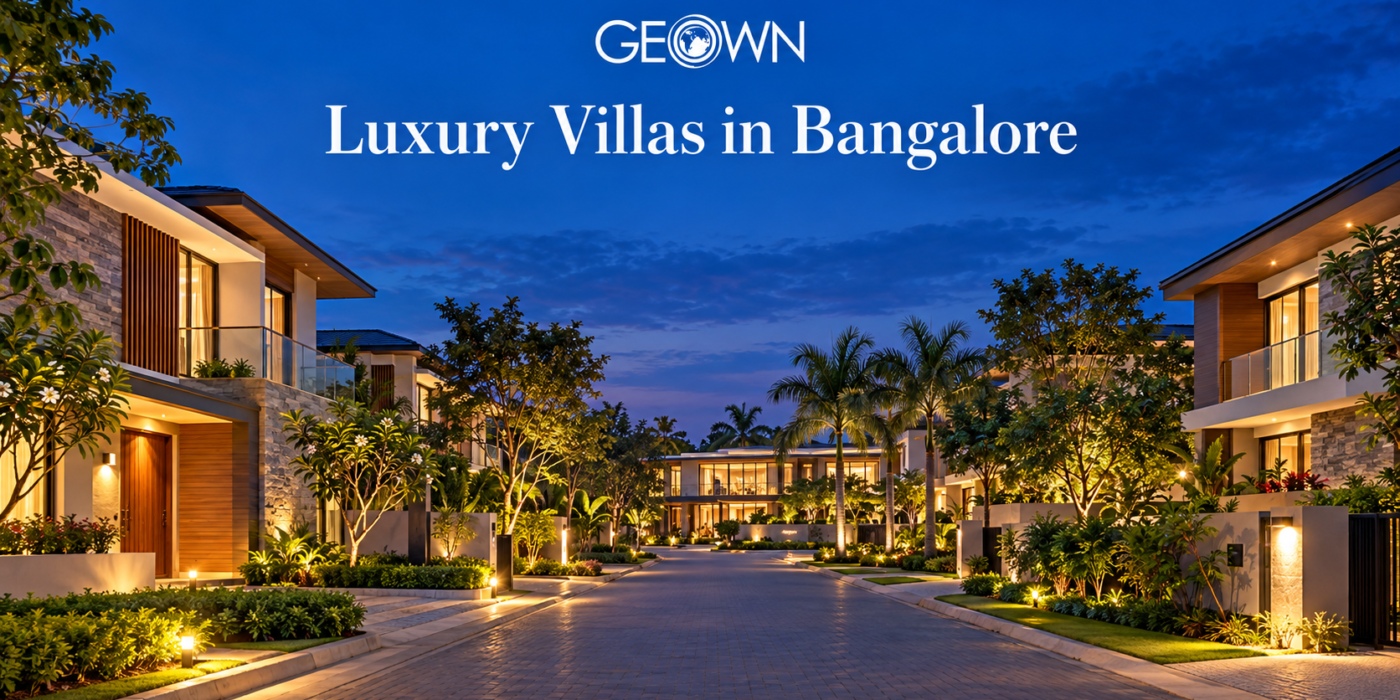
Driving into one of Bangalore’s established luxury villa communities in the evening tells you something about what premium villa living actually means before anyone describes it. The scale changes at the entry gate: a security checkpoint with visitor management rather than a simple barrier, landscaped common areas visible from the approach road, internal roads wider and quieter than anything outside, and the particular ambient stillness that low residential density produces in a city where ambient noise is otherwise a constant. The villa community is genuinely a world of its own, not in the aspiration-brochure sense but in the practical sense that the conditions inside it are meaningfully different from what surrounds it.

Luxury villas in Bangalore have developed to a maturity over the past decade that makes this experience real rather than promotional. The city’s technology wealth base has created a buyer profile whose expectations are shaped by global residential standards and whose purchasing power supports the construction quality, community infrastructure, and land allocation that genuine premium villa living requires. Understanding what defines this category specifically in Bangalore’s context is what allows buyers to evaluate it honestly rather than through marketing vocabulary alone.

Here’s what this blog covers: the specific dimensions that define luxury villas in Bangalore, what premium villa communities deliver that apartments cannot, and which areas of the city have developed the most established luxury villa landscape.

What Actually Defines a Luxury Villa in Bangalore

Luxury in the villa context has five dimensions that together constitute a genuine definition rather than a marketing label. Location quality and employment proximity provide the structural demand foundation: a villa in a location with strong IT employment access, good social infrastructure, and established residential character holds its value and its desirability in ways that peripheral locations marketed as premium don’t. Construction and finish specification determines the daily material experience of the home: imported stone, quality joinery, branded mechanical and electrical systems, and the build quality that maintains its standard across a decade of daily use rather than only at handover. Community infrastructure determines the lifestyle experience beyond the villa’s walls: the amenity depth, the management quality, and the maintenance standard that keeps the community’s shared environment matching the individual villa’s quality over years of residence. Private space configuration is the dimension that most directly differentiates villa living from apartment living at equivalent price points: the private garden, the multi-floor layout, the physical separation from adjacent households that produces the quiet and privacy that apartment buildings structurally can’t provide. And resident profile determines the community culture that develops over time: premium villa communities whose residents have made deliberate, considered choices about how they want to live tend to develop the genuine neighbourly culture that makes the community a place people want to stay rather than a property investment they’re managing from a distance.

The Premium Villa Community Experience

The community experience in a premium Bangalore villa is what most distinguishes it from the standalone luxury home or the high-rise luxury apartment, and it’s what buyers who have lived in it consistently report as the dimension they most valued and least expected before experiencing it.

Amenity Infrastructure That’s Genuinely Used

Premium villa communities in Bangalore have moved past the era where amenities were primarily marketing tools. Established communities now have clubhouses with active programming, swimming pools maintained to standard rather than minimally managed, gymnasium equipment that’s kept current, and the landscaped common areas that are genuinely inviting for daily use rather than impressive only at the sales stage. The difference between a community whose amenities are regularly used and one whose amenities are present but neglected shows clearly in how residents talk about where they choose to spend their time.

Security and Privacy at Scale

The security infrastructure of a mature luxury villa community operates at a different level from both standalone home security and apartment building access control. Perimeter management with CCTV coverage, visitor management systems with advance confirmation protocols, RFID vehicle access for residents, and patrol schedules that are documented rather than nominal together produce a controlled residential environment that residents experience as genuine security rather than a security aesthetic.

Community Culture and Resident Profile

The resident profile of a luxury villa community shapes the community culture that develops over time in ways that are genuinely felt in daily life. Communities whose residents have chosen villa living specifically for its quality, who engage with the resident association, who participate in community events, and who maintain the standards of their individual villas create a collective residential environment that is meaningfully different from communities where investment buyers and absent owners constitute a significant proportion of the ownership.

The Private Space Dimension

A luxury villa’s private outdoor space, the garden, the terrace, or the private courtyard, changes how the home is used in daily life in ways that compound across the years of residence. Morning routines extend outdoors. Children have independent outdoor access without adult organisation. Informal social gathering happens naturally rather than requiring a dedicated occasion. These changes in daily habit are what residents consistently describe as the most meaningful quality-of-life difference from apartment living, and they’re entirely dependent on the private outdoor space that villa format provides and apartment format doesn’t.

What Makes a Villa “Luxury” in Bangalore?

The distinction between a premium villa and a standard villa in Bangalore is most reliably drawn across three verifiable dimensions. Construction specification at the imported or premium domestic material level throughout the home, not selectively in primary spaces, is the first. Community infrastructure that covers the full suite of lifestyle amenities maintained to the standard of the individual villa rather than treated as a cost centre after possession, is the second. And location in a corridor with established social infrastructure, genuine employment proximity for the buyer profile the villa serves, and the scarcity of buildable land that supports long-term value, is the third. A villa that meets all three qualifies as luxury regardless of what the marketing says. One that meets only one or two is a premium product in that dimension and a standard one in the others.

Where Bangalore’s Luxury Villa Communities Are Established

Bangalore’s luxury villa landscape is geographically concentrated in corridors where the combination of IT employment proximity, social infrastructure maturity, and established residential quality has produced communities that have demonstrated their value over time:

  • Whitefield and the East Bangalore IT corridor: the most established luxury villa market in the city, with the deepest inventory of completed communities and the strongest end-user demand from the large IT professional population; the reference market for Bangalore villa pricing
  • North Bangalore (Devanahalli, Hebbal, Yelahanka): the fastest-developing corridor with strong NRI buyer activity, airport proximity premium, and significant new project pipeline from developers responding to established demand
  • South Bangalore (Sarjapur Road upper zones, Bannerghatta Road, Kanakapura Road): a quieter residential character with good social infrastructure, suited to buyers who prioritise residential quality over IT corridor proximity
  • Peripheral estate and boutique projects: smaller-format luxury villa communities on larger land parcels outside the primary corridors, offering the private estate experience at the upper end of the luxury price range

Why Bangalore’s Villa Market Has Developed Differently From Other Indian Cities

The premium villa format’s dominance in Bangalore’s luxury residential market is not incidental. The city’s technology and startup economy has created a buyer profile whose income, lifestyle expectations, and professional context make villa living specifically appropriate in ways that other Indian cities’ wealthy buyer pools don’t uniformly match. Senior technology professionals, founders, and the returning NRI cohort who bring global residential experience to their Indian purchase decisions all represent buyer segments for whom the private space, community lifestyle, and employment proximity that Bangalore’s villa corridors provide constitute a genuine value proposition rather than a status signal.

This buyer profile has also sustained the quality standards of Bangalore’s established villa communities in ways that investment-dominated markets don’t: end-user buyers who live in their villas maintain the community’s common areas, participate in resident association governance, and create the demand for quality management that keeps established communities at their original standard rather than degrading over time. Geown Properties develops 3 and 4 BHK premium villas in Bangalore with the construction quality, community design, and location selection that the city’s genuine luxury villa buyer profile specifically requires. Their current projects are available to explore at www.geownproperties.com.

Which Areas in Bangalore Have the Best Luxury Villas?

The best area depends on what the buyer is specifically optimising for:

  • For IT employment proximity and established community quality: Whitefield and the East Bangalore corridor offer the deepest inventory of mature, established luxury villa communities with proven value and strong end-user demand
  • For connectivity and airport proximity alongside luxury living: North Bangalore’s Devanahalli and Hebbal zones combine premium villa communities with the connectivity that frequent travellers and NRI buyers specifically value
  • For the quietest residential character and green surroundings: South Bangalore zones along Kanakapura Road and Bannerghatta offer lower-density development and more genuinely green surroundings than the tech-corridor zones
  • For early-mover appreciation alongside luxury specification: emerging premium villa zones in upper Sarjapur Road and select North Bangalore micro-markets offer entry at prices that established Whitefield inventory doesn’t

Conclusion

Luxury villas in Bangalore are defined by the intersection of five specific dimensions, location, construction specification, community infrastructure, private space configuration, and resident profile, that together produce the daily experience that the premium price reflects. The city’s technology wealth base, its IT employment geography, and the end-user buyer profile that has driven consistent demand for this format have produced a luxury villa market whose established communities are among the most genuinely liveable premium residential environments available in any Indian city.

The buyers who find the greatest long-term satisfaction in a Bangalore luxury villa are those who evaluated all five defining dimensions rather than optimising for any single one, and who chose a community where the combination delivered the daily experience they were actually looking for rather than the specification that looked best in a comparison document.

CategoriesUncategorized

Ultra Luxury Villas in Bangalore: Exploring the Features That Define High-End Living

Ultra luxury villas in Bangalore occupy a distinct tier at the top of the residential market, defined not simply by a higher price point but by a specific combination of features, space standards, and exclusivity characteristics that separate them from the premium villa category beneath them. The distinction matters because the buyers evaluating this tier are making decisions based on what the home will actually deliver across every dimension of daily life, not just on how it compares to standard premium offerings. Understanding what genuinely defines ultra luxury in the Bangalore villa market is what allows buyers to evaluate whether a project’s claims match its specification.

The Bangalore ultra luxury villa market has matured considerably over the past decade, driven by the wealth generation of the technology and startup economy, the return of NRI buyers with global residential experience and expectations, and the emergence of a Bangalore-based HNI class whose lifestyle requirements exceed what standard premium communities can deliver. The result is a market tier where specification depth, community exclusivity, and architectural design intelligence are the primary differentiators rather than location or community brand alone.

Here’s what this blog covers: the features that define ultra luxury villa living in Bangalore, where the market is concentrated, who it’s designed for, and what buyers should evaluate before investing at this tier.

What Separates Ultra Luxury From Premium in the Villa Market

The premium villa category in Bangalore is characterised by quality construction, good community amenities, and a specification level that exceeds standard residential development. Ultra luxury takes each of these dimensions further in specific, verifiable ways rather than simply adding more of the same.

The plot-to-built-up ratio is one of the clearest separators: ultra luxury villas allocate significantly more land per unit than premium communities, producing private outdoor space that is genuinely generous rather than adequate. A private pool or water feature is standard in the ultra luxury tier rather than an optional premium. Architectural design is bespoke or semi-custom rather than repeated across all units in the project, producing homes with individual identity rather than variations on a standard layout. Material specifications move from quality domestic sourcing to imported premium materials throughout the home rather than selectively in primary spaces. And the community size itself is typically smaller, sometimes as few as twenty to forty exclusive units, producing a resident profile that is curated rather than open.

The Defining Features of Ultra Luxury Villas in Bangalore

Each feature dimension that defines the ultra luxury tier operates at a level that the premium tier approaches but doesn’t reach.

Architectural Design and Space

Ultra luxury villas are architecturally designed with specific spatial intelligence: double-height living volumes that create genuine ceiling drama, indoor-outdoor flow that extends living areas seamlessly into private garden and pool zones, and room configurations that accommodate the complex household uses of the buyer profile, home offices, entertainment suites, home theatres, and staff quarters alongside the main family living areas. The architectural brief is treated as a design exercise rather than a floor-plan efficiency calculation.

Premium Material and Finish Specification

The material specification of ultra luxury high-end villas in Bangalore reaches international standards throughout the home rather than selectively. Imported marble, travertine, or natural stone flooring in primary spaces, engineered timber or premium hardwood for joinery and cabinetry, branded sanitary hardware from international manufacturers, and facade cladding materials that maintain their quality and appearance across Bangalore’s climate conditions over years without significant maintenance. These materials are specified consistently across the home rather than concentrated in the primary living areas.

Smart Home and Technology Integration

Home automation in the ultra luxury tier is a fully integrated system rather than a collection of individual smart devices. Centralised control of climate, lighting, security, entertainment, and access from a single interface, with remote management capability, is the standard expectation. Advanced security systems including biometric access, integrated CCTV with remote monitoring, and perimeter intrusion detection complement the community’s security infrastructure with villa-level protection. EV charging infrastructure, solar power with battery storage, and high-capacity internet infrastructure are built into the design rather than retrofitted.

Private Amenities and Exclusive Community Features

The community amenity level in ultra luxury projects goes beyond what premium communities offer: a private pool as a standard villa feature rather than a shared community pool, dedicated home theatre or entertainment room, private gym or wellness space within the villa alongside community fitness facilities, wine storage or cellar rooms, and staff accommodation that serves the household management expectations of the buyer profile. Community-level amenities in ultra luxury projects include concierge-level facility management, private dining facilities for resident entertaining, and spa and wellness infrastructure that provides resort-level services within the community.

What Features Separate Ultra Luxury Villas From Premium Villas?

The specific feature distinctions that place a villa in the ultra luxury rather than premium tier: private pool as a standard inclusion rather than a premium option, imported material specification throughout rather than selectively, fully integrated home automation rather than individual smart features, bespoke or semi-custom architectural design rather than repeated layouts, plot sizes that provide genuinely generous private outdoor space, community sizes of fewer than fifty units for exclusivity and curated resident profiles, concierge-level facility management rather than standard maintenance management, and additional private amenity spaces within the villa footprint including home theatre, private gym, or entertainment suite.

Where Ultra Luxury Villas Are Concentrated in Bangalore

The ultra luxury villa market in Bangalore operates in specific corridors where the land availability, infrastructure quality, and buyer profile density support projects at this specification level:

  • North Bangalore (Devanahalli and Hebbal zones): proximity to the international airport and the developing Aerospace and Tech Park corridor attracts NRI buyers and senior business leaders who value connectivity alongside exclusivity
  • South Bangalore (Bannerghatta Road, Sarjapur south): established residential character, good social infrastructure, and the quieter residential environment that the ultra luxury buyer profile typically prioritises
  • East Bangalore (Whitefield premium zones): the IT employment hub’s senior professional and founder population drives demand for ultra luxury within commuting proximity of ITPL and surrounding tech parks
  • Emerging villa estates outside the primary corridors: boutique projects on larger land parcels beyond the established corridors offer the private estate character that some ultra luxury buyers specifically seek

Who the Ultra Luxury Villa Buyer Actually Is

The buyer profile at the ultra luxury villa tier in Bangalore reflects several distinct but overlapping segments whose common characteristic is the requirement for a home that matches their professional environment and global lifestyle experience.

NRI buyers returning to or investing in Bangalore from the United States, United Kingdom, Singapore, and the Gulf bring residential experience of international standards that shape their expectation of what ultra luxury means in the Indian context. Tech founders and senior executives from Bangalore’s startup and technology ecosystem represent the primary domestic buyer segment, with household incomes and wealth levels that support ultra luxury investment and lifestyle requirements that standard premium communities don’t fully meet. HNI investors and business families who hold diversified asset portfolios add to this mix, treating ultra luxury villa ownership as both a lifestyle asset and a long-term wealth preservation vehicle.

Geown Properties develops premium 3 and 4 BHK villa communities in Bangalore with the construction quality, material specification, and community design that positions them within the upper tier of the Bangalore villa market, serving buyers whose requirements extend beyond standard premium into the high-end living category. More about their current Bangalore projects is available at www.geownproperties.com.

What Is the Price Range for Ultra Luxury Villas in Bangalore?

Price ranges in the Bangalore ultra luxury villa market reflect corridor, community size, and specification depth:

  • North Bangalore ultra luxury projects: ₹8 crore to ₹15 crore and above for fully specified projects with private pools and imported material finish throughout
  • East Bangalore (Whitefield premium): ₹7 crore to ₹12 crore for high-specification projects in established zones with strong IT employment proximity
  • South Bangalore ultra luxury estates: ₹9 crore to ₹20 crore for larger plot allocations in quieter residential zones with bespoke architectural design
  • Boutique estate projects outside primary corridors: ₹10 crore and above for private estate formats with the lowest density and highest exclusivity
  • Key price drivers beyond base specification: plot size (larger plots carry significant premiums), private pool inclusion, home automation scope, material specification depth, and community size

Conclusion

Ultra luxury villas in Bangalore define high-end living through the convergence of architectural design intelligence, imported material specification, integrated technology, private amenity depth, and community exclusivity that the premium tier approaches but doesn’t reach. Understanding what these distinctions actually are, rather than accepting the vocabulary without the specification, is what allows buyers evaluating this tier to make decisions based on genuine value rather than marketing positioning.

The buyers who find the greatest satisfaction at the ultra luxury level are those who evaluated each feature dimension against how they actually live and what their household genuinely requires, and then chose projects where the specification confirmed rather than merely promised the high-end living experience they were investing in.

CategoriesUncategorized

Luxury Villas by Budget: How to Choose a Premium Villa Within Your Price Range

Choosing from luxury villas by budget requires more than setting a price ceiling in a property search and evaluating whatever appears below it. The villa market in Bangalore spans a wide range of price points where the difference between what two similarly priced villas actually deliver can be substantial: one project at ₹5 crore may offer a generous plot, quality construction, and strong community amenities in an established location, while another at the same price offers a smaller plot, peripheral location, and basic community infrastructure that the ₹5 crore price tag doesn’t reflect as clearly as the specification sheet implies.

Navigating this requires a structured approach to understanding what different price tiers actually deliver, what trade-offs are present at each level, and how to align a specific budget to the villa that genuinely best represents its value rather than the one that presents most compellingly in a sales environment.

By the end of this blog, you’ll have a clear framework for matching your villa budget to the right price tier, understanding what each tier delivers, and making the trade-off decisions that get you the best possible villa within your actual range.

Establish Your True Budget Before Starting the Villa Search

The budget figure most villa buyers start with is the base price they’re comfortable paying. The total acquisition cost of a villa purchase is typically fifteen to twenty percent higher than the base price, and beginning a villa search without accounting for this difference consistently produces the situation where the right villa is found and then discovered to be unaffordable once the full purchase cost is calculated.

The components of total acquisition cost that need to be included in the budget alongside the base price: stamp duty, which varies by state and currently runs at approximately five percent of the property value in Karnataka; registration charges of approximately one percent; GST of five percent on under-construction properties (not applicable for ready-to-move with occupancy certificate); the maintenance deposit that gated communities require at possession, typically one to two years of maintenance charges; and the interiors investment for a newly constructed villa, which ranges from ₹15 to ₹50 lakh or more depending on specification level.

A buyer with a ₹5 crore comfort level for a villa base price needs approximately ₹5.75 to ₹6 crore of total committed funds to complete the purchase and move in with reasonable interiors. Starting the search at ₹5 crore and discovering this gap at the legal and financial documentation stage is a common and entirely avoidable planning error.

Understand What Each Villa Price Tier Delivers in Bangalore

The Bangalore premium villa market has four broadly recognisable price tiers that each deliver a meaningfully different combination of location, plot size, construction quality, and community amenity depth.

Entry Premium (₹2.5 to ₹4 Crore)

The entry premium tier in Bangalore delivers a 3 BHK villa format, typically in a gated community with standard amenity infrastructure, in locations that are either emerging corridors with developing social infrastructure or in more established locations at the lower end of their price range. Plot sizes at this tier are typically modest, community amenities cover the basics of pool, gym, and clubhouse without the depth of higher tiers, and construction specification is quality but not at the imported finish material level. This tier represents the accessible entry point into the gated villa lifestyle.

Mid-Premium (₹4 to ₹6 Crore)

The mid-premium tier is where the most balanced value proposition exists in the Bangalore villa market: a 3 or 4 BHK villa in an established or well-developing location, with adequate plot size for meaningful private outdoor space, good community amenity infrastructure, and construction quality that covers quality domestic materials throughout with selective premium specification in key areas. This tier is the most competitive in terms of developer activity and buyer demand, and finding the best value within it requires careful comparison of what each project’s price is actually covering.

Upper Premium (₹6 to ₹9 Crore)

Upper premium villas deliver meaningfully larger plots, superior locations in established corridors, imported or premium material specification throughout, and the depth of community amenity infrastructure that includes all the features marketed at lower tiers plus smart home readiness, EV charging, and the private amenity elements that begin to appear at this level. The quality step up from mid-premium is genuine and visible in the finish specification and community standard, not just in the price.

Ultra Luxury (₹9 Crore and Above)

The ultra luxury tier covers private pools as standard, bespoke or semi-custom architectural design, imported material specification throughout, the smallest community sizes for maximum exclusivity, and the additional private amenity spaces within the villa footprint itself that lower tiers position as optional upgrades. This tier is appropriate for buyers for whom the specific features it delivers are genuine requirements rather than aspirational additions.

What Is the Price Range for Luxury Villas in Bangalore?

The practical price range for what genuinely qualifies as a premium villa in Bangalore, meaning gated community format with real amenity infrastructure and construction quality above standard residential, runs from approximately ₹2.5 crore at the entry level through to ₹15 crore and above for the ultra luxury boutique project tier. The mid-premium range of ₹4 to ₹6 crore represents the largest active market segment, where the most options are available at any given time and where comparative evaluation produces the most useful differentiation between projects.

Decide Between Under-Construction and Ready-to-Move

The under-construction versus ready-to-move decision is the second most significant budget decision after the total acquisition cost calculation, and at every price tier it changes both the effective entry price and the risk profile of the purchase.

Under-construction villas in the same location and specification tier typically price fifteen to twenty-five percent lower than ready-to-move equivalents, which at a ₹5 crore ready-to-move reference means an under-construction entry at approximately ₹4 to ₹4.25 crore. This price differential is the compensation for the construction completion risk and the waiting period that under-construction purchase involves. Deciding factors between the two options at each budget tier:

  • If possession within six to twelve months is a requirement because of an existing housing situation that can’t extend, ready-to-move is the correct choice regardless of the price premium
  • If a two to three year waiting period is acceptable and the budget is genuinely at its ceiling, under-construction in a RERA-registered project from a developer with a strong delivery track record provides access to a better specification tier than the same budget buys in ready-to-move
  • For buyers with flexible timelines and moderate budget flexibility, comparing total cost including possession-period rental against the under-construction saving clarifies which option is genuinely more economical
  • At the entry premium tier specifically, under-construction often provides the best access to projects that will eventually reach a community quality level that the completed-project price would exclude them from

Prioritise the Features That Matter Most for Your Budget

When a budget can’t cover all the features that the ideal villa would have at full specification, the prioritisation decision determines which trade-offs produce the least regret. The trade-off decisions that matter most across villa purchase priorities:

Location versus plot size is the most common tension in the Bangalore villa market: an established location with superior social infrastructure and connectivity typically comes with a smaller plot at the same price than a peripheral location. For families with school-age children where daily commute and school access are primary considerations, location should win. For buyers prioritising private outdoor space and community lifestyle over location prestige, the peripheral location with a more generous plot often delivers the better daily experience.

Construction quality versus community amenities is the second common trade-off: some developers allocate more of the project budget to individual villa specification and less to community infrastructure, while others prioritise the community experience. For buyers who will spend most of their home time inside the villa itself, construction quality wins. For buyers who will regularly use community spaces with children, the community infrastructure investment matters more.

Geown Properties develops 3 and 4 BHK premium villas in Bangalore with a clear value position within the mid-premium tier, providing the construction quality, community design, and location that buyers in the ₹3 to ₹6 crore range are looking for without the specification compromises that some projects in this range make to hit a price point. More about their current projects is available at www.geownproperties.com.

How Much Should I Budget for a 4 BHK Villa in Bangalore?

A practical budget reference for 4 BHK villa purchase in Bangalore by location corridor and specification tier:

  • Whitefield and East Bangalore established zones: ₹4.5 to ₹7 crore for mid to upper premium specification, with ready-to-move carrying the higher end of this range and under-construction providing entry at the lower end
  • North Bangalore (Devanahalli and Hebbal corridors): ₹5 to ₹9 crore for mid to upper premium, with the airport proximity premium reflected particularly in completed projects in established communities
  • South Bangalore (Sarjapur Road upper and Bannerghatta zones): ₹4 to ₹7 crore for the established parts of these corridors, with emerging sub-zones offering under-construction entry at ₹3 to ₹4.5 crore
  • Premium boutique and estate projects across corridors: ₹8 crore and above for 4 BHK in the smallest, most exclusive community formats regardless of corridor

Conclusion

Choosing from luxury villas by budget is most successful when the search begins with a clear total acquisition cost calculation, a realistic understanding of what each price tier delivers in the Bangalore market, and a prioritised list of the features that matter most when the budget doesn’t cover all of them simultaneously. These three inputs convert a broad price-ceiling search into a structured evaluation of the specific options that genuinely represent the best value within a well-defined range.

The buyers who make the most confident and satisfying villa purchase decisions are almost always those who spent time on this framework before visiting a single site, because the clarity it produces makes the sales process a confirmation exercise rather than a decision-under-pressure experience.

CategoriesUncategorized

Luxury Villas Under ₹1 Crore: What Can Buyers Expect at This Budget in Bangalore?

Luxury villas under ₹1 crore do exist in Bangalore, but they exist in particular places and particular formats. At this budget you are usually looking at compact three-bedroom homes of roughly 1,200 to 1,600 sq ft inside gated communities along the city’s emerging growth corridors, not sprawling detached homes in the heart of Whitefield or Sarjapur Road.

That gap between expectation and available inventory is where most buyers lose months. Villa transactions across the city average somewhere between ₹1.5 crore and ₹8 crore, so a one crore ceiling places you right at the entry edge of the segment, and the projects that genuinely serve this band are rarely the ones advertising the hardest.

In this blog, we’ll look at what your budget actually buys, where to look for it, which amenities survive at this price point, and the trade-offs worth thinking through before you commit.

What a ₹1 Crore Budget Really Buys in Bangalore’s Villa Market

Entry-level villas, meaning row houses and compact 3 BHK configurations, start from roughly ₹80 lakh in corridors like Kanakapura Road, Anekal and Hoskote. Move into established addresses such as Devanahalli or Sarjapur Road and the mid-segment typically begins around ₹1.2 crore, which is why a strict sub-crore search tends to point outward rather than inward.

Format matters as much as price here. Most homes in this band are row or twin villas sharing one or two walls, built across two floors, with a modest private garden and covered parking. You still get ground-level access, a private compound and the freedom to modify interiors, which are the things villa buyers actually move for.

Luxury at this budget is expressed through planning and finish rather than scale. Well-proportioned rooms, good ventilation, a considered elevation and a properly maintained community will do more for daily living than an extra 400 sq ft in a poorly planned layout.

Are Villas in Bangalore Under ₹1 Crore Worth the Investment?

For buyers with a seven to ten year horizon, generally yes. The land component in a villa drives returns in a way an apartment cannot match, and the corridors in this price band are the ones absorbing the city’s infrastructure spending. Hoskote, for instance, has recorded around 115% appreciation over the last five years, with rental yield sitting near 3%.

There is a structural advantage too. Villa buyers in Bangalore are overwhelmingly end-users looking for a lifestyle upgrade rather than investors chasing a flip, which makes the segment noticeably more resilient when the broader market corrects. North Bangalore and the Sarjapur corridor together account for close to 55% of all villa transactions in the city.

One caution worth holding onto: appreciation follows infrastructure that actually gets delivered, not infrastructure that gets announced. Price the corridor on what is operational today.

Where to Look for Villas in This Range

Three belts consistently offer inventory at this budget without stranding you an hour from anything useful.

North Bangalore

The airport belt is the strongest long-term story, powered by the aerospace SEZ, the BIAL IT Investment Region and STRR Phase 1, operational since late 2023. Devanahalli’s core now sits above a one crore budget, so the practical move is to look one ring further out toward the Doddaballapur and Chikkaballapur stretches.

East Bangalore

Hoskote and the Budigere belt benefit from the Bengaluru-Chennai expressway and the coming metro extensions eastward. This is where affordable luxury villas in Bangalore are most plentiful right now, largely because developers moved here early.

South Bangalore

Kanakapura Road and Anekal offer greener, quieter surroundings and reasonable access to Electronic City. Social infrastructure is more established here than in the northern periphery, which suits families with school-going children.

What Amenities Can You Expect at This Budget?

Shared amenities are the norm and they are usually good ones: a clubhouse, gated security, landscaped parks, children’s play areas and jogging tracks. Community-scale amenities are how developers deliver a premium experience without pushing individual unit prices past the crore mark.

What typically gets trimmed is the private stuff. Private pools, in-villa elevators, generous plot-to-built ratios and imported fittings sit above this band almost without exception. Check what is contractually committed in your agreement rather than what appears in the brochure render, and ask specifically when each amenity phase is scheduled for handover.

Trade-offs Worth Weighing Before You Commit

Commute is the real cost. Drive the route to your workplace at 9 am on a weekday, not at noon on a Sunday, and decide honestly whether you can live with it.

On paperwork, confirm RERA registration, DC conversion of the land, a sanctioned plan from the relevant BMRDA planning authority, and clean A-Khata or e-Khata status. B-Khata properties limit home loan eligibility and future approvals, and no discount compensates for that.

Also accept that resale in peripheral corridors takes longer than in Whitefield. That is fine if you are buying a home. It matters more if you might need to exit in three years.

Conclusion

Luxury villas under ₹1 crore in Bangalore are a real option, provided you calibrate what the word luxury is doing at that price. You are trading proximity and square footage for land ownership, private outdoor space, community amenities and a corridor with genuine infrastructure momentum behind it.

The buyers who end up happiest in this segment are usually the ones who stopped comparing their shortlist against ₹2 crore villas and started comparing it against the apartment they would otherwise have bought. Framed that way, the value at this budget is considerably clearer.

CategoriesUncategorized

Premium Villa Lifestyle: Why Buyers Are Choosing More Spacious and Amenity-Rich Homes

There’s a particular realisation that comes to professionals who have been living in well-appointed apartments for several years: the space worked perfectly when it was chosen, and it has stopped working somewhere between the addition of a child, the normalisation of working from home, and the growing awareness of everything the apartment’s format simply cannot provide. No private outdoor space. No dedicated room that closes off properly for a workday. No community that extends beyond occasional lift conversations. The premium villa lifestyle doesn’t arrive as a sudden aspiration for most buyers. It arrives as the logical answer to a collection of small, daily limitations that have been building for longer than anyone explicitly noticed.

This realisation is happening across Bangalore’s professional buyer class at significant scale, driving a sustained preference shift toward spacious, amenity-rich villa living that is reshaping which residential format buyers with serious purchasing power are choosing. The drivers are real and specific: not merely the desire for more square footage but the need for a different kind of space, a different residential environment, and a different quality of daily life that apartment formats structurally cannot provide.

By the end of this blog, you will understand what’s driving the preference for spacious, amenity-rich villa living, what the premium villa lifestyle actually delivers in practice, and why buyers across Bangalore are making this choice with increasing conviction.

What’s Driving the Shift Toward Premium Villa Living

Several forces have converged to make the apartment-to-villa transition feel necessary rather than aspirational for a growing segment of Bangalore’s professional buyer class.

The pandemic permanently changed how professionals relate to their homes. A home that had previously been primarily a place to sleep and decompress between office days became the workspace, the school, the gym, and the social environment simultaneously. Apartments that were adequate for one use case struggled under the full weight of all of them, and the experience crystallised what was missing: private outdoor access, room separation that allows simultaneous use, and a residential environment with space to breathe. These preferences have persisted well beyond the pandemic period itself, because the hybrid and flexible work arrangements that emerged during it have become permanent rather than temporary.

Rising lifestyle expectations in the IT and entrepreneurial professional class have moved in parallel with rising incomes. The same buyer who would have been entirely satisfied with a premium 2 BHK apartment at 32 is looking at 4 BHK villas with private gardens at 38, not because their taste changed dramatically but because their life filled in around them and the space they need for it has grown.

What the Premium Villa Lifestyle Actually Delivers Day to Day

The premium villa lifestyle isn’t an abstract quality. It shows up in specific, daily ways that accumulate into a fundamentally different residential experience.

Private Space That Expands How the Home Is Used

A private garden, terrace, or courtyard accessible directly from the home changes how the home is used across the day. Morning routines extend outdoors. Children have a space that doesn’t require logistics to access. Evening winding-down happens outside rather than in front of a screen by default. The private outdoor space doesn’t add a feature to the home. It adds an entirely different dimension of how the home can be lived in.

Community Amenities That Elevate the Daily Routine

Luxury villa amenities in premium gated communities have evolved significantly beyond the swimming pool and basic gym that defined the category a decade ago. Contemporary premium villa communities offer co-working lounges for residents who work from home, children’s activity and learning zones, senior wellness areas for multigenerational households, landscaped walking circuits designed for daily use, and EV charging infrastructure that reflects where the buyer class’s vehicles are going. These amenities don’t simply add value at the time of purchase. They change what the daily routine looks and feels like for everyone in the household.

The Quiet and Privacy of Low-Density Living

The density difference between a premium villa community and a high-rise apartment complex is substantial and felt continuously rather than occasionally. Fewer households sharing fewer walls in a larger physical footprint produces an ambient quiet that becomes part of the home’s baseline quality. Residents in well-run villa communities consistently describe this quietness as one of the most significant and least anticipated quality-of-life improvements after the move.

Multigenerational and Work-From-Home Functionality

A 3 or 4 BHK villa distributes its space in ways that specifically support the complex household configurations of the professional buyer class: a grandparent’s room with ground-floor access, a dedicated home office that closes off from the rest of the house properly, a study area for children that doesn’t compromise the living space, and guest accommodation that doesn’t require household displacement. These configurations are natural to villa design and forced or impossible in most apartment formats at comparable investment levels.

What Amenities Should a Premium Villa Community Have?

At minimum, a premium villa community should offer: a well-equipped clubhouse with gymnasium and recreational spaces that are maintained to a standard matching the residential specification, a swimming pool with adequate capacity for the community size, landscaped common areas with genuine green space and walkable paths, children’s play infrastructure with age-appropriate equipment in a safe location, security infrastructure including controlled access and CCTV coverage, adequate visitor parking, and power backup for common areas. Premium communities add co-working spaces, senior wellness facilities, EV charging in private parking, smart home readiness, and community event infrastructure that makes shared celebrations a natural feature of community life rather than an organised exception.

Why Spacious Villas in Bangalore Are Attracting the Professional Buyer Class

The specific buyer profile driving demand for spacious villas in Bangalore reflects a convergence of life stage, income level, and lifestyle expectation that the IT and startup professional economy has produced at significant scale:

  • Dual-income professional households in their mid-thirties to mid-forties with children, whose combined income supports villa investment and whose daily life has outgrown the apartment format
  • Senior technology professionals and engineering managers whose compensation has reached a level where villa investment is the natural next residential step
  • Returning NRIs who have experienced larger-format residential living abroad and want to replicate the space and community quality in Bangalore
  • Founders and entrepreneurs for whom the home is also a workspace, entertainment space, and representation space that a villa format serves more completely than an apartment

The Investment Case That Accompanies the Lifestyle Case

The premium villa lifestyle is not only a quality-of-life decision. Premium villa communities in Bangalore’s established corridors have demonstrated appreciation supported by structural end-user demand rather than speculative momentum. Land scarcity within established villa zones limits new supply, supporting value preservation in existing inventory. The sustained demand from the large IT professional class provides a stable buyer pool that keeps premium villa values resilient across market cycles. And the quality of life that well-maintained villa communities provide sustains resident tenure rather than producing the turnover that investment-driven property markets experience. Geown Properties develops 3 and 4 BHK premium villas in Bangalore with the space configuration, luxury villa amenities, and community design that the professional buyer profile specifically requires. More about their current projects is available at www.geownproperties.com.

Why Are People Choosing Villas Over Apartments in Bangalore?

The specific reasons driving the apartment-to-villa preference shift in Bangalore’s premium buyer market:

  • Private outdoor space that changes how the home is used across the day and is unavailable in apartment formats regardless of price point
  • Room separation across floors that supports simultaneous household activities without spatial compromise
  • The quiet and lower ambient stress of a low-density residential environment compared to high-rise apartment living
  • Community amenities that are genuinely used and maintained rather than present primarily for marketing purposes
  • Children’s outdoor independence within a secure community environment that apartment buildings cannot replicate
  • Work-from-home functionality that requires the dedicated, closeable space that villa configuration provides naturally
  • Long-term asset value supported by structural demand and limited new supply in established villa corridors

Conclusion

The premium villa lifestyle is being chosen by Bangalore’s professional buyer class not as a luxury indulgence but as the residential format that most fully serves how their lives have grown. Private outdoor space, room separation, low-density quiet, genuine community amenities, and the investment case that accompanies the lifestyle decision together make the apartment-to-villa transition feel not just attractive but logical.

The buyers who make this decision and find it most satisfying are almost always those who made it in response to how they actually live rather than how they once imagined living. The premium villa lifestyle delivers most completely when it’s chosen for what it genuinely provides rather than what it represents, and what it genuinely provides turns out to be more substantial and more daily than most buyers anticipated before experiencing it.