
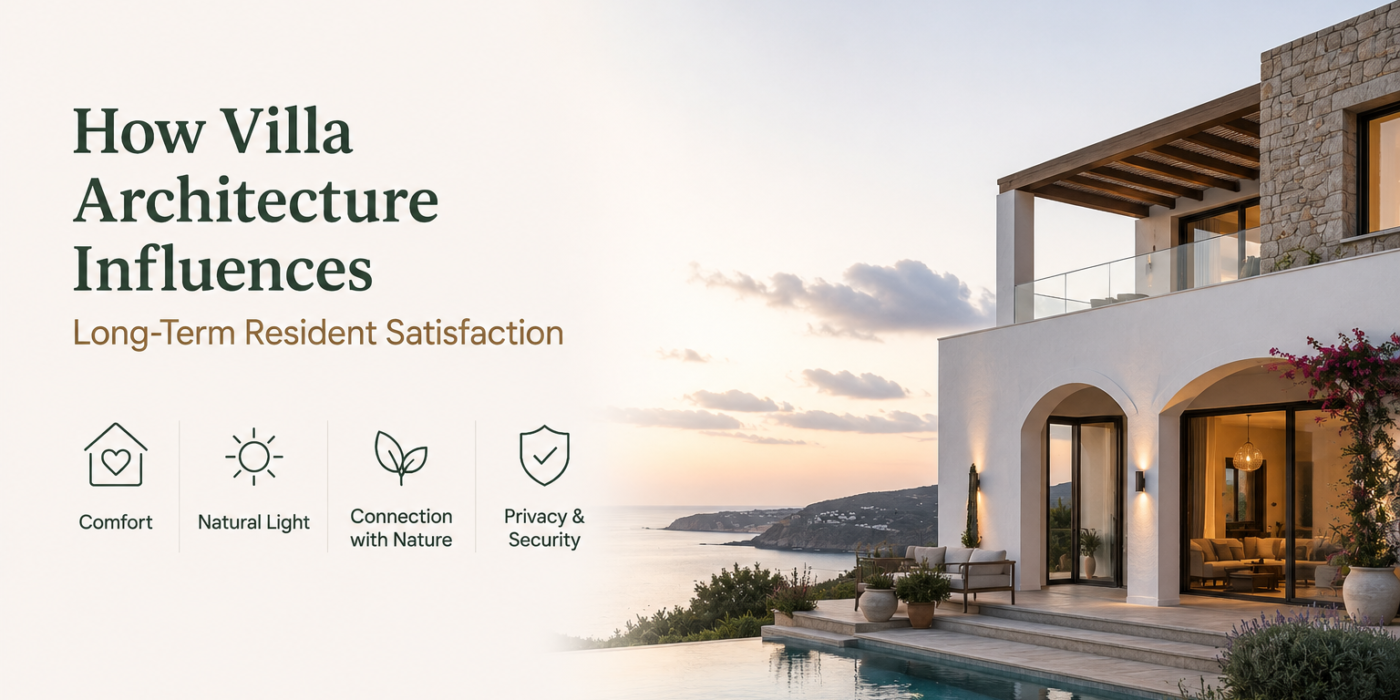
The way a villa is designed has a lasting impact on how people feel about living there. While location, amenities, and construction quality are important, modern villa architecture often plays a bigger role in long-term resident satisfaction than many buyers initially realize. Good architecture shapes how a home functions, how comfortable it feels, and how well it adapts to changing family needs over time.
Most people notice architecture first through appearance. Clean lines, elegant facades, and attractive layouts certainly make a strong first impression. Yet the real value of thoughtful design reveals itself years later, when daily routines become easier, spaces remain comfortable, and the home continues to meet the needs of its residents.
This blog explores how villa architecture influences long-term satisfaction and why design decisions matter far beyond aesthetics.
Architecture Is About Living, Not Just Looking
A beautiful long term villa projects may attract attention, but a well-designed villa earns appreciation over time.
There is a difference.
Architecture influences how people move through a home, how rooms connect with one another, and how natural light enters the space. These factors affect everyday experiences in subtle ways. Most homeowners do not actively think about them after moving in, yet they notice when something feels convenient, comfortable, or frustrating.
Good design often goes unnoticed because it simply works.
Poor design, on the other hand, tends to become obvious very quickly.
The Importance of Functional Layout Planning
Long-term satisfaction often begins with layout efficiency.
A villa should support daily life naturally rather than forcing residents to adapt to awkward spaces. This is where architecture becomes practical.
Well-planned layouts typically provide:
- Smooth movement between key areas
- Clear separation between public and private spaces
- Convenient access to outdoor areas
- Flexible room usage
- Better furniture placement options
These details may sound ordinary. They are not.
Over the years, functional planning often contributes more to homeowner happiness than decorative features.
Below are the signs of a well-designed villa layout:
- Rooms feel connected but not crowded
- Natural movement paths are intuitive
- Privacy is maintained where needed
- Storage integrates naturally into the design
- Outdoor and indoor spaces complement each other
In most cases, these characteristics improve daily living significantly.
Natural Light Changes the Living Experience
Few architectural elements influence comfort as consistently as natural light.
Homes that receive balanced daylight generally feel more inviting throughout the day. They appear larger, brighter, and more pleasant to spend time in.
That said, successful design is not simply about adding bigger windows. Placement matters. Orientation matters too.
Morning light in family spaces, controlled afternoon sunlight, and thoughtfully positioned openings can transform the atmosphere of a home. These choices affect mood, energy consumption, and even productivity for residents working from home.
A villa can look impressive on paper. Living in it is another matter entirely.
Ventilation and Comfort Go Hand in Hand
Comfort is often associated with air conditioning and technology. Yet architecture remains the first layer of climate control.
Cross ventilation, ceiling heights, window positioning, and spatial openness all influence indoor comfort. When these elements work together, homes remain fresher and more comfortable throughout the year.
Here’s where it gets interesting.
Many homeowners only appreciate good ventilation after experiencing poor ventilation elsewhere. It is one of those design features that quietly improves everyday life without demanding attention.
Thoughtful architecture makes homes feel comfortable naturally.
Designing for Changing Family Needs
Families evolve. Homes should too.
A villa that works perfectly for a young couple may need to accommodate children, aging parents, remote work requirements, or changing lifestyle preferences in the future.
Flexible architecture supports these transitions.
Some examples include:
- Multi-purpose rooms
- Adaptable guest spaces
- Ground-floor accessibility
- Future expansion possibilities
- Open layouts that allow functional changes
These considerations may not influence buying decisions immediately. They become extremely valuable over the years.
In fact, many homeowners cite adaptability as one of the most important aspects of their overall villa living experience.
Outdoor Integration Creates Better Living
Modern villa buyers increasingly value outdoor connectivity.
Gardens, courtyards, terraces, and landscaped spaces are no longer viewed as secondary features. They have become part of the overall living environment.
Architecture plays a critical role in connecting these spaces to the home itself.
When outdoor areas are visually and physically integrated with interior spaces, residents tend to use them more frequently. Family gatherings expand naturally. Children spend more time outdoors. Daily routines become less confined.
The result feels more balanced.
And honestly, this is one of the reasons villa living remains so appealing compared to more compact housing formats.
The Emotional Impact of Design
Not every architectural benefit can be measured.
Some aspects relate to emotion.
Certain homes simply feel comfortable. Others feel stressful or disconnected despite having similar dimensions and features. Architecture influences these perceptions through proportion, flow, openness, and visual harmony.
At the same time, personal preferences vary.
One family may prefer contemporary minimalism, while another values more traditional design elements. Good architecture accommodates both aesthetic appeal and practical usability.
This balance often separates average homes from truly memorable ones.
Why Architectural Quality Supports Property Value
Resident satisfaction and property value are closely connected.
Homes that remain comfortable, adaptable, and functional tend to maintain stronger appeal over time. Buyers often recognize quality design even when they cannot immediately identify the specific reasons.
A thoughtful premium villa design Bangalore market increasingly rewards projects that prioritize long-term usability alongside visual appeal.
Design choices made during planning continue to influence market desirability years after construction is complete.
That is not always obvious during the buying process, but it matters.
Architecture Shapes Daily Life More Than Expected
People interact with architecture every day.
The amount of daylight entering a room. The convenience of moving between spaces. The comfort of a well-ventilated living area. The ease of gathering with family indoors and outdoors.
These experiences accumulate.
Individually, they may seem minor. Together, they define how residents feel about their homes over time.
And satisfaction, after all, is built through daily experiences rather than occasional impressions.
Conclusion
Long-term resident satisfaction depends on more than location, amenities, or finishes. Architecture influences how a home functions, adapts, and supports everyday life over many years. From layout planning and natural light to ventilation and flexibility, thoughtful design decisions create lasting comfort that residents continue to appreciate long after moving in.
The best homes are not necessarily the most elaborate. They are the ones that remain comfortable, practical, and enjoyable to live in as life evolves. That is why modern villa architecture continues to play such an important role in shaping meaningful living experiences and lasting homeowner satisfaction.