
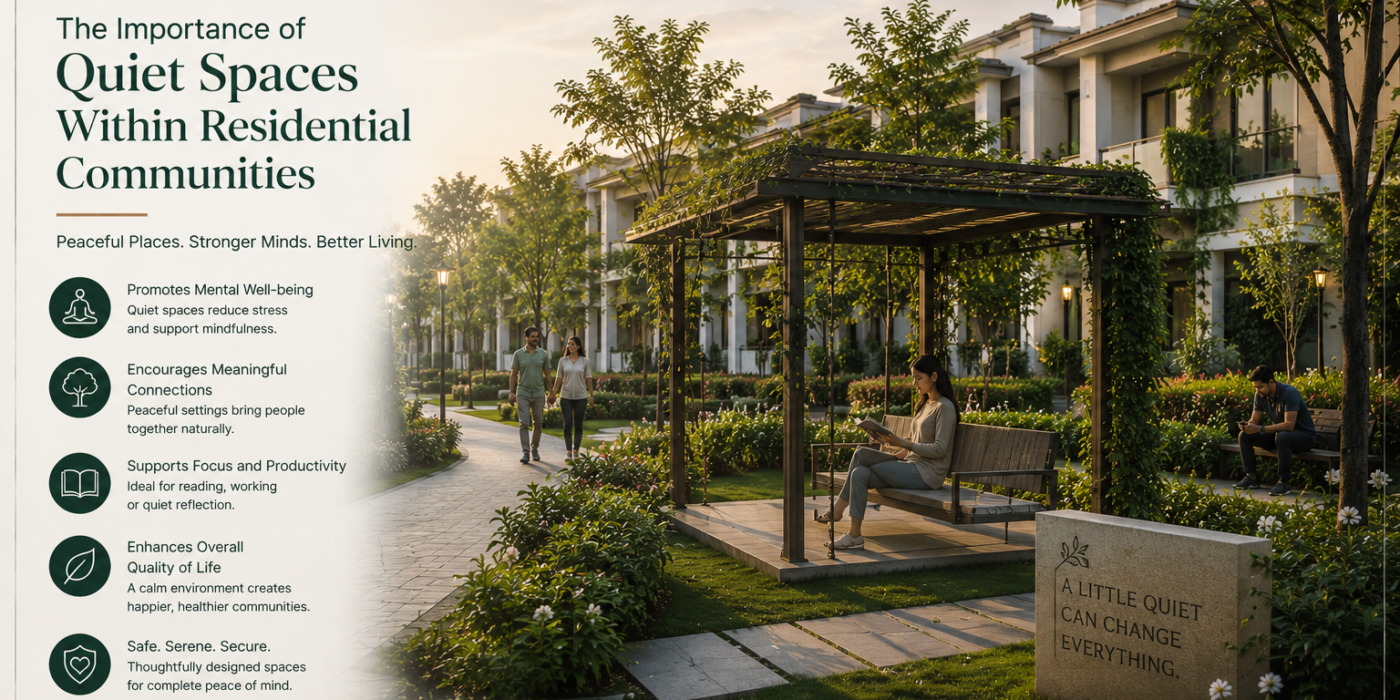
Quiet Spaces in Residential Communities are quickly becoming one of the most sought-after features for homebuyers, and it’s not hard to see why. As cities grow louder and daily life gets busier, the ability to return home to genuine calm has shifted from a nice-to-have to a defining factor in where people choose to live.
For growing families, working professionals, and investors alike, noise affects far more than comfort. It shapes sleep quality, focus, mental wellbeing, and even how children grow up experiencing their surroundings. A home that offers real peace isn’t just pleasant, it’s practical.
In this blog, we’ll look at why quiet spaces matter so much in residential planning, what actually makes a community peaceful, and how thoughtful design brings this to life.
Why Quiet Has Become a Priority for Today’s Homebuyers
Bangalore’s rapid growth has brought incredible opportunity, but also constant noise from traffic, construction, and dense development. Many buyers who once prioritized proximity above everything else are now rethinking what “location” really means. A well-connected home that still feels chaotic inside its own gates isn’t the win it once was.
This shift has been accelerated by remote and hybrid work becoming permanent fixtures for many professionals. When your living room doubles as your office, the noise levels around you directly affect your output. Families have noticed the difference too, especially those raising young children who need consistent routines and undisturbed rest.
The Real Impact of Noise on Everyday Life
The connection between noise and wellbeing isn’t just anecdotal. Research has consistently linked constant exposure to high noise levels with disrupted sleep, elevated stress, and long-term effects on cardiovascular health. Quiet Spaces in Residential Communities, on the other hand, have been shown to support better rest and a genuine sense of restoration.
For children, calm surroundings matter for concentration, play, and healthy development. For adults, they make the difference between coming home to recover from the day or coming home to more of the same noise they just left behind.
What Actually Makes a Quiet Spaces in Communities?
Quietness rarely happens by accident. It’s usually the result of deliberate planning decisions made long before a single villa is built.
Thoughtful Master Planning: Villa placement, road layouts, and distances from main traffic corridors are planned to naturally reduce sound intrusion into living spaces.
Landscaped Buffers and Green Zones: Trees, hedges, and landscaped strips do more than look good. They physically absorb and deflect sound, acting as a natural barrier between homes and outside noise.
Low-Density Layouts: Communities with more breathing room between homes tend to feel calmer simply because there’s more distance and greenery between neighbours.
Quality Construction and Acoustic Design: Solid building materials, proper insulation, and well-sealed windows and doors reduce how much outside noise actually makes it indoors.
The Role of Quiet Spaces in Communities in Everyday Calm
Community open spaces play a quieter but equally important role in shaping how peaceful a neighbourhood feels day to day. Parks, courtyards, and walking trails don’t just add greenery, they create natural gaps between activity zones and living areas.
Well-designed open spaces typically offer:
- Buffer zones that absorb noise before it reaches homes
- Walking paths and gardens for unwinding without leaving the community
- Safe, low-traffic areas where children can play freely
- Shared spots for residents to relax or connect without crowding
When these spaces are planned well, they end up doing double duty, giving residents room to breathe while quietly protecting the peace of the homes around them.
Does a Quiet Community Affect Property Value?
Yes, and the connection is stronger than many buyers realise. Homes in peaceful, well-planned communities tend to hold their value better over time simply because demand for liveability keeps rising. As more buyers actively search for calm, low-noise environments, communities that already offer this become harder to replicate and, in turn, more valuable.
Choosing a Villa Community Built Around Peaceful Living
Not every gated community delivers genuine peace, even if the brochure promises it. It helps to look closely at layout density, the amount of usable green space, distance from main roads, and how seriously acoustic detailing was treated during construction.
This is the thinking behind how Geown Properties approaches its villa projects, with layouts, landscaping, and construction quality planned around everyday liveability rather than just aesthetics. The goal is straightforward: villas that feel calm on a Tuesday evening, not just in a promotional photo.
Ultimately, peaceful villa living comes down to details most buyers don’t see until they’ve already moved in. Wide setbacks, generous greenery, sound-conscious construction, and low-density planning all work together quietly in the background.
Conclusion
Quiet Spaces in Residential Communities aren’t a luxury add-on anymore, they’re becoming a baseline expectation for anyone serious about long-term comfort and value. As more families and professionals prioritise wellbeing alongside location and price, developers who build genuine calm into their communities will be the ones defining what premium living actually means.
If there’s one thing worth remembering when evaluating a villa project, it’s this: a beautiful home surrounded by constant noise is still a compromise. True comfort comes from a community designed, from the ground up, to let residents actually enjoy the Quiet Spaces in Communities.