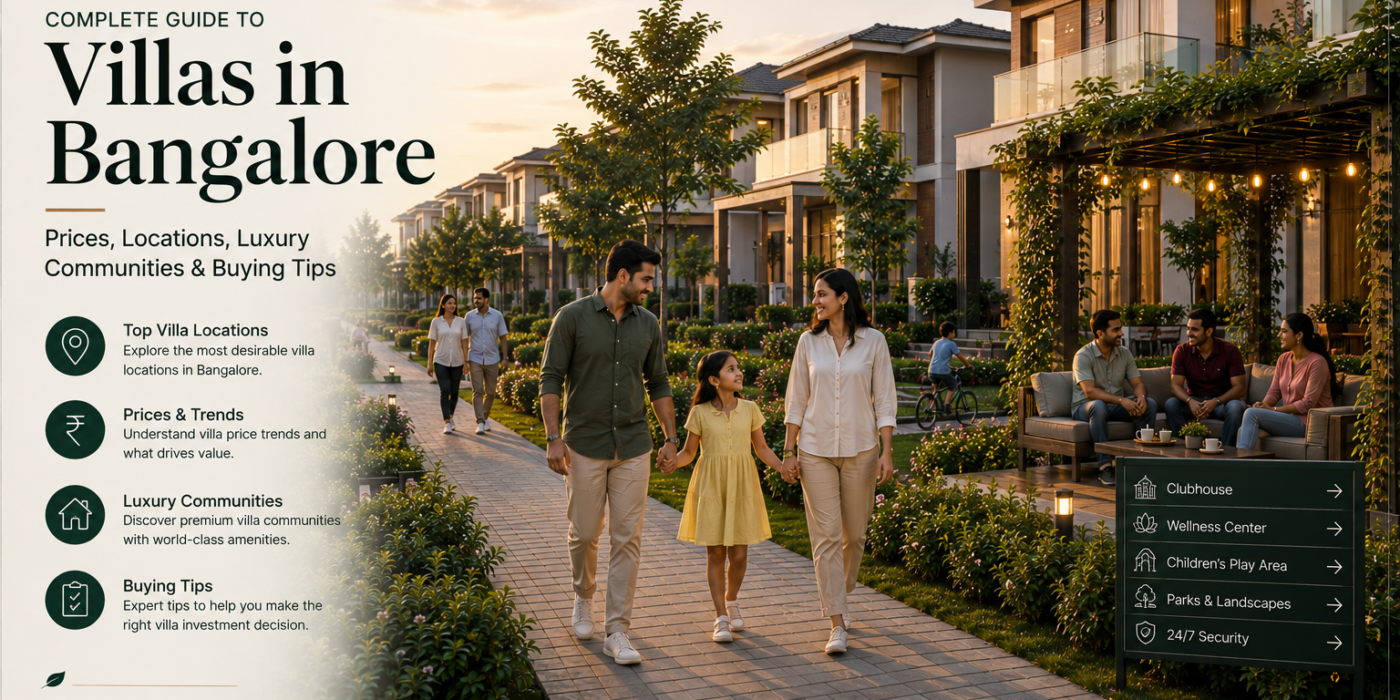
Premium modern villa community with landscaped walkways, a clubhouse, children's play area, lush green spaces, and Indian families of different generations enjoying everyday life together, highlighting how thoughtful planning, lifestyle amenities, secure surroundings, and strong community connections encourage long-term resident satisfaction and lasting happiness.
CategoriesUncategorized

How Modern Villa Communities Encourage Long-Term Resident Satisfaction

Modern Villa Communities Long-Term Satisfaction comes down to a handful of consistent factors: thoughtful planning, dependable amenities, strong connectivity, and construction that holds up well beyond the first few years. Modern villa communities are increasingly designed with this longevity in mind, moving away from the idea that a home simply needs to look good at the time of purchase. Instead, developers are focusing on how a home and its surrounding environment will actually function for a family five, ten, or twenty years down the line.

This shift matters because buyers today are not just choosing a property. They are choosing a lifestyle they intend to keep for a long time, whether that is a growing family looking for space to expand into, a working professional who wants a quiet base close to the city, or an NRI investor thinking about where their family will eventually settle. The challenge is that many developments still prioritize a strong first impression over sustained livability, which leaves residents dealing with maintenance issues, poor planning, or a fading sense of community a few years in. 

In this article, we will look at what actually separates a villa community built for the long haul from one that only looks good on launch day.

What Makes a Villa Community Built for the Long Term

A Modern Villa Communities Long-Term Satisfaction that holds up over time is rarely the result of one standout feature. It is usually the outcome of several smaller decisions made early in the planning process working together consistently, from how the layout handles density to how well the common infrastructure is maintained years after handover. Communities that get this right tend to feel just as functional in year eight as they did on day one.

Developers who plan for the long term also tend to think beyond the individual villa. They consider how residents will actually use shared spaces, how traffic and parking will behave once every unit is occupied, and how the community will adapt as families grow. This is one of the areas where Geown Properties, a developer of thoughtfully planned premium villa communities, puts particular emphasis, treating the surrounding ecosystem as seriously as the homes themselves.

Thoughtful Planning Creates Everyday Comfort

Long-term villa living is shaped far more by daily comfort than by dramatic architectural statements. Efficient layouts, good cross-ventilation, ample natural light, and a sensible flow between rooms make a genuine difference to how a home feels to live in, especially as families spend more time at home or accommodate changing needs like a home office or an elderly parent moving in.

Privacy also plays a bigger role than most buyers expect going in. Villas that are positioned with enough separation from neighboring units, along with private gardens or outdoor spaces, tend to age better in terms of resident satisfaction because they do not feel cramped as the community matures.

Why Do Residents Stay Longer in Well-Planned Villa Communities?

Residents tend to stay longer in communities that offer consistency: reliable security, well-maintained common areas, and a genuine sense of belonging among neighbors. Low-density layouts help here too, since fewer households sharing a space tends to translate into stronger, more personal community bonds rather than the anonymity common in high-density developments. When these elements are in place, moving out starts to feel like a loss rather than an upgrade, which is exactly the outcome long-term developers aim for.

Modern Amenities That Support Everyday Family Living

Amenities are one of the more visible ways modern villa communities support resident satisfaction, but the ones that matter most over time are usually practical rather than flashy. A few examples include:

  • Clubhouses that host regular community activities, not just unused common space
  • Landscaped gardens and walking trails that get genuine daily use
  • Dedicated play areas for children and fitness spaces for adults
  • Round-the-clock security and gated access
  • Well-maintained parking and clean, functional common utilities

Communities that keep these amenities in good working condition years after possession, rather than letting them decline once sales are complete, tend to report noticeably higher resident satisfaction in villa communities over time.

Connectivity and Location Shape Long-Term Value

Even the best-designed villa loses appeal if the daily commute becomes unbearable or essential services are too far away. Long-term satisfaction depends heavily on:

  • Proximity to established and upcoming employment hubs
  • Access to good schools and healthcare facilities
  • Reliable road and metro connectivity that improves rather than worsens over time
  • Nearby retail and everyday conveniences

Locations that are well-connected today and positioned for further infrastructure growth tend to hold their value and livability far better than isolated developments that looked promising only on paper.

Sustainability and Quality Construction Build Lasting Trust

Quality construction is what ultimately protects everything else. Durable materials, proper waterproofing, and energy-efficient systems reduce the maintenance headaches that quietly erode satisfaction over the years. Sustainable design choices, from rainwater harvesting to efficient landscaping, also tend to lower long-term costs for residents while keeping the community environmentally responsible as it matures.

Conclusion

Modern Villa Communities Long-Term Satisfaction that get these fundamentals right end up being homes people are genuinely glad they chose, not just at move-in but well into the years that follow. The combination of considered planning, functioning amenities, strong connectivity, and construction that ages well is what actually keeps residents settled rather than searching for the next upgrade.

If there is one thing worth taking away from all this, it is that long-term satisfaction is rarely accidental. It is the product of a developer who planned for the decade ahead rather than just the day of possession, and for anyone evaluating a villa purchase, that distinction is worth looking for closely before signing on.

Premium villa community with Indian family walking along landscaped pathways near everyday conveniences including a supermarket, pharmacy, café, ample parking, and green open spaces, highlighting how easy access to essential amenities, secure surroundings, and thoughtful planning influence smarter villa buying decisions and enhance everyday living.
CategoriesUncategorized

Why Everyday Convenience Should Influence Villa Buying Decisions

When it comes to Convenience Villa Buying Decisions, convenient villa living often gets pushed aside in favor of bigger considerations like design, square footage, or the number of bedrooms. But convenience, meaning how easily your home connects to the rest of your life, ends up shaping how much you actually enjoy living there. A villa can look stunning on paper, but if getting to work takes an hour or the nearest hospital is a forty-minute drive away, that beauty fades fast.

This is exactly why so many buyers regret their decision within the first year of moving in. They fall in love with a floor plan or a landscaped garden and forget to ask the more practical questions: How far is my office? Where’s the nearest school for my kids? Can I get groceries without planning a whole trip around it? These aren’t small details. They’re the things you’ll deal with every single day for years to come. 

In this blog, we’ll look at why convenience deserves a central place in your Convenience Villa Buying Decisions guide and how it shapes both daily comfort and long-term value.

What Convenience Really Means in a Villa Community

Convenience isn’t just about being near a mall or a metro station, though that helps. It’s a broader idea that covers how much time and effort your daily routine actually requires. Think about the small, repeated tasks that make up an average week: the school drop-off, the grocery run, the gym session, the visit to the pharmacy. When these things are close by, life feels lighter. When they’re not, even small errands start eating into your evenings and weekends.

For families, this often comes down to schools and healthcare access. For working professionals, it’s the daily commute. For NRI investors, it might mean knowing the property is in a location that will stay relevant and well-connected even when they’re managing it from abroad. Convenience looks a little different for everyone, but it always comes back to the same idea: your home should make your life easier, not add friction to it.

How Location and Connectivity Shape Everyday Life

Location has always mattered in real estate, but its role goes beyond property value. A villa near major roads, business corridors, and public transport doesn’t just commute faster, it also tends to age better as an investment because that same connectivity attracts future infrastructure and development. Areas with strong road networks, upcoming metro lines, or proximity to airports consistently see better long-term demand, which matters whether you’re planning to live there for decades or eventually rent it out.

Why Is Connectivity One of the Most Overlooked Factors in Villa Buying?

Most buyers underestimate connectivity because it’s invisible during a site visit. A villa can look perfect on a weekend tour, but that same drive during Monday morning traffic tells a very different story. Connectivity only becomes obvious after you’ve moved in and started living the daily grind, which is exactly why it deserves attention early, not after the fact.

Amenities That Support a Modern Villa Lifestyle

A modern villa lifestyle isn’t just about having a private garden or a large driveway anymore. It’s about the surrounding infrastructure that supports how people actually want to live today. The right amenities can turn a house into a genuinely comfortable, low-friction place to live.

Some of the amenities that genuinely improve everyday convenience include:

  • Gated security and visitor management systems that reduce daily worry
  • Clubhouses, walking tracks, and recreational spaces within the community itself
  • Reliable power backup and water supply, so basic utilities aren’t a constant concern
  • Coworking spaces or business centers for professionals working hybrid schedules
  • Sustainable design elements like rainwater harvesting and energy-efficient lighting

These features matter because they remove small daily hassles that would otherwise pile up over time.

Convenience as a Long-Term Value Driver

Convenience doesn’t just affect comfort, it directly affects resale value and rental demand. Villas in well-connected, amenity-rich communities tend to hold their value better because they continue to attract buyers and tenants long after the initial excitement of a new launch has faded.

This matters especially for:

  • NRI investors who want a property that stays desirable even from a distance
  • Growing families planning to stay long-term and need schools, healthcare, and safety nearby
  • Anyone thinking about resale, since well-located homes typically sell faster and at better prices

How Should You Evaluate Convenience Villa Buying Decisions?

A simple way to test convenience is to drive the actual commute during peak hours before signing anything. Beyond that, check the distance to schools, hospitals, and daily essentials, and look into any upcoming infrastructure projects planned for the area. A community that already has strong connectivity today is one that’s likely to only get better with time.

Conclusion

Choosing a villa ultimately comes down to how well it fits into your everyday life, not just how it looks in photographs. Convenient villa living means fewer daily compromises, shorter commutes, easier access to essentials, and a community designed around how people genuinely live rather than just how a home is marketed. When location, connectivity, and amenities are thought through carefully, a villa stops being just a property and starts becoming a place that actually supports your routine.

At the end of the day, the best villa isn’t necessarily the biggest or the most photogenic one. It’s the one that quietly makes your life simpler every single day, from the school run to the evening walk, without you having to think twice about it. That’s the kind of thoughtful planning worth looking for when you’re evaluating villa communities built for real for convenience Villa Buying Decisions, everyday living.

Premium villa community featuring a peaceful landscaped garden with shaded seating, reading corners, pergolas, and lush greenery, where Indian residents relax, read, and enjoy quiet moments, highlighting the importance of dedicated quiet spaces for mental well-being, relaxation, and a balanced residential lifestyle.
CategoriesBlog

The Importance of Quiet Spaces Within Residential Communities

Quiet Spaces in Residential Communities are quickly becoming one of the most sought-after features for homebuyers, and it’s not hard to see why. As cities grow louder and daily life gets busier, the ability to return home to genuine calm has shifted from a nice-to-have to a defining factor in where people choose to live.

For growing families, working professionals, and investors alike, noise affects far more than comfort. It shapes sleep quality, focus, mental wellbeing, and even how children grow up experiencing their surroundings. A home that offers real peace isn’t just pleasant, it’s practical. 

In this blog, we’ll look at why quiet spaces matter so much in residential planning, what actually makes a community peaceful, and how thoughtful design brings this to life.

Why Quiet Has Become a Priority for Today’s Homebuyers

Bangalore’s rapid growth has brought incredible opportunity, but also constant noise from traffic, construction, and dense development. Many buyers who once prioritized proximity above everything else are now rethinking what “location” really means. A well-connected home that still feels chaotic inside its own gates isn’t the win it once was.

This shift has been accelerated by remote and hybrid work becoming permanent fixtures for many professionals. When your living room doubles as your office, the noise levels around you directly affect your output. Families have noticed the difference too, especially those raising young children who need consistent routines and undisturbed rest.

The Real Impact of Noise on Everyday Life

The connection between noise and wellbeing isn’t just anecdotal. Research has consistently linked constant exposure to high noise levels with disrupted sleep, elevated stress, and long-term effects on cardiovascular health. Quiet Spaces in Residential Communities, on the other hand, have been shown to support better rest and a genuine sense of restoration.

For children, calm surroundings matter for concentration, play, and healthy development. For adults, they make the difference between coming home to recover from the day or coming home to more of the same noise they just left behind.

What Actually Makes a Quiet Spaces in Communities?

Quietness rarely happens by accident. It’s usually the result of deliberate planning decisions made long before a single villa is built.

Thoughtful Master Planning: Villa placement, road layouts, and distances from main traffic corridors are planned to naturally reduce sound intrusion into living spaces.

Landscaped Buffers and Green Zones: Trees, hedges, and landscaped strips do more than look good. They physically absorb and deflect sound, acting as a natural barrier between homes and outside noise.

Low-Density Layouts: Communities with more breathing room between homes tend to feel calmer simply because there’s more distance and greenery between neighbours.

Quality Construction and Acoustic Design: Solid building materials, proper insulation, and well-sealed windows and doors reduce how much outside noise actually makes it indoors.

The Role of Quiet Spaces in Communities in Everyday Calm

Community open spaces play a quieter but equally important role in shaping how peaceful a neighbourhood feels day to day. Parks, courtyards, and walking trails don’t just add greenery, they create natural gaps between activity zones and living areas.

Well-designed open spaces typically offer:

  • Buffer zones that absorb noise before it reaches homes
  • Walking paths and gardens for unwinding without leaving the community
  • Safe, low-traffic areas where children can play freely
  • Shared spots for residents to relax or connect without crowding

When these spaces are planned well, they end up doing double duty, giving residents room to breathe while quietly protecting the peace of the homes around them.

Does a Quiet Community Affect Property Value?

Yes, and the connection is stronger than many buyers realise. Homes in peaceful, well-planned communities tend to hold their value better over time simply because demand for liveability keeps rising. As more buyers actively search for calm, low-noise environments, communities that already offer this become harder to replicate and, in turn, more valuable.

Choosing a Villa Community Built Around Peaceful Living

Not every gated community delivers genuine peace, even if the brochure promises it. It helps to look closely at layout density, the amount of usable green space, distance from main roads, and how seriously acoustic detailing was treated during construction.

This is the thinking behind how Geown Properties approaches its villa projects, with layouts, landscaping, and construction quality planned around everyday liveability rather than just aesthetics. The goal is straightforward: villas that feel calm on a Tuesday evening, not just in a promotional photo.

Ultimately, peaceful villa living comes down to details most buyers don’t see until they’ve already moved in. Wide setbacks, generous greenery, sound-conscious construction, and low-density planning all work together quietly in the background.

Conclusion

Quiet Spaces in Residential Communities aren’t a luxury add-on anymore, they’re becoming a baseline expectation for anyone serious about long-term comfort and value. As more families and professionals prioritise wellbeing alongside location and price, developers who build genuine calm into their communities will be the ones defining what premium living actually means.

If there’s one thing worth remembering when evaluating a villa project, it’s this: a beautiful home surrounded by constant noise is still a compromise. True comfort comes from a community designed, from the ground up, to let residents actually enjoy the Quiet Spaces in Communities.


Premium villa community with landscaped walking trails, cycling paths, green open spaces, and Indian families jogging, cycling, practicing yoga, and spending time outdoors, showcasing how thoughtfully designed villa communities encourage healthier daily habits and active lifestyles.
CategoriesBlog

How Villa Communities Help Create Healthier Daily Habits

Villa Communities for Healthier Habits do more than look good on a brochure. The way a community is designed, its open spaces, walking paths, and low-density layout, quietly shapes how residents move, unwind, and interact every single day. It’s not about willpower or discipline. It’s about an environment that makes healthier choices the easy choices.

Most urban lifestyles today revolve around long commutes, screen-heavy workdays, and very little unstructured outdoor time. Add to that the isolation that comes with high-density apartment living, and it’s easy to see why so many families feel like they’re constantly trying to “fit in” a walk or a workout rather than having it happen naturally. This is exactly where thoughtfully planned communities change the equation. 

In this blog, we’ll look at how villa communities support movement, connection, and long-term wellness as part of everyday routine, not as an extra task on the to-do list.

Why Everyday Environment Shapes Health More Than Willpower

Habits are rarely built through motivation alone. They’re built through convenience. A person is far more likely to walk in the evening if there’s a shaded path right outside their door than if it requires driving somewhere. The same logic applies to socializing, relaxing outdoors, or even eating better, since access and ease drive behaviour more than intention does.

This is one reason wellness-focused community living has become such a strong theme in premium residential planning. Developers now recognize that a resident’s health outcomes are tied closely to the physical spaces around their home. Villas built within thoughtfully designed communities tend to reduce the friction between wanting to be active and actually being active, simply because the option is always right there.

Open Spaces and Walking Tracks That Make Movement Effortless

Landscaped walking tracks, tree-lined paths, and open gardens turn movement into something that happens on the way to somewhere else rather than a separate task. A morning walk before work, an evening stroll after dinner, kids cycling along a safe internal road, these become part of the rhythm of the day instead of an appointment.

Low traffic and controlled entry points also mean residents feel safe stepping out at any hour, which matters more than people often realize. Many families in denser neighbourhoods simply skip outdoor activity because the surroundings don’t feel walkable or secure.

What Makes a Villa Community Genuinely Wellness-Focused?

A wellness-focused villa community generally combines a few specific things: generous green cover, low-density planning that avoids overcrowding, dedicated fitness and recreation zones, walkable internal roads, and design choices that prioritize natural light and airflow. It’s the combination of these elements, not any single amenity, that creates a setting where healthier routines happen almost automatically.

How Community Amenities Support an Active Lifestyle Every Day

An active lifestyle in Villa Communities for Healthier Habits is largely a product of what’s available within a short walk from home.

Fitness and Recreation Spaces

Gyms, sports courts, and yoga lawns remove the usual excuse of “no time to travel to a fitness centre.” When a workout space is a two-minute walk away, people show up more consistently.

Family and Social Spaces

Clubhouses and shared gathering areas give families a reason to step outside together. Evening get-togethers, weekend games, or simply chatting with neighbours while children play nearby all add up over time.

Green and Outdoor Spaces

Parks, gardens, and seating areas offer a slower kind of wellness, encouraging residents to unwind outdoors rather than spend every evening indoors in front of a screen.

The Mental and Social Side of Healthy Habits

Health isn’t only physical. Villa Communities for Healthier Habits, by design, tend to reduce noise and crowding, which has a real effect on stress levels. Add regular interaction with neighbours, and residents often build a genuine support system rather than living in isolation behind closed doors. That sense of belonging plays a bigger role in long-term wellbeing than most people expect.

Do Villa Communities Really Make a Long-Term Difference to Health?

Yes, though the change tends to be gradual rather than immediate. Residents don’t usually experience dramatic shifts overnight. What happens instead is a slow, steady accumulation of small choices, an extra walk here, a shared evening there, that compound into meaningfully better routines over months and years.

Choosing a Villa Community Built Around Everyday Wellness

When evaluating a villa project, it helps to look beyond the floor plan and consider how the overall community is planned. Connectivity to workplaces and schools, the quality of construction, sustainability features, and the genuine presence of usable open spaces all matter more than they might seem to at first glance. 

Geown Properties approaches villa development with exactly this lens, designing communities around contemporary architecture, spacious layouts, and everyday comfort, so residents get a lifestyle that supports both convenience and long-term wellbeing, not just a well-finished home.

Conclusion

Villa Communities for Healthier Habits work because they remove the friction between intention and action. Walking, connecting with neighbours, and spending time outdoors stop being things people have to plan for and simply become part of how each day unfolds. For homebuyers, growing families, working professionals, and NRI investors alike, this everyday design advantage is often what separates a house from a genuinely well-lived-in home.

Choosing where to live is ultimately choosing the routines you’ll fall into without even trying. A well-planned villa community doesn’t just offer a better address, it quietly nudges everyday life toward being a little healthier, a little more connected, and a lot more enjoyable.

Premium villa community with landscaped walkways, children's play area, green open spaces, and Indian families enjoying quality time together, illustrating how family-friendly community design creates safer, healthier, and more connected neighborhoods for every generation.
CategoriesBlog

Why Family-Friendly Community Design Matters More Than Ever

Raising a family today looks different than it did even a decade ago, and where you choose to live plays a bigger role in that shift than most people realise. Family-friendly villa communities have moved from being a nice-to-have to a genuine priority for parents, working professionals, and even NRI investors scouting long-term homes in Bangalore. The reason is simple: the physical layout of a neighbourhood shapes how safely children play, how easily families connect with neighbours, and how much daily stress a household carries.

This shift isn’t just about aesthetics or bigger floor plans. It’s about whether a five-year-old can cycle down a street without a parent hovering nearby, whether there’s a shaded park within walking distance, or whether the community actually encourages people to step outside and know each other. As cities grow denser and commutes get longer, these small design choices end up shaping a family’s quality of life far more than the size of the living room does. 

In this blog, we’ll look at what family-friendly design really means, why demand for it is rising in Bangalore, and how the right community can shape both a child’s everyday life and a family’s long-term investment.

What Does Family-Friendly Community Design Actually Mean?

It’s tempting to assume “family-friendly” just means a playground and a clubhouse, but that’s a fairly shallow read of what actually matters to parents. Genuine community design for families factors in how people move through a space, how safe children feel exploring it, and how naturally neighbours interact with one another. It’s less about a checklist of amenities and more about the underlying logic of the layout itself.

Research on residential planning consistently points to a few non-negotiable elements:

  • Traffic-calmed internal roads and pedestrian-first pathways
  • Green, landscaped spaces that aren’t just decorative but usable
  • Low-density layouts that allow for both privacy and casual interaction
  • Play areas with soft surfacing and some form of natural, indirect supervision
  • Proximity to schools, clinics, and daily conveniences

When these elements come together, they create something apartments in dense high-rises often struggle to replicate.

The Growing Demand for Family-Friendly Villa Communities in Bangalore

Bangalore’s growth corridors, Devanahalli, Sarjapur Road, Whitefield, and Hebbal among them, have seen a noticeable shift in buyer priorities over the past couple of years. Families who once defaulted to apartment living are now actively seeking villa communities that offer private outdoor space, lower density, and a sense of ground-level freedom for their children. Part of this is practical: elderly parents and pets manage far better with direct ground access than with lift-dependent high-rises.

There’s also a generational piece to this. Remote and hybrid work has made people rethink how much of their day is actually spent at home, and that’s pushed buyers toward neighbourhoods that support a fuller lifestyle, not just a place to sleep.

How Thoughtful Design Shapes a Child’s Everyday Life

Good design doesn’t just look pleasant in a brochure. It changes how children actually spend their afternoons.

Safe, Traffic-Free Play Areas

Internal roads designed with speed bumps, clear sightlines, and minimal vehicle movement give children room to be children without constant adult intervention.

Access to Green and Open Spaces

Landscaped gardens and open lawns aren’t just visual softness. They give kids room to run, explore textures, and spend time outdoors instead of being confined indoors.

Opportunities for Independent Play and Social Growth

Communities that allow children some degree of unsupervised, low-risk exploration help build confidence and social skills that overly controlled environments tend to suppress.

What Makes a Residential Community Truly Child-Friendly?

A community earns that label when safety, layout, and amenities work together rather than existing as separate checkboxes. That means gated access with visible security, walkable internal paths, age-appropriate play zones, and enough green cover that outdoor time feels inviting rather than optional. It also means proximity to schools and healthcare, so daily logistics don’t eat into family time.

Long-Term Value: Why Family-Friendly Design Is Also a Smart Investment

For homebuyers and investors alike, well-planned child-friendly residential communities tend to hold and appreciate value better than generic developments. Families prioritise these neighbourhoods for resale and rental demand too, which makes thoughtful design a financial consideration, not just a lifestyle one. Locations with strong connectivity and consistent demand from young families have historically shown steadier appreciation over time.

How Geown Properties Approaches Community Design for Families

At Geown Properties, this thinking shapes every project from the ground up. The focus stays on contemporary architecture paired with genuinely spacious layouts, well-connected locations, and security systems that let parents relax a little. Sustainable practices like efficient water management and thoughtful landscaping aren’t afterthoughts either, they’re built into the plan from day one, alongside amenities designed around how families actually spend their time together.

Conclusion

Choosing a home today means choosing the environment your children will grow up in, and that decision carries weight well beyond square footage. Family-friendly villa communities offer something that’s difficult to manufacture later: a setting where safety, nature, and everyday convenience are already built into the plan.

For families evaluating their next move, it’s worth looking past the surface-level amenities list and asking harder questions about walkability, safety, and how a community actually functions day to day. The right answer to those questions tends to matter far more, ten years down the line, than anything a floor plan alone can promise.

Modern luxury villa living room with floor-to-ceiling glass windows overlooking lush greenery, hills, and scenic landscapes, as an Indian family enjoys the peaceful natural views, highlighting how nature enhances comfort, well-being, and the villa living experience.
CategoriesBlog

How Natural Views Enhance the Experience of Villa Living

Waking up to a view of trees swaying outside your window instead of a neighbour’s compound wall changes something in how a day begins. It’s a small thing on paper, but for anyone who has lived both experiences, it’s rarely small in practice. Villas with natural views do more than look good in a brochure. They shape mood, routine, and even how a family spends its evenings together, which is exactly why this feature has moved from “nice to have” to a genuine deciding factor for homebuyers today.

The shift makes sense when you think about how most people actually live now. Long work hours, screen fatigue, and increasingly congested cities have made green, open surroundings feel less like a luxury and more like a basic need. Buyers aren’t just asking whether a home has enough rooms anymore. They’re asking whether it will actually help them feel calmer at the end of the day. 

In this blog, we’ll look at why natural views matter, what sets scenic villa communities apart, and how this kind of setting affects both daily living and long-term value.

Why Natural Views Matter More Than You’d Think

There’s a reason architects and urban planners keep circling back to greenery and open views when they talk about wellbeing. It isn’t just aesthetic preference. Research into biophilic design, the idea that humans respond positively to natural elements in their surroundings, has repeatedly linked exposure to greenery and daylight with lower stress and better focus. When windows frame trees or landscaped gardens instead of concrete, the effect on how a space feels is immediate.

For families in particular, this translates into something very concrete: fewer indoor, screen-heavy evenings and more time spent outdoors without having to travel anywhere. A few of the everyday effects that natural views tend to have on residents include:

  • Reduced stress and a calmer transition between work and home life
  • Better sleep patterns linked to natural light exposure through the day
  • More opportunities for outdoor family time without leaving the property
  • A general sense of space and openness that indoor design alone can’t fully replicate

None of this is about escaping the city entirely. It’s about designing homes so that nature isn’t something you drive to on weekends, but something you live alongside.

What Makes Scenic Villa Communities Different

Not every villa project delivers on this promise, even when the marketing suggests otherwise. Scenic villa communities are planned differently from the start. Instead of maximising the number of units on a plot, the layout is built around preserving tree cover, open sightlines, and low-density spacing between homes. That’s a deliberate trade-off, and it’s usually the one that separates a genuinely scenic community from one that simply has a garden near the entrance.

Geown Properties approaches this the same way, treating landscape as part of the architectural plan rather than an afterthought squeezed in once construction is done. Thoughtful road placement, retained greenery, and homes oriented to face open views rather than each other all come from decisions made early, not late.

Do Villas With Natural Views Cost More to Maintain?

It’s a fair question, and the honest answer is: usually not significantly. Most of the maintenance in these communities is handled at the community level through shared landscaping and upkeep, not by individual homeowners tending large plots themselves. What buyers do pay for upfront is the scarcity of land that offers unobstructed views in the first place, which is a one-time cost reflected in the property’s price rather than an ongoing burden.

Everyday Lifestyle Benefits Across Different Buyers

The appeal of villas with natural views isn’t limited to one type of buyer. It shows up differently depending on who’s living there.

For Growing Families

Children get room to play outdoors safely, within sight of home, and parents get a bit of peace of mind that comes with low-traffic, green surroundings.

For Working Professionals

A view that changes with the seasons, rather than a wall of identical windows, makes it easier to switch off after a long day, especially for those working from home.

For NRI Investors and Second-Home Buyers

Scenic, well-connected villa communities tend to hold their appeal across visits, making them easier to rent, maintain remotely, or simply enjoy on return trips without feeling disconnected from the property.

Nature-Inspired Villa Living and Long-Term Value

Beyond lifestyle, there’s a practical investment angle too. Plots with genuine natural views are limited by definition. There’s only so much land bordering green belts, lakes, or hill views in any growth corridor, and once it’s built on, that particular view is gone. This scarcity tends to support steadier appreciation for scenic villa communities compared to standard developments, along with stronger resale and rental interest from buyers who specifically want that setting.

What Should You Look For in a Scenic Villa Community?

If this kind of setting matters to you, it helps to look past the renderings and check a few practical things before deciding:

  • How much of the original tree cover and topography has actually been preserved
  • Whether homes are oriented toward open views or simply toward each other
  • The developer’s track record on delivering what was originally promised
  • Connectivity to schools, workplaces, and the airport, since scenic shouldn’t mean isolated

Conclusion

Villas with natural views offer something that’s hard to quantify but easy to notice once you’ve experienced it: a home that actively supports how you want to live, rather than one you simply live in. From the everyday wellbeing benefits of greenery and open space to the practical advantages of stronger long-term value, the case for choosing a scenic villa community goes well beyond appearance.

For families, professionals, and investors alike, the right setting can turn a house into a place that genuinely feels restorative, not just spacious. As more buyers prioritise this kind of everyday quality of life, it’s likely that nature-inspired villa living will keep shaping how premium residential communities are planned in the years ahead.

Spacious modern villa kitchen featuring a functional island layout, ample storage, natural lighting, and an Indian family cooking together, showcasing how thoughtful kitchen planning enhances convenience, workflow, and everyday living in premium villas.
CategoriesUncategorized

The Importance of Functional Kitchen Planning in Modern Villas

Modern villa kitchen design is no longer just about how a kitchen looks in a brochure photograph. It is about how well the space actually works once a family moves in and starts using it every single day, for quick breakfasts, elaborate weekend meals, and everything in between. For villa buyers, the kitchen often ends up being the single most-used room in the house, which makes its layout far more important than most people realise while house hunting.

This is exactly where many villa buyers run into trouble. They fall for a beautiful countertop or a striking island, only to realise months later that the layout does not support how they cook, entertain, or move through the space. A kitchen that photographs well but functions poorly becomes a daily source of friction. 

In this blog, we will look at what makes a kitchen layout genuinely functional, how to choose between open and closed configurations, and why this planning matters so much in premium villa living.

Why the Kitchen Is the Real Test of Villa Living

Villas offer something apartments rarely can: generous floor plates, dedicated utility spaces, and the freedom to design a kitchen around real family needs. But that extra space is also where planning mistakes get amplified. A poorly zoned large kitchen can feel just as inefficient as a cramped one, only now you are walking further to feel the frustration.

Families who invest in a villa are usually thinking long term, which means the kitchen needs to work through different life stages, from young children underfoot to festive gatherings with extended family, without needing a renovation every few years.

What Makes a Kitchen Layout Truly Functional?

At the core of every well-planned kitchen is a simple idea: the stove, sink, and refrigerator should form an efficient work triangle that minimises unnecessary movement. This principle remains the backbone of good functional kitchen layouts, even in villas with far more square footage to work with.

Beyond the triangle, functionality comes down to a few practical decisions:

  • Enough counter space near the hob for active prep, not just for display
  • Storage planned around how the household actually cooks, including pull-out units and deep drawers for daily staples
  • Clear pathways so two people can work in the kitchen at once without bumping into each other
  • Ventilation strong enough to handle the heat and aromas typical of Indian cooking

Getting these basics right does more for daily comfort than any finish or fixture ever will.

Choosing Between Open, Closed, and Semi-Open Layouts

One of the biggest decisions in villa kitchen planning is how connected the kitchen should feel to the rest of the home. There is no single right answer, only the one that fits how your household actually lives.

Open Layouts

Open kitchens merge naturally with the living and dining areas, ideal for families who enjoy cooking while staying part of the conversation and want the kitchen to feel like a social hub.

Closed Layouts

Closed kitchens remain a strong choice for households that cook heavily every day. Keeping smoke, noise, and mess contained to one room has real practical value in multi-generational homes.

Semi-Open Layouts

A semi-open layout, using a pass-through counter or partial wall, often gives villa owners the best of both worlds: visual connection without losing the containment daily Indian cooking demands.

What Should a Functional Kitchen Layout Actually Include?

A genuinely functional kitchen layout includes a clear work triangle, ample storage, strong ventilation, task lighting over work surfaces, and enough counter space to prep without clutter. Planned together at the design stage rather than as afterthoughts, these elements hold up to years of daily use instead of just looking good on move-in day.

How Functional Kitchen Planning Elevates Luxury Villa Interiors

There is a common misconception that functionality and luxury pull in opposite directions. In practice, the opposite is true. The most convincing luxury villa interiors are the ones where every element, including the kitchen, performs as well as it looks. A stone island loses its appeal quickly if it is positioned awkwardly between the stove and sink.

This is why experienced designers start with function before finishes. Once the layout, ventilation, and storage are resolved, the aesthetic choices simply enhance a space that was already going to work well.

Is an Open Kitchen a Good Idea for a Villa in India?

It depends on how the household cooks day to day. For families who cook light meals frequently and entertain often, an open kitchen with strong ventilation works beautifully. For homes with heavy daily cooking, a closed or semi-open layout tends to hold up better over time, since it contains smoke and odours without sacrificing too much connection to the rest of the home.

How Geown Properties Approaches Kitchen and Home Design

At Geown Properties, thoughtful planning extends into every corner of the home, and the kitchen is treated as a functional priority rather than a decorative afterthought. Villa layouts are designed with practical work zones, adequate storage, and ventilation in mind from the earliest planning stage, alongside the quality construction and modern amenities the brand is known for.

Conclusion

Functional kitchen planning is ultimately what separates a villa that merely looks premium from one that delivers on comfort and long-term value. Getting the layout, storage, and ventilation right at the outset saves homeowners years of frustration, which is precisely why modern villa kitchen design deserves as much attention as the facade or the floor plan.

For growing families, working professionals, and NRI investors evaluating villa communities in Bangalore, the kitchen is a useful lens for judging a developer’s approach to planning. A builder who gets the small, practical details right here is far more likely to have applied that same discipline across the rest of the home.

a family jogging around the corners of the villa communities
CategoriesBlog

How Villa Communities Support Healthier Weekend Lifestyles

Weekends are supposed to feel different from the rest of the week, but for many families in Bangalore, they don’t. The apartment feels the same, the traffic outside sounds the same, and there’s rarely a reason to step outdoors beyond running errands. This is exactly why healthy lifestyle villa communities have started catching the attention of homebuyers who want their weekends to actually feel restorative rather than just quieter.

The shift makes sense when you look at how people are living now. Hybrid work has blurred the line between office hours and home hours, so the two days a week that used to belong entirely to family and rest now carry more weight than before. Add to that a growing awareness that health isn’t only about diet and exercise but also about how much time you spend outdoors, moving, and connecting with people around you. A home’s layout, and the community it sits within, has real influence over whether any of that happens consistently. 

In this blog, we’ll look at how villa communities shape weekend routines, what makes them safer for family activity, and how thoughtful planning turns everyday amenities into genuine wellness habits.

Why Weekend Lifestyle Has Become a Real Buying Factor

A few years ago, buyers mostly evaluated a home on square footage and price per square foot. That calculation has changed. Families now ask what a Saturday morning actually looks like in a given community, whether there’s somewhere to walk without dodging traffic, and whether children have space to play that doesn’t depend on booking a slot at a nearby park.

This isn’t a small preference anymore. It reflects how central home life has become since remote and hybrid work took hold. People are simply home more, and the areas around their house now function as extensions of daily life rather than places they pass through on the way somewhere else.

How Villa Layouts Naturally Encourage Outdoor Living

Private gardens, lawns, and sit-out areas do something that a balcony rarely manages. They pull people outside without anyone deciding to make it a plan. Morning tea moves to the porch. Evenings slow down. Children spend more time running around the yard instead of parked in front of a screen, and pets behave differently too when there’s actual ground to move around on.

None of this is dramatic on its own, but it adds up over months. Families who move into a villa often notice the change only after they’ve been living there a while, when weekend mornings start feeling unhurried in a way that apartment living rarely allowed.

What Makes a Villa Community Genuinely Safe for Weekend Activity?

Safety is the piece that makes all of this usable rather than theoretical. Controlled entry points, internal roads with slower traffic, and dedicated security personnel mean children can cycle or play outside without a parent standing guard the entire time. That single difference changes how often families actually use the outdoor space they have, since low-traffic, gated environments remove the hesitation that comes with busy public roads.

Weekend Family Activities Villa Communities Make Possible

Once safety and space are in place, the range of weekend family activities a villa community can support expands quite a bit. Depending on the development, this typically includes:

  • Walking and jogging tracks that don’t require driving anywhere
  • Children’s play areas and open lawns for casual games
  • Swimming pools and sports courts for weekend exercise
  • Clubhouse spaces for informal gatherings or celebrations

The advantage here isn’t just having these facilities but having them close enough that using them becomes routine rather than an occasional outing.

Villa Community Lifestyle and the Social Side of Wellness

Physical space matters, but a big part of what makes a villa community lifestyle genuinely healthier is the social rhythm that builds around it. Festivals, weekend fitness sessions, and casual resident gatherings give people a reason to step out and interact, which matters more for wellbeing than most people give it credit for. Even simple things, like recognizing neighbors on an evening walk or catching up briefly at a community event, build a sense of familiarity that apartment living, with its more anonymous shared spaces, doesn’t always offer. Over time, this social comfort becomes as important to family wellbeing as the physical amenities themselves.

How Geown Properties Designs for Everyday Family Wellbeing

At Geown Properties, this connection between design and daily life shapes how villa communities are planned from the start. The focus stays on contemporary architecture and spacious layouts, paired with amenities and green spaces that are woven into how residents actually move through their day rather than added as separate showpieces. 

Locations are chosen for strong connectivity, so families get easy access to schools, workplaces, and healthcare without giving up the calm of a well-planned residential setting. Quality construction and sustainable development practices round this out, aiming to create homes that hold their value while genuinely improving how families live day to day, weekends included.

Conclusion

Choosing a home today means thinking beyond square footage and finishes toward how that home will actually shape daily life, and healthy lifestyle villa communities offer a fairly clear answer to that question. Between safer outdoor spaces, layouts that naturally invite family time, and amenities designed for regular use rather than occasional novelty, these communities give weekends a different texture altogether.

At the end of the day, the homes that hold up best over the years tend to be the ones built around how people actually live, not just how a floor plan looks on paper. A villa community that gets the fundamentals right, space, safety, connectivity, and thoughtful design, tends to make healthier routines feel effortless rather than something families have to work at.

A family sitting at a clam environment with villas at the back of the sitting area
CategoriesUncategorized

Why Outdoor Seating Areas Matter in Residential Communities

Outdoor seating spaces in communities do something that open green areas alone cannot: they create conditions for staying rather than passing through. A well-positioned bench under a shaded tree, a seating cluster near the pool, or a garden pavilion with comfortable surfaces invites residents to sit, talk, rest, and simply be present in the community rather than moving through it on the way somewhere else. That distinction, between outdoor space for activity and outdoor space for habitation, is what separates a landscape design that residents actually live in from one they only look at.

This matters particularly for villa community buyers, since the outdoor environment of a planned community is part of what justifies the choice over a standalone property. A standalone villa offers a private garden but no shared social landscape. A well-designed villa community offers both, and the shared outdoor seating element is what enables the community interaction that private gardens inherently can’t facilitate. Buying into a community without thoughtful outdoor seating provision means paying for the community premium while missing one of the most tangible benefits it can deliver.

In this blog, we will understand what outdoor seating actually enables in a residential setting, what design choices determine whether it gets used or remains empty, and what to check during a site visit to assess whether a community’s outdoor landscape will genuinely serve daily life.

The Difference Between Outdoor Space and Outdoor Seating

Open green space and designed seating areas serve different purposes, and understanding this distinction helps clarify why both are worth evaluating separately when assessing a community. Open lawns and garden areas support physical activity, informal play, and visual relief from built surfaces. They’re designed for movement and use at a specific time rather than lingering.

Outdoor seating creates a different condition entirely. A seating area says, in physical terms, this is a place worth staying in. It transforms a patch of landscape from a surface to pass through into a destination. Residents sit there with a morning coffee, conversations start because two people happen to arrive at the same time, children play nearby while parents talk, and the community’s social fabric builds through exactly these accumulated informal moments rather than through planned events or organised activities.

What Well-Designed Outdoor Seating Actually Enables

The practical benefits of good outdoor seating in a villa community operate at several different registers simultaneously, each serving different residents and different kinds of community life.

Spontaneous Neighbour Interaction

The most consistent social research finding about community design is that spontaneous, unplanned interaction is what builds genuine neighbourliness rather than organised community events. Outdoor seating creates the physical conditions for this spontaneity: two residents arrive at a seating cluster at the same time, and a conversation happens that wouldn’t otherwise. Repeated across weeks and months, these moments build the kind of familiarity and goodwill that makes a community feel like a community rather than a collection of adjacent private properties.

A Space for Personal Rest and Restoration

Not all outdoor seating use is social. A shaded, comfortable outdoor space near greenery serves as a genuine restorative environment for residents who want to sit quietly, read, or simply be outside without being inside. This personal wellbeing function is distinct from the social function but equally valuable, particularly for residents who work from home or whose daily environment is otherwise predominantly indoors.

Cross-Generational Use Within the Community

Well-positioned outdoor seating is one of the few community spaces that genuinely serves all age groups simultaneously. Older residents and grandparents visiting for extended stays find accessible, comfortable outdoor seating particularly valuable. Parents monitor children from seating areas near play zones. Younger residents use casual seating for informal social gathering. A community where multiple generations use the same outdoor spaces builds a different and richer social texture than one where all spaces are age-specific.

A Social Alternative to the Private Garden

A private villa garden is an excellent space for family use but a poor space for community interaction, since its privacy is both its value and its limitation. Shared outdoor seating provides a social register that the private garden can’t: a place where residents can be part of the community without having to invite someone in. This intermediate social zone, neither fully public nor fully private, is where much of the genuine community social life in a well-designed villa project actually happens.

What Makes Outdoor Seating in a Community Actually Usable?

The presence of seating doesn’t guarantee it gets used. A number of specific design factors determine whether outdoor seating becomes a genuine community asset or a landscape feature that looks good in renders but sits empty in practice:

  • Shade provision adequate for the local climate, since unseated seating areas in direct afternoon sun become unusable for most of the day in Indian weather
  • Material selection that handles monsoon conditions without becoming slippery, waterlogged, or unattractive after the first rainy season
  • Proximity to greenery and natural elements rather than surrounded entirely by hard paving, since people consistently prefer to sit near vegetation when given the choice
  • Positioning that allows social orientation, where seating faces toward activity rather than toward walls or service areas, giving residents something to watch and engage with
  • Evening lighting that makes outdoor seating usable after work hours, when many residents actually have time to use it

How Residential Landscape Design Shapes Seating Area Quality

Residential landscape design decisions made at the planning stage determine seating area quality in ways that are nearly impossible to retrofit after occupation. Drainage around seating areas, for instance, has to be planned before surfaces are laid: inadequate drainage produces waterlogging that makes seating unusable during and after rain, which in India means for a significant portion of the year.

Shade canopy takes years to establish if it depends on planted trees, which means communities that rely on mature tree coverage for shade need to have planted them years before residents move in. Developers who understand this plant large, fast-establishing species early rather than leaving planting as a landscaping afterthought. The difference between a seating area with genuine dappled shade and one with either direct sun or an artificial canopy structure is significant enough that it shows clearly during a site visit.

Material selection matters across multiple dimensions: durability under heavy use, heat retention on exposed surfaces in summer, slip resistance in monsoon conditions, and visual quality that ages well rather than looking worn within a few years of opening. These decisions reveal how carefully the developer has thought about the experience of actually sitting in these spaces rather than just how they photograph.

Why Seating Distribution Matters as Much as Seating Quantity

A community with all its outdoor seating concentrated in a single central plaza has effectively one outdoor seating area, regardless of how many seats that plaza contains. Residents whose villas are at the community’s edges face a longer walk to reach it, which reduces how spontaneously they use it. Peak times see competition for space while off-peak times see the same area sitting mostly empty.

Distributed seating, positioned in clusters across the community near different villa groupings, amenity areas, and garden zones, produces a fundamentally different pattern of use. Residents near each cluster use it casually and frequently because it’s genuinely convenient. Different areas develop their own social character based on which residents use them regularly. The community feels inhabited across its whole footprint rather than concentrated at one node. Geown Properties applies this distributed seating philosophy to their 3 and 4 BHK villa community design, positioning outdoor seating to serve residents across the full community rather than creating a single showpiece area. More about their approach to community landscape design is available at www.geownproperties.com.

How Much Outdoor Seating Should a Villa Community Have?

There’s no single ratio that applies universally, but a practical way to evaluate adequacy during a site visit is to consider whether seating provision would comfortably accommodate simultaneous use by ten to fifteen percent of the community’s residents at any given time, since peak outdoor seating use rarely exceeds this proportion even in well-used communities. A few specific things worth checking:

  • Whether seating clusters exist near each major amenity area, play zone, and garden section rather than only at the clubhouse or entrance
  • Whether shade provision is genuine and adequate for afternoon use or whether most seating is in direct sun
  • Whether seating surfaces and materials show appropriate weather resistance rather than early wear that suggests poor material specification
  • Whether evening lighting covers the seating areas rather than only pathways and roads
  • Whether any seating is present near children’s play areas specifically, since this determines whether parents can supervise comfortably and be genuinely present

Conclusion

Outdoor seating spaces in communities matter because they enable the kind of daily outdoor life, restful, social, and spontaneous, that residents move to a villa community to have access to. Without thoughtful seating provision, even a beautifully landscaped community remains a place to look at rather than genuinely live in, which is a significant gap between promise and delivery for families who chose the community lifestyle deliberately.

The communities that get outdoor seating right tend to be the ones where the developer thought about what residents would actually do in these spaces rather than what they would look like in marketing material. That difference in planning orientation shows up very clearly during a site visit, and it’s worth looking for carefully before a purchase decision is made.

a clam environment of villas by the road
CategoriesUncategorized

How Recreational Amenities Encourage Stronger Family Bonds

Recreational amenities in villa communities strengthen family bonds primarily by removing the one obstacle that most consistently prevents families from doing things together: friction. When a swimming pool, an open lawn, or a play area is a two-minute walk from the front door rather than a thirty-minute drive away, the threshold for using it drops dramatically. Families don’t need to plan for it, pack for it, or coordinate schedules around it. They just go, and they go often enough that shared activity becomes a natural part of daily life rather than an occasional outing.

This matters particularly for families choosing between a villa in a planned community and a standalone property or an urban apartment. The villa itself provides space, but the community’s recreational infrastructure determines how that space connects to daily family life. A home with a large garden but no shared amenities keeps family activity contained to the private plot. A well-planned villa community extends that to pools, courts, clubhouses, and open green areas that serve different family members in different ways, making the daily texture of home life genuinely richer rather than just physically larger.

In this blog, we will look at why proximity is the most underrated amenity factor, which specific facilities build family bonds most consistently, and how to evaluate whether a community’s amenity offering will actually deliver the family lifestyle it promises.

Why Proximity Is the Real Amenity

The difference between an amenity five minutes’ walk away and one that requires driving is not a minor convenience gap. It’s the difference between something families use spontaneously and something they use occasionally when they’ve specifically planned for it. Spontaneous use is where genuine family bonding happens: the unplanned evening swim after dinner, the weekend morning where children drift to the play area and parents follow with coffee, the impromptu cricket game on the lawn that runs longer than anyone expected.

External clubs, parks, and sports facilities can be excellent without generating this kind of spontaneous use, simply because the activation energy of getting there filters out all but the most deliberately planned visits. Community recreational amenities that sit within the daily footprint of the home don’t have this filter. They participate in family life in a way that external facilities, however well-appointed, rarely do.

The Amenities That Build Family Bonds Most Effectively

Not all amenities contribute equally to family connection. The ones that work best share a common trait: they accommodate multiple family members doing different things in the same space simultaneously rather than segregating activity by age or interest.

Swimming Pools for Cross-Age Family Activity

A pool is one of the few recreational spaces where young children, teenagers, and adults genuinely enjoy being at the same time rather than tolerating each other’s presence. Children play, teenagers socialise, and parents swim or simply watch from the edge, all within the same space and without anyone compromising their preferred activity. This simultaneity is exactly what makes pool time reliably family time rather than just recreation.

Open Lawns and Garden Spaces

Large, open green areas serve a similarly flexible function. Children use them freely, parents find them restful, and older family members or grandparents visiting for the day can sit comfortably while the rest of the family moves around them. Unstructured open space accommodates improvised games, picnics, festivals, and quiet evenings in a way that purpose-built facilities with fixed equipment often can’t.

Children’s Play Areas Within Sight of Adult Spaces

The placement of children’s play areas relative to adult seating and relaxation zones matters considerably to how much parents actually use the outdoor space. A play area visible from a shaded seating section means parents can be present and relaxed simultaneously rather than having to choose between supervising children and their own rest. This design detail, rarely mentioned in brochures, is one of the more significant factors in whether families spend genuine time in community outdoor spaces.

Sports Courts and Active Recreation

Badminton courts, basketball areas, and multi-purpose sports surfaces extend amenity relevance to older children and teenagers who have outgrown play equipment but haven’t yet reached the gym. They also create opportunities for parents and older children to play together rather than in parallel, which shifts the dynamic from supervision to shared activity.

Clubhouse Spaces for Shared Occasions

A well-designed clubhouse serves family bonding in a different register from outdoor amenities: it’s where birthday celebrations, family dinners, and festive gatherings happen without the logistical overhead of a venue booking. Hosting a child’s birthday party within the community rather than at an external venue keeps the event relaxed, keeps children within a familiar and safe space, and makes the effort of celebrating together considerably lower.

What Amenities Should a Good Family-Friendly Villa Community Have?

The most useful family amenities tend to be the ones that actually get used across multiple times a week rather than on special occasions only. A practical list for families evaluating a community:

  • A swimming pool with a shallow section suitable for young children alongside adequate depth for adults
  • Open lawn or garden space that accommodates unstructured outdoor activity without requiring booking or scheduling
  • A children’s play area with age-appropriate equipment and a surface safe for falls
  • At least one sports court suitable for older children and teenagers
  • A clubhouse or multipurpose hall for larger family gatherings and community events
  • Adequate lighting across outdoor amenity areas for evening use, since many family outdoor moments happen after the working day

Amenities like elaborate themed water features, mini golf installations, and similarly niche facilities photograph well but contribute less to daily family life than the basics above executed at a high standard.

How Community Lifestyle Amenities Create a Social Environment for Children

Recreational amenities in villa communities do something for families beyond the direct activity they enable: they create the conditions for children to build friendships within the community rather than relying entirely on school-based social connections. A child who uses the community pool and play area regularly meets the same group of neighbourhood children repeatedly, and those repeated encounters build genuine friendships that extend back to the home environment rather than staying school-specific.

This matters to families more than it’s often articulated during a property search, because the social environment children grow up in shapes their experience of home as much as the home itself does. A community where children have friends within walking distance produces a different childhood experience from one where all social life requires coordination and travel.

Amenities Across Life Stages: What Families Need at Different Points

A villa community’s amenity offering serves a family differently depending on where the family is in its life stage. Young children with primary-school-age kids prioritise safe play areas and pool access. Families with teenagers need sports courts, open spaces for informal gathering, and enough variety to hold adolescent interest. Families at a stage where grandparents visit regularly value accessible, shaded seating and low-impact activity options alongside more active amenities.

Communities with varied provision serve families better across longer timeframes because the amenity set remains relevant as children grow rather than becoming less useful once the play equipment is outgrown. Geown Properties designs the recreational amenity mix within their 3 and 4 BHK villa communities with exactly this cross-stage family lifestyle in mind, ensuring that what the community offers remains genuinely useful rather than just impressive at the point of sale. More detail about current projects is available at www.geownproperties.com.

Do Villa Community Amenities Actually Get Used or Are They Just for Show?

This is one of the most useful questions a buyer can ask during a site visit, and the answer is usually visible with a little attention. A few indicators that distinguish well-used amenities from ones that look better in renders than in practice:

  • The pool and play area show signs of regular use: mild wear on surfaces, towel hooks being used, children present during the visit
  • Maintenance quality reflects active use management rather than a freshly cleaned show space that rarely sees residents
  • Residents using outdoor spaces during the visit rather than all amenities sitting empty on a weekend afternoon
  • Resident association activity around amenity scheduling and maintenance decisions, which suggests genuine engagement rather than passive ownership
  • The clubhouse shows evidence of recent events: a notice board with upcoming activities, or minor setup in progress, rather than a pristine room that’s clearly rarely opened

Conclusion

Recreational amenities in villa communities earn their value by making shared family activity the easy choice rather than the effortful one. When good facilities are close enough to use spontaneously, families use them consistently, and consistent shared activity is where genuine family bonds form and strengthen over time rather than in the occasional planned outing.

The families who get the most from a villa community’s recreational offering are the ones who chose a community where amenities were planned for daily use rather than sales impression. The difference between the two shows up in how residents actually spend their time together, and that’s ultimately the measure that matters most when the home is where family life happens.