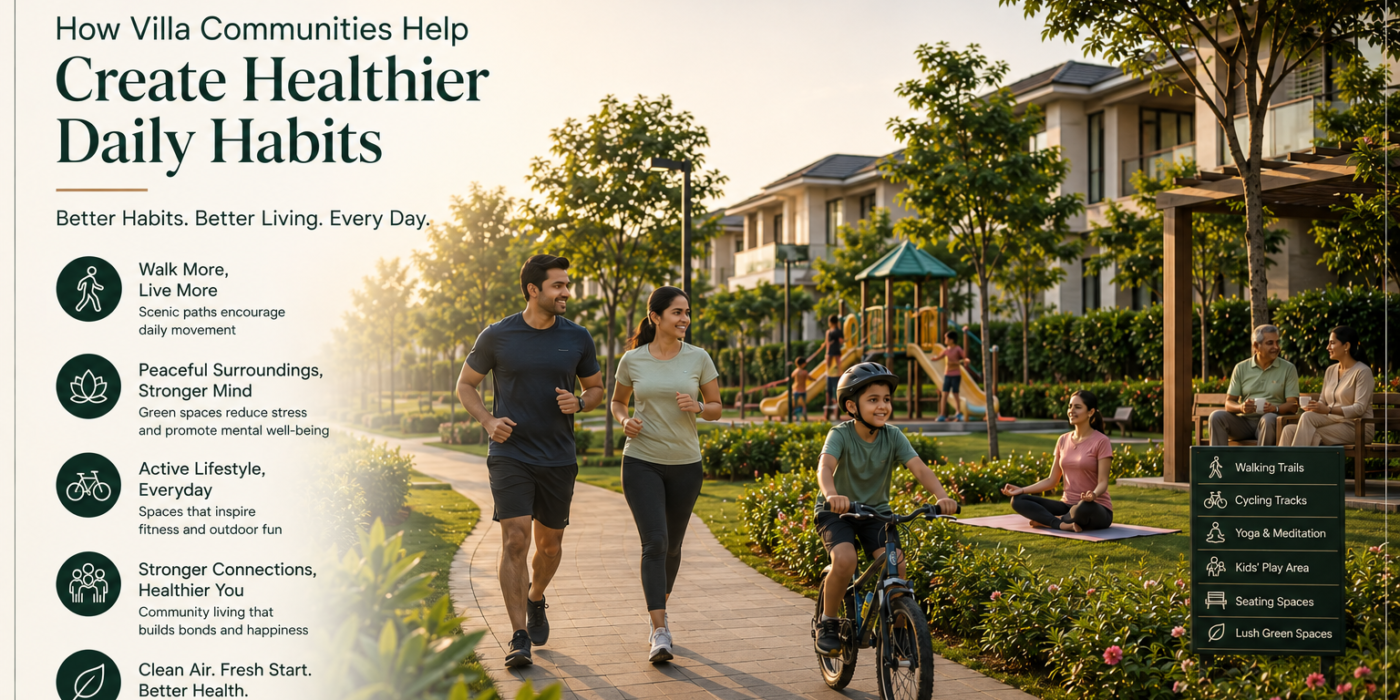
a family jogging around the corners of the villa communities
CategoriesBlog

How Villa Communities Support Healthier Weekend Lifestyles

Weekends are supposed to feel different from the rest of the week, but for many families in Bangalore, they don’t. The apartment feels the same, the traffic outside sounds the same, and there’s rarely a reason to step outdoors beyond running errands. This is exactly why healthy lifestyle villa communities have started catching the attention of homebuyers who want their weekends to actually feel restorative rather than just quieter.

The shift makes sense when you look at how people are living now. Hybrid work has blurred the line between office hours and home hours, so the two days a week that used to belong entirely to family and rest now carry more weight than before. Add to that a growing awareness that health isn’t only about diet and exercise but also about how much time you spend outdoors, moving, and connecting with people around you. A home’s layout, and the community it sits within, has real influence over whether any of that happens consistently. 

In this blog, we’ll look at how villa communities shape weekend routines, what makes them safer for family activity, and how thoughtful planning turns everyday amenities into genuine wellness habits.

Why Weekend Lifestyle Has Become a Real Buying Factor

A few years ago, buyers mostly evaluated a home on square footage and price per square foot. That calculation has changed. Families now ask what a Saturday morning actually looks like in a given community, whether there’s somewhere to walk without dodging traffic, and whether children have space to play that doesn’t depend on booking a slot at a nearby park.

This isn’t a small preference anymore. It reflects how central home life has become since remote and hybrid work took hold. People are simply home more, and the areas around their house now function as extensions of daily life rather than places they pass through on the way somewhere else.

How Villa Layouts Naturally Encourage Outdoor Living

Private gardens, lawns, and sit-out areas do something that a balcony rarely manages. They pull people outside without anyone deciding to make it a plan. Morning tea moves to the porch. Evenings slow down. Children spend more time running around the yard instead of parked in front of a screen, and pets behave differently too when there’s actual ground to move around on.

None of this is dramatic on its own, but it adds up over months. Families who move into a villa often notice the change only after they’ve been living there a while, when weekend mornings start feeling unhurried in a way that apartment living rarely allowed.

What Makes a Villa Community Genuinely Safe for Weekend Activity?

Safety is the piece that makes all of this usable rather than theoretical. Controlled entry points, internal roads with slower traffic, and dedicated security personnel mean children can cycle or play outside without a parent standing guard the entire time. That single difference changes how often families actually use the outdoor space they have, since low-traffic, gated environments remove the hesitation that comes with busy public roads.

Weekend Family Activities Villa Communities Make Possible

Once safety and space are in place, the range of weekend family activities a villa community can support expands quite a bit. Depending on the development, this typically includes:

  • Walking and jogging tracks that don’t require driving anywhere
  • Children’s play areas and open lawns for casual games
  • Swimming pools and sports courts for weekend exercise
  • Clubhouse spaces for informal gatherings or celebrations

The advantage here isn’t just having these facilities but having them close enough that using them becomes routine rather than an occasional outing.

Villa Community Lifestyle and the Social Side of Wellness

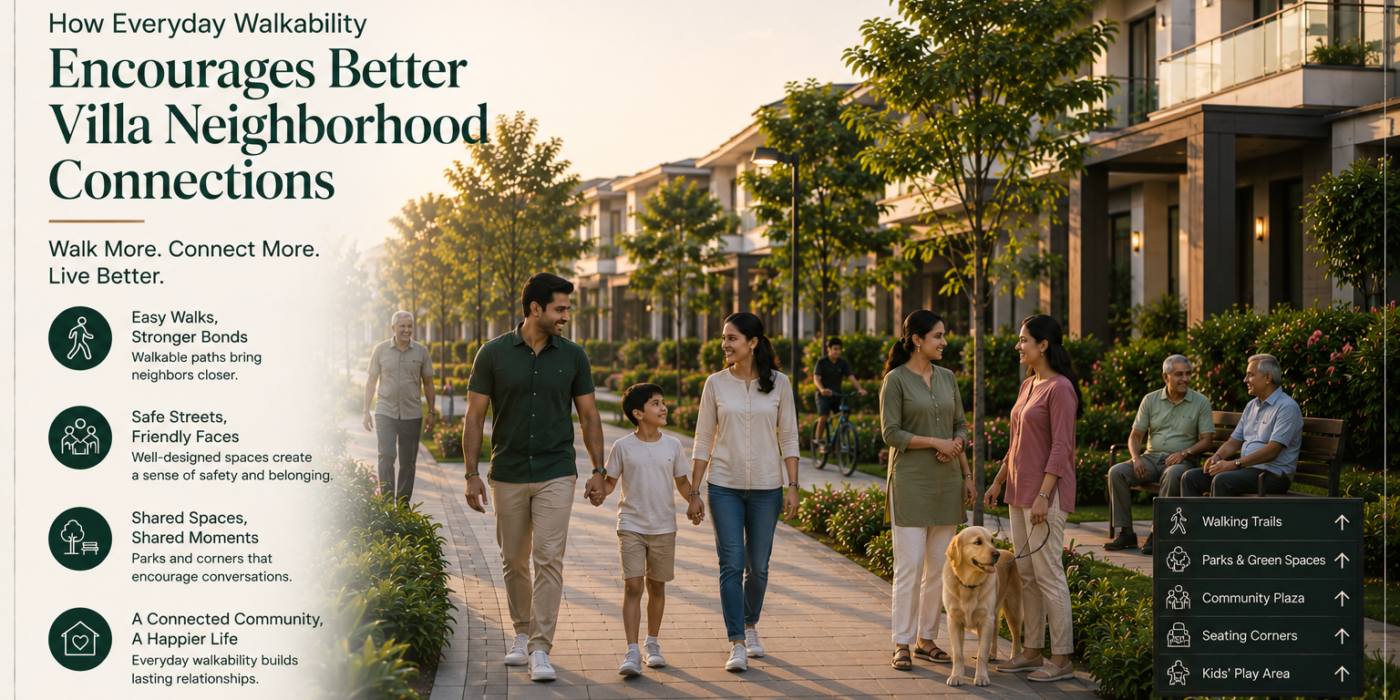
Physical space matters, but a big part of what makes a villa community lifestyle genuinely healthier is the social rhythm that builds around it. Festivals, weekend fitness sessions, and casual resident gatherings give people a reason to step out and interact, which matters more for wellbeing than most people give it credit for. Even simple things, like recognizing neighbors on an evening walk or catching up briefly at a community event, build a sense of familiarity that apartment living, with its more anonymous shared spaces, doesn’t always offer. Over time, this social comfort becomes as important to family wellbeing as the physical amenities themselves.

How Geown Properties Designs for Everyday Family Wellbeing

At Geown Properties, this connection between design and daily life shapes how villa communities are planned from the start. The focus stays on contemporary architecture and spacious layouts, paired with amenities and green spaces that are woven into how residents actually move through their day rather than added as separate showpieces. 

Locations are chosen for strong connectivity, so families get easy access to schools, workplaces, and healthcare without giving up the calm of a well-planned residential setting. Quality construction and sustainable development practices round this out, aiming to create homes that hold their value while genuinely improving how families live day to day, weekends included.

Conclusion

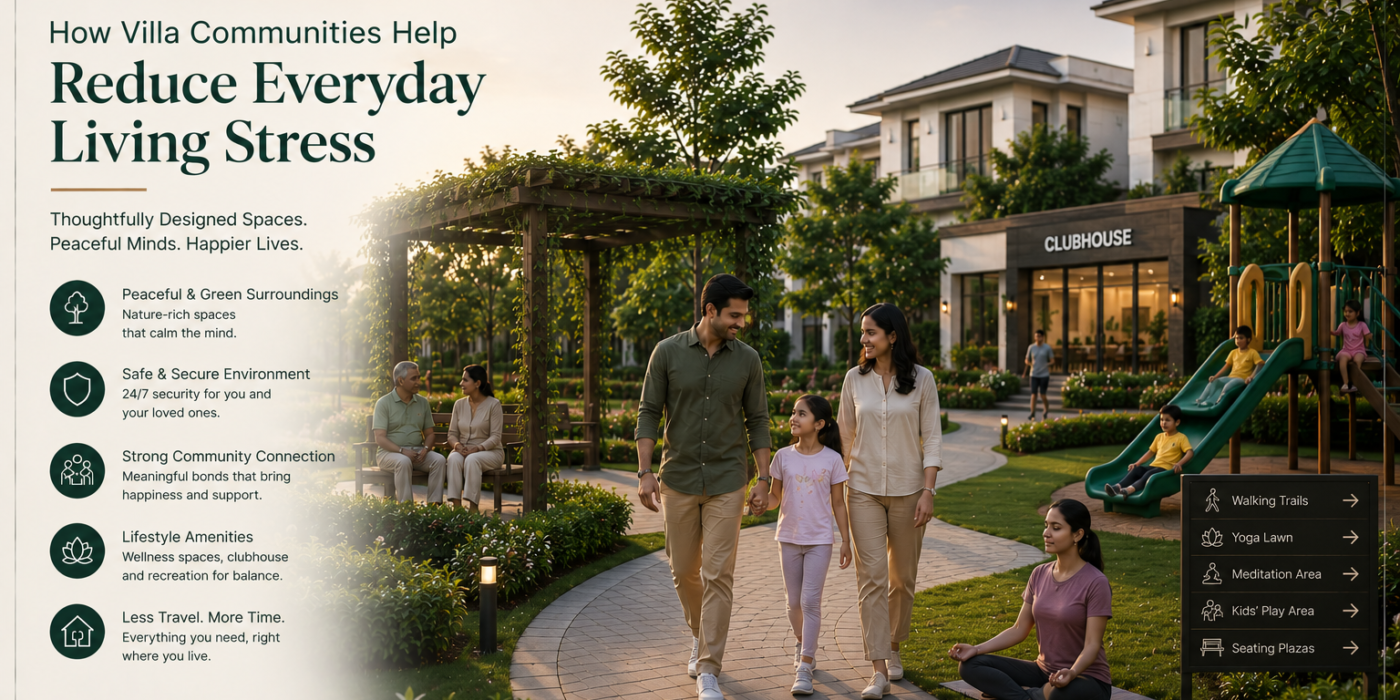
Choosing a home today means thinking beyond square footage and finishes toward how that home will actually shape daily life, and healthy lifestyle villa communities offer a fairly clear answer to that question. Between safer outdoor spaces, layouts that naturally invite family time, and amenities designed for regular use rather than occasional novelty, these communities give weekends a different texture altogether.

At the end of the day, the homes that hold up best over the years tend to be the ones built around how people actually live, not just how a floor plan looks on paper. A villa community that gets the fundamentals right, space, safety, connectivity, and thoughtful design, tends to make healthier routines feel effortless rather than something families have to work at.

A family sitting at a clam environment with villas at the back of the sitting area
CategoriesUncategorized

Why Outdoor Seating Areas Matter in Residential Communities

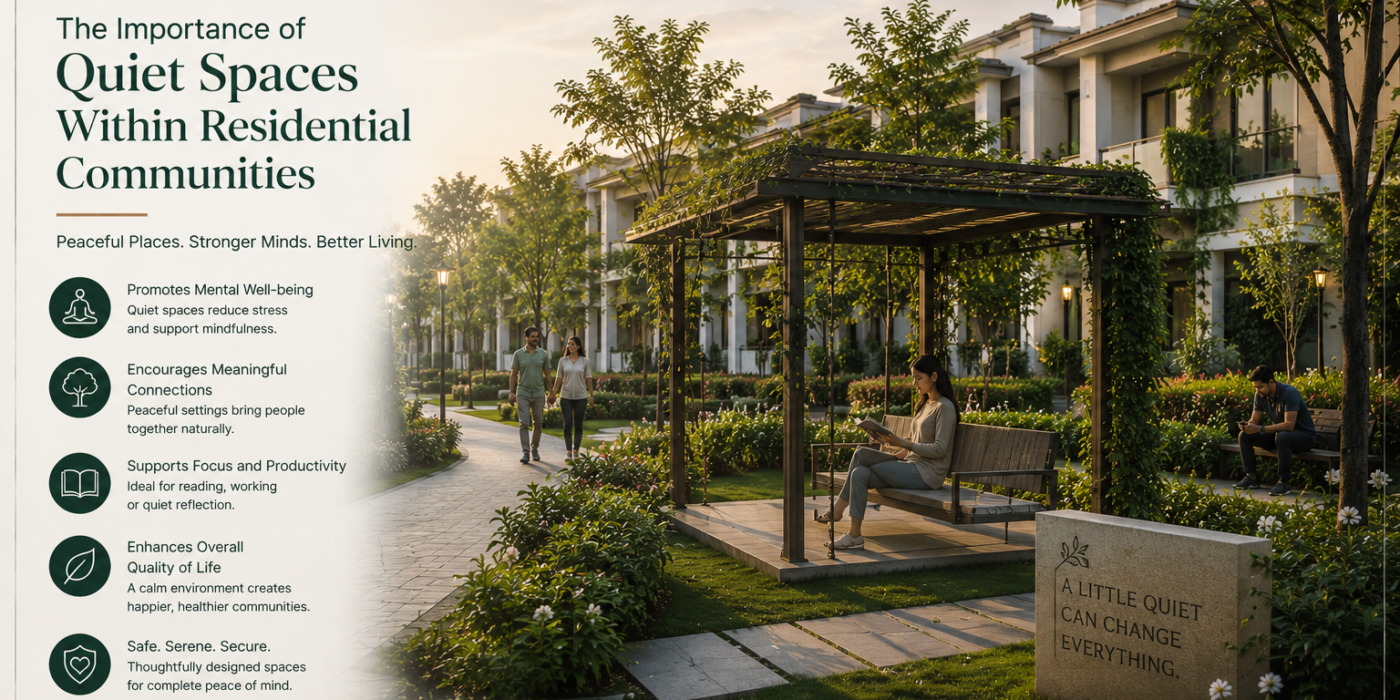
Outdoor seating spaces in communities do something that open green areas alone cannot: they create conditions for staying rather than passing through. A well-positioned bench under a shaded tree, a seating cluster near the pool, or a garden pavilion with comfortable surfaces invites residents to sit, talk, rest, and simply be present in the community rather than moving through it on the way somewhere else. That distinction, between outdoor space for activity and outdoor space for habitation, is what separates a landscape design that residents actually live in from one they only look at.

This matters particularly for villa community buyers, since the outdoor environment of a planned community is part of what justifies the choice over a standalone property. A standalone villa offers a private garden but no shared social landscape. A well-designed villa community offers both, and the shared outdoor seating element is what enables the community interaction that private gardens inherently can’t facilitate. Buying into a community without thoughtful outdoor seating provision means paying for the community premium while missing one of the most tangible benefits it can deliver.

In this blog, we will understand what outdoor seating actually enables in a residential setting, what design choices determine whether it gets used or remains empty, and what to check during a site visit to assess whether a community’s outdoor landscape will genuinely serve daily life.

The Difference Between Outdoor Space and Outdoor Seating

Open green space and designed seating areas serve different purposes, and understanding this distinction helps clarify why both are worth evaluating separately when assessing a community. Open lawns and garden areas support physical activity, informal play, and visual relief from built surfaces. They’re designed for movement and use at a specific time rather than lingering.

Outdoor seating creates a different condition entirely. A seating area says, in physical terms, this is a place worth staying in. It transforms a patch of landscape from a surface to pass through into a destination. Residents sit there with a morning coffee, conversations start because two people happen to arrive at the same time, children play nearby while parents talk, and the community’s social fabric builds through exactly these accumulated informal moments rather than through planned events or organised activities.

What Well-Designed Outdoor Seating Actually Enables

The practical benefits of good outdoor seating in a villa community operate at several different registers simultaneously, each serving different residents and different kinds of community life.

Spontaneous Neighbour Interaction

The most consistent social research finding about community design is that spontaneous, unplanned interaction is what builds genuine neighbourliness rather than organised community events. Outdoor seating creates the physical conditions for this spontaneity: two residents arrive at a seating cluster at the same time, and a conversation happens that wouldn’t otherwise. Repeated across weeks and months, these moments build the kind of familiarity and goodwill that makes a community feel like a community rather than a collection of adjacent private properties.

A Space for Personal Rest and Restoration

Not all outdoor seating use is social. A shaded, comfortable outdoor space near greenery serves as a genuine restorative environment for residents who want to sit quietly, read, or simply be outside without being inside. This personal wellbeing function is distinct from the social function but equally valuable, particularly for residents who work from home or whose daily environment is otherwise predominantly indoors.

Cross-Generational Use Within the Community

Well-positioned outdoor seating is one of the few community spaces that genuinely serves all age groups simultaneously. Older residents and grandparents visiting for extended stays find accessible, comfortable outdoor seating particularly valuable. Parents monitor children from seating areas near play zones. Younger residents use casual seating for informal social gathering. A community where multiple generations use the same outdoor spaces builds a different and richer social texture than one where all spaces are age-specific.

A Social Alternative to the Private Garden

A private villa garden is an excellent space for family use but a poor space for community interaction, since its privacy is both its value and its limitation. Shared outdoor seating provides a social register that the private garden can’t: a place where residents can be part of the community without having to invite someone in. This intermediate social zone, neither fully public nor fully private, is where much of the genuine community social life in a well-designed villa project actually happens.

What Makes Outdoor Seating in a Community Actually Usable?

The presence of seating doesn’t guarantee it gets used. A number of specific design factors determine whether outdoor seating becomes a genuine community asset or a landscape feature that looks good in renders but sits empty in practice:

  • Shade provision adequate for the local climate, since unseated seating areas in direct afternoon sun become unusable for most of the day in Indian weather
  • Material selection that handles monsoon conditions without becoming slippery, waterlogged, or unattractive after the first rainy season
  • Proximity to greenery and natural elements rather than surrounded entirely by hard paving, since people consistently prefer to sit near vegetation when given the choice
  • Positioning that allows social orientation, where seating faces toward activity rather than toward walls or service areas, giving residents something to watch and engage with
  • Evening lighting that makes outdoor seating usable after work hours, when many residents actually have time to use it

How Residential Landscape Design Shapes Seating Area Quality

Residential landscape design decisions made at the planning stage determine seating area quality in ways that are nearly impossible to retrofit after occupation. Drainage around seating areas, for instance, has to be planned before surfaces are laid: inadequate drainage produces waterlogging that makes seating unusable during and after rain, which in India means for a significant portion of the year.

Shade canopy takes years to establish if it depends on planted trees, which means communities that rely on mature tree coverage for shade need to have planted them years before residents move in. Developers who understand this plant large, fast-establishing species early rather than leaving planting as a landscaping afterthought. The difference between a seating area with genuine dappled shade and one with either direct sun or an artificial canopy structure is significant enough that it shows clearly during a site visit.

Material selection matters across multiple dimensions: durability under heavy use, heat retention on exposed surfaces in summer, slip resistance in monsoon conditions, and visual quality that ages well rather than looking worn within a few years of opening. These decisions reveal how carefully the developer has thought about the experience of actually sitting in these spaces rather than just how they photograph.

Why Seating Distribution Matters as Much as Seating Quantity

A community with all its outdoor seating concentrated in a single central plaza has effectively one outdoor seating area, regardless of how many seats that plaza contains. Residents whose villas are at the community’s edges face a longer walk to reach it, which reduces how spontaneously they use it. Peak times see competition for space while off-peak times see the same area sitting mostly empty.

Distributed seating, positioned in clusters across the community near different villa groupings, amenity areas, and garden zones, produces a fundamentally different pattern of use. Residents near each cluster use it casually and frequently because it’s genuinely convenient. Different areas develop their own social character based on which residents use them regularly. The community feels inhabited across its whole footprint rather than concentrated at one node. Geown Properties applies this distributed seating philosophy to their 3 and 4 BHK villa community design, positioning outdoor seating to serve residents across the full community rather than creating a single showpiece area. More about their approach to community landscape design is available at www.geownproperties.com.

How Much Outdoor Seating Should a Villa Community Have?

There’s no single ratio that applies universally, but a practical way to evaluate adequacy during a site visit is to consider whether seating provision would comfortably accommodate simultaneous use by ten to fifteen percent of the community’s residents at any given time, since peak outdoor seating use rarely exceeds this proportion even in well-used communities. A few specific things worth checking:

  • Whether seating clusters exist near each major amenity area, play zone, and garden section rather than only at the clubhouse or entrance
  • Whether shade provision is genuine and adequate for afternoon use or whether most seating is in direct sun
  • Whether seating surfaces and materials show appropriate weather resistance rather than early wear that suggests poor material specification
  • Whether evening lighting covers the seating areas rather than only pathways and roads
  • Whether any seating is present near children’s play areas specifically, since this determines whether parents can supervise comfortably and be genuinely present

Conclusion

Outdoor seating spaces in communities matter because they enable the kind of daily outdoor life, restful, social, and spontaneous, that residents move to a villa community to have access to. Without thoughtful seating provision, even a beautifully landscaped community remains a place to look at rather than genuinely live in, which is a significant gap between promise and delivery for families who chose the community lifestyle deliberately.

The communities that get outdoor seating right tend to be the ones where the developer thought about what residents would actually do in these spaces rather than what they would look like in marketing material. That difference in planning orientation shows up very clearly during a site visit, and it’s worth looking for carefully before a purchase decision is made.

a clam environment of villas by the road
CategoriesUncategorized

How Recreational Amenities Encourage Stronger Family Bonds

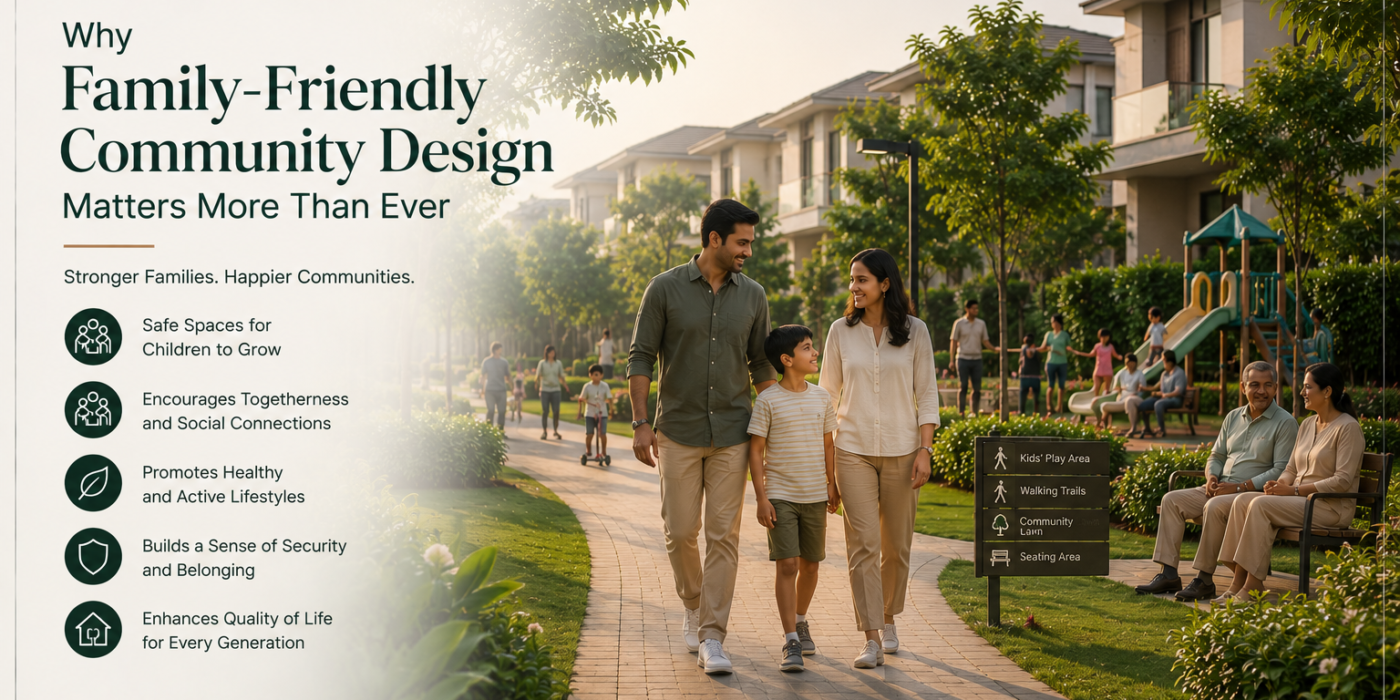
Recreational amenities in villa communities strengthen family bonds primarily by removing the one obstacle that most consistently prevents families from doing things together: friction. When a swimming pool, an open lawn, or a play area is a two-minute walk from the front door rather than a thirty-minute drive away, the threshold for using it drops dramatically. Families don’t need to plan for it, pack for it, or coordinate schedules around it. They just go, and they go often enough that shared activity becomes a natural part of daily life rather than an occasional outing.

This matters particularly for families choosing between a villa in a planned community and a standalone property or an urban apartment. The villa itself provides space, but the community’s recreational infrastructure determines how that space connects to daily family life. A home with a large garden but no shared amenities keeps family activity contained to the private plot. A well-planned villa community extends that to pools, courts, clubhouses, and open green areas that serve different family members in different ways, making the daily texture of home life genuinely richer rather than just physically larger.

In this blog, we will look at why proximity is the most underrated amenity factor, which specific facilities build family bonds most consistently, and how to evaluate whether a community’s amenity offering will actually deliver the family lifestyle it promises.

Why Proximity Is the Real Amenity

The difference between an amenity five minutes’ walk away and one that requires driving is not a minor convenience gap. It’s the difference between something families use spontaneously and something they use occasionally when they’ve specifically planned for it. Spontaneous use is where genuine family bonding happens: the unplanned evening swim after dinner, the weekend morning where children drift to the play area and parents follow with coffee, the impromptu cricket game on the lawn that runs longer than anyone expected.

External clubs, parks, and sports facilities can be excellent without generating this kind of spontaneous use, simply because the activation energy of getting there filters out all but the most deliberately planned visits. Community recreational amenities that sit within the daily footprint of the home don’t have this filter. They participate in family life in a way that external facilities, however well-appointed, rarely do.

The Amenities That Build Family Bonds Most Effectively

Not all amenities contribute equally to family connection. The ones that work best share a common trait: they accommodate multiple family members doing different things in the same space simultaneously rather than segregating activity by age or interest.

Swimming Pools for Cross-Age Family Activity

A pool is one of the few recreational spaces where young children, teenagers, and adults genuinely enjoy being at the same time rather than tolerating each other’s presence. Children play, teenagers socialise, and parents swim or simply watch from the edge, all within the same space and without anyone compromising their preferred activity. This simultaneity is exactly what makes pool time reliably family time rather than just recreation.

Open Lawns and Garden Spaces

Large, open green areas serve a similarly flexible function. Children use them freely, parents find them restful, and older family members or grandparents visiting for the day can sit comfortably while the rest of the family moves around them. Unstructured open space accommodates improvised games, picnics, festivals, and quiet evenings in a way that purpose-built facilities with fixed equipment often can’t.

Children’s Play Areas Within Sight of Adult Spaces

The placement of children’s play areas relative to adult seating and relaxation zones matters considerably to how much parents actually use the outdoor space. A play area visible from a shaded seating section means parents can be present and relaxed simultaneously rather than having to choose between supervising children and their own rest. This design detail, rarely mentioned in brochures, is one of the more significant factors in whether families spend genuine time in community outdoor spaces.

Sports Courts and Active Recreation

Badminton courts, basketball areas, and multi-purpose sports surfaces extend amenity relevance to older children and teenagers who have outgrown play equipment but haven’t yet reached the gym. They also create opportunities for parents and older children to play together rather than in parallel, which shifts the dynamic from supervision to shared activity.

Clubhouse Spaces for Shared Occasions

A well-designed clubhouse serves family bonding in a different register from outdoor amenities: it’s where birthday celebrations, family dinners, and festive gatherings happen without the logistical overhead of a venue booking. Hosting a child’s birthday party within the community rather than at an external venue keeps the event relaxed, keeps children within a familiar and safe space, and makes the effort of celebrating together considerably lower.

What Amenities Should a Good Family-Friendly Villa Community Have?

The most useful family amenities tend to be the ones that actually get used across multiple times a week rather than on special occasions only. A practical list for families evaluating a community:

  • A swimming pool with a shallow section suitable for young children alongside adequate depth for adults
  • Open lawn or garden space that accommodates unstructured outdoor activity without requiring booking or scheduling
  • A children’s play area with age-appropriate equipment and a surface safe for falls
  • At least one sports court suitable for older children and teenagers
  • A clubhouse or multipurpose hall for larger family gatherings and community events
  • Adequate lighting across outdoor amenity areas for evening use, since many family outdoor moments happen after the working day

Amenities like elaborate themed water features, mini golf installations, and similarly niche facilities photograph well but contribute less to daily family life than the basics above executed at a high standard.

How Community Lifestyle Amenities Create a Social Environment for Children

Recreational amenities in villa communities do something for families beyond the direct activity they enable: they create the conditions for children to build friendships within the community rather than relying entirely on school-based social connections. A child who uses the community pool and play area regularly meets the same group of neighbourhood children repeatedly, and those repeated encounters build genuine friendships that extend back to the home environment rather than staying school-specific.

This matters to families more than it’s often articulated during a property search, because the social environment children grow up in shapes their experience of home as much as the home itself does. A community where children have friends within walking distance produces a different childhood experience from one where all social life requires coordination and travel.

Amenities Across Life Stages: What Families Need at Different Points

A villa community’s amenity offering serves a family differently depending on where the family is in its life stage. Young children with primary-school-age kids prioritise safe play areas and pool access. Families with teenagers need sports courts, open spaces for informal gathering, and enough variety to hold adolescent interest. Families at a stage where grandparents visit regularly value accessible, shaded seating and low-impact activity options alongside more active amenities.

Communities with varied provision serve families better across longer timeframes because the amenity set remains relevant as children grow rather than becoming less useful once the play equipment is outgrown. Geown Properties designs the recreational amenity mix within their 3 and 4 BHK villa communities with exactly this cross-stage family lifestyle in mind, ensuring that what the community offers remains genuinely useful rather than just impressive at the point of sale. More detail about current projects is available at www.geownproperties.com.

Do Villa Community Amenities Actually Get Used or Are They Just for Show?

This is one of the most useful questions a buyer can ask during a site visit, and the answer is usually visible with a little attention. A few indicators that distinguish well-used amenities from ones that look better in renders than in practice:

  • The pool and play area show signs of regular use: mild wear on surfaces, towel hooks being used, children present during the visit
  • Maintenance quality reflects active use management rather than a freshly cleaned show space that rarely sees residents
  • Residents using outdoor spaces during the visit rather than all amenities sitting empty on a weekend afternoon
  • Resident association activity around amenity scheduling and maintenance decisions, which suggests genuine engagement rather than passive ownership
  • The clubhouse shows evidence of recent events: a notice board with upcoming activities, or minor setup in progress, rather than a pristine room that’s clearly rarely opened

Conclusion

Recreational amenities in villa communities earn their value by making shared family activity the easy choice rather than the effortful one. When good facilities are close enough to use spontaneously, families use them consistently, and consistent shared activity is where genuine family bonds form and strengthen over time rather than in the occasional planned outing.

The families who get the most from a villa community’s recreational offering are the ones who chose a community where amenities were planned for daily use rather than sales impression. The difference between the two shows up in how residents actually spend their time together, and that’s ultimately the measure that matters most when the home is where family life happens.

Cars parked at the gate to the villas and a quite road
CategoriesBlog

The Importance of Visitor Parking in Premium Villa Communities

Visitor parking in villa communities rarely makes it onto the headline amenity list in a developer’s brochure, but it consistently makes it onto the list of complaints residents raise after moving in. The reason is straightforward: villas attract more frequent, larger-scale hosting than most other residential formats, and when the community hasn’t been planned with adequate visitor vehicle provision, the friction shows up every time someone hosts a birthday gathering, a family dinner, or a festive celebration.

This gets overlooked during the purchase evaluation because buyers are typically focused on the villa itself during a site visit, the layout, the finishes, the private garden, and the headline amenities like the clubhouse and pool. Parking feels like an afterthought until the first time guests have to circle the internal roads looking for a spot, or until a neighbour knocks to say a visitor’s car is blocking their driveway. By then, the community is already home, and the problem is one to manage rather than avoid.

In this blog, we will see why villa communities specifically need more visitor parking than buyers often expect, what inadequate provision actually feels like to live with, and what to check during a site visit before the purchase is made.

Why Villa Communities Need More Visitor Parking Than Standard Gated Communities

The relationship between home size and hosting frequency is fairly consistent: larger homes accommodate larger gatherings, and villa residents tend to host more often and in greater numbers than apartment residents in the same community. A 3 or 4 BHK villa with a private garden and a generous living area is the kind of space where families host Sunday lunches, festival celebrations, children’s birthday parties, and overnight guests with regular frequency.

Each of these occasions brings vehicles that need somewhere to park within the community rather than on the street outside the gate. A gathering of twelve people arriving by car can generate six to eight visitor vehicles simultaneously, and this is entirely routine for villa residents who use their homes the way larger homes are meant to be used. When visitor parking provision has been calculated for a smaller, apartment-scale hosting pattern, the shortfall becomes apparent very quickly after the community is occupied.

What Happens When Visitor Parking Is Inadequate

The consequences of insufficient visitor parking don’t stay contained to an inconvenience at the gate. They cascade through the community in ways that affect everyone’s daily experience rather than only the residents directly hosting.

Internal Roads Used as Overflow Parking

When designated visitor parking fills up, vehicles default to whatever available surface exists, and in most gated communities that means internal roads. Once cars begin parking on internal roads regularly, the roads narrow effectively for moving traffic, pedestrians lose clear walking space, and the low-traffic environment that villa community residents specifically chose starts to erode. The problem compounds during festive seasons when multiple households host simultaneously.

Blocked Driveways and Neighbour Disputes

A visitor parking on an internal road often ends up partially or fully blocking a neighbouring villa’s driveway, sometimes unknowingly. This is one of the most consistent sources of neighbour friction in gated communities, since it creates a situation where a resident returning home can’t access their own property because of someone else’s guest’s car. Repeated incidents of this type corrode the neighbourly goodwill that community living depends on.

Disrupted Pedestrian and Play Spaces

Children using internal paths for cycling or play, and residents walking between their villas and community amenities, lose safety margin when vehicles overflow into non-designated spaces. The community’s usability as a pedestrian-friendly environment depends partly on vehicles staying where they’re supposed to, which depends on there being enough designated space to accommodate them.

A Premium Community That Stops Feeling Premium

This is the cumulative effect of all the above. A premium villa community where visitors routinely struggle to park, where internal roads have cars lining their edges on weekends, and where parking disputes have become a standing agenda item in resident association meetings doesn’t feel premium to live in, regardless of how well the clubhouse is appointed or how attractively the landscaping was designed.

How Many Visitor Parking Spots Should a Villa Community Have?

There’s no universally agreed ratio, but a practical benchmark for villa communities is roughly one visitor parking spot for every two to three villas, factoring in that multiple households may host simultaneously, particularly on weekends and during festive periods. Communities that fall significantly below this ratio tend to see parking overflow become a regular issue within the first year of occupation. Dedicated overflow zones for large-event occasions, separate from the standard visitor provision, are an additional sign that the developer has thought about peak demand rather than just average demand.

What Good Visitor Parking Design Actually Looks Like

Visitor parking quantity matters, but design quality determines whether the provision actually works as intended. A few specific indicators separate well-planned visitor parking from slots added as an afterthought:

  • Placement near villa clusters rather than concentrated in one corner of the community, so visitors don’t have a long walk and are less tempted to park closer illegally
  • Clear surface demarcation with properly painted bays and directional signage that first-time visitors can follow without confusion
  • Adequate lighting for evening and night visits, since many social occasions extend into the evening
  • Surface quality that remains usable during monsoon without pooling or becoming muddy, which affects both vehicle access and the community’s visual appearance
  • Separation from pedestrian pathways so that parking activity doesn’t create conflict with walking routes

Why Parking Quality Signals Overall Developer Thoughtfulness

A developer who has planned visitor parking carefully has, almost by definition, thought about what it actually feels like to host someone at a villa in their community rather than just what the community looks like when empty. Visitor parking is unglamorous infrastructure, it doesn’t photograph well and it doesn’t feature in architectural renders, which means developers who invest in it are doing so because they’re thinking about the resident experience rather than the sales presentation.

This logic extends to other practical infrastructure decisions: road widths, drainage planning, lighting coverage, and service access. Geown Properties applies this same lived-experience thinking to their 3 and 4 BHK villa projects, where infrastructure planning is treated as part of what makes premium living genuinely premium rather than just visually impressive. More about their current projects is available at www.geownproperties.com.

What Should I Check About Parking When Visiting a Villa Community?

A site visit reveals considerably more about parking provision than a brochure does. A few specific checks worth making:

  • Count the visitor parking slots and estimate the ratio relative to the total number of villas in the project
  • Visit on a weekend afternoon when residents are more likely to have visitors already present, since this shows actual parking usage patterns rather than an empty weekday picture
  • Walk the internal roads and check whether any vehicles are already parked on road edges or in non-designated spaces, since this during a viewing suggests the designated provision is already insufficient
  • Check lighting coverage over visitor parking areas and whether drainage appears adequate for monsoon conditions
  • Ask the sales or site team directly how visitor parking overflow is managed during festive periods or large events

Conclusion

Visitor parking in villa communities matters far more to daily quality of life than its absence from most developer brochures would suggest. For villa residents who use their homes for the kind of hosting that larger spaces naturally enable, adequate and well-designed visitor parking is the difference between a community that supports that lifestyle and one that quietly works against it every time guests arrive.

The buyers who avoid this particular post-purchase frustration are the ones who check parking provision specifically during their site visit rather than assuming it’s been handled adequately. In a premium villa community, the details that most affect how living there actually feels are often the practical infrastructure ones rather than the headline amenities, and parking sits firmly in that category.

a couple walking down the empty road with villas on its right
CategoriesUncategorized

Why Low Traffic Movement Makes Villa Communities More Peaceful

Low traffic villa communities offer a kind of quiet that most urban residents haven’t experienced since childhood, and it comes from something more deliberate than just having a gate at the entrance. It comes from how internal roads are designed, how vehicle movement is routed and slowed, and how pedestrian space is prioritised over through-traffic convenience. The result is a residential environment where the baseline sensory experience of being home is fundamentally calmer than what most people live with in high-density urban settings.

This matters more than buyers typically anticipate before they’ve actually lived it. The difference between a community where vehicles move constantly through shared internal roads and one where traffic is genuinely limited isn’t subtle once you’re on the inside of it. It shows up in how children use outdoor spaces, in how well you sleep, in how the morning feels when you step outside, and in the cumulative daily quality of life that’s difficult to quantify in a brochure but very easy to notice after a few weeks of living there.

In this blog, we will look at what low traffic design actually involves, how it changes everyday life in specific and tangible ways, and why villa communities tend to deliver this kind of environment more reliably than apartment complexes of comparable size.

What “Low Traffic” Actually Means Inside a Villa Community

A gate controls who enters a community. Low traffic design controls how vehicles move once they’re inside, which is a considerably more significant factor for day-to-day peacefulness. A poorly designed gated community can still have constant internal vehicle movement, noisy through-routes, and roads that function more like mini arterials than residential lanes.

Genuine low traffic design involves deliberate choices at the planning stage:

  • Internal road layouts that loop or terminate rather than creating straight through-routes that invite faster vehicle movement
  • Speed control features like textured surfaces, gentle curves, and entry narrowing that naturally slow vehicles without requiring constant signage
  • Dedicated pedestrian pathways that are physically separated from vehicle roads rather than sharing the same surface
  • Parking placement that keeps vehicles away from garden areas, children’s play zones, and the immediate surroundings of villa entrances
  • Resident-only vehicle access policies that prevent service and delivery traffic from moving freely through the entire community rather than being directed to specific zones

Each of these produces a measurable reduction in the volume and speed of vehicle movement inside the community, and their combined effect is what makes the internal environment feel genuinely different to live in.

How Low Traffic Movement Changes Daily Life at Home

The practical effects of living in a low traffic villa community show up across almost every part of daily routine, often in ways that feel disproportionately significant relative to the simple fact of having fewer vehicles moving nearby.

Quieter Outdoor Spaces and Natural Soundscapes

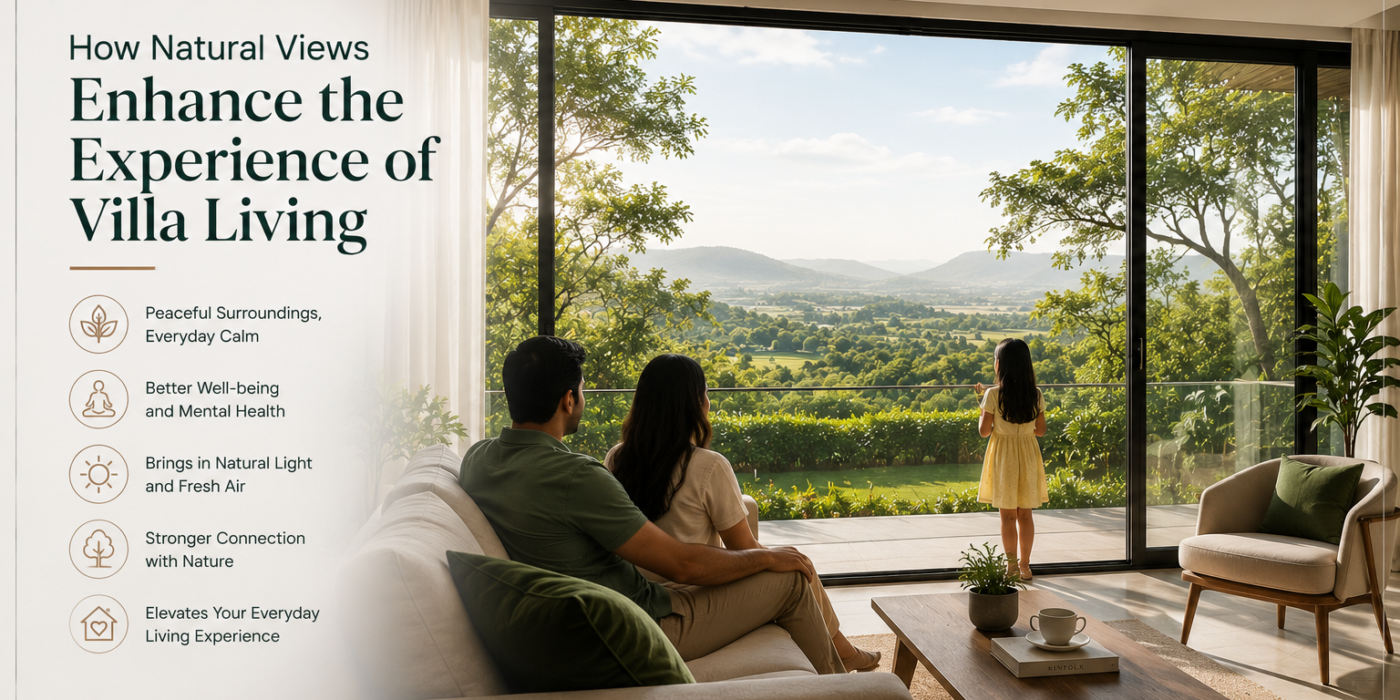
When vehicle noise drops below a certain threshold, the ambient sound environment of a residential community changes character entirely. Bird sounds, wind in trees, children’s voices, and the general texture of a quiet neighbourhood become the dominant soundscape rather than engine noise and tyre sound. Sitting in a garden or on a covered veranda becomes a genuinely restful experience rather than one that requires mentally filtering out traffic.

Safer Play Areas for Children

Children in low traffic communities use outdoor space fundamentally differently from those in higher-traffic environments. Internal streets become usable for cycling and play rather than requiring constant adult supervision at the roadside. Parents have a meaningfully lower level of background anxiety about children being near road surfaces, which changes the quality of outdoor time for the whole family rather than just for the children directly.

More Comfortable Walking Between Amenities

Walking from a villa to a community clubhouse, a garden, or a neighbour’s home feels different when the path doesn’t require navigating vehicle movement. Pedestrian-priority internal layouts make casual walking the natural default rather than something that requires attention and caution, which affects how much residents actually use community amenities and interact with neighbours.

Better Sleep and Reduced Stress at Home

Traffic noise is one of the most consistently documented environmental factors affecting sleep quality and background stress levels. Even moderate traffic sound during night hours disrupts sleep patterns in ways residents often don’t consciously attribute to the cause. Low traffic environments remove this factor almost entirely for villa residents, since the combination of ground-level living, greater distance between homes, and reduced internal vehicle movement produces significantly lower ambient noise levels than urban apartment living.

How Do Gated Villa Communities Control Traffic Inside?

The most effective communities use a combination of physical design and operational policy rather than relying on either alone. Physical design, road layout, speed management features, and separated pedestrian paths, works passively without requiring ongoing enforcement. Operational policies, like restricting vendor and delivery access to specific entry points and times, and requiring visitor vehicles to park near the entrance rather than driving to individual villas, reduce discretionary vehicle movement. The communities that manage traffic most successfully are those where both layers are present from the planning stage rather than retrofitted after residents move in.

Why Villa Communities Are Quieter Than High-Density Apartment Complexes

The structural reasons for this are worth understanding clearly. An apartment complex of equivalent resident count concentrates all movement through shared infrastructure: lobbies, corridors, lifts, and stairwells all become movement channels that generate noise and activity directly adjacent to living spaces. Vehicle movement concentrates in basement parking areas directly below habitable floors, and pedestrian movement concentrates outside apartment doors.

A villa community distributes the same resident count across ground-level homes with direct individual access, which means movement is dispersed across the site rather than concentrated through shared bottlenecks. Lower density per acre also means less total vehicle movement within the same physical area. Geown Properties’ 3 and 4 BHK villas are designed with exactly this low-density, ground-level living model in mind, where the spatial distribution of homes is part of what produces the quieter environment rather than just the gate at the entrance. More detail on current projects is available at www.geownproperties.com.

The Long-Term Value of Quiet Residential Neighbourhoods

Demand for peaceful gated communities tends to hold remarkably well through property market cycles, since the factors that make a quiet residential neighbourhood desirable, low noise, safe outdoor spaces, and a calm daily environment, are consistently valued by a wide range of buyers rather than by a niche demographic. Families with young children, professionals working partly from home, and older buyers prioritising wellbeing all rank low traffic and quiet highly when making residential choices.

This breadth of demand translates into resilient property values. Communities that deliver genuine quietness rather than just marketing it tend to attract serious, long-term buyers rather than speculative investors, which produces a more stable and better-maintained community over time.

Is a Villa Community Actually Quieter Than an Apartment Complex?

Generally yes, and the difference comes from several compounding factors rather than one single advantage:

  • Ground-level living means no noise from floors above or lift machinery adjacent to living spaces
  • Greater horizontal distance between homes reduces the transmission of neighbour noise compared to shared walls in apartment buildings
  • Lower internal resident density means less total vehicle and pedestrian movement within the community footprint
  • Direct villa access means no shared corridors, lobbies, or stairwells generating noise outside front doors
  • Garden and landscaping buffers between homes absorb sound in ways that hard urban surfaces and building facades don’t

Conclusion

Low traffic villa communities earn their peacefulness through deliberate design choices that go considerably beyond what a gated entrance alone provides. Internal road layout, pedestrian priority, speed management, and access control together produce an environment where the daily experience of being home is quietly but consistently better than what most urban residential settings deliver.

For buyers weighing the difference between villa and apartment living, the traffic and noise dimension is often underestimated until it’s experienced firsthand. Once you’ve spent time in a community where children play freely in open spaces and the morning sounds like a garden rather than a road, the comparison becomes one of the easier decisions in the entire property search.

woman-with-phone-resting-lying-hammock-with-mobile-phone-scaled
CategoriesBlog

How Well-Planned Villa Communities Adapt to Future Lifestyle Needs

Buying a villa is one of the biggest decisions you will make. While location, design, and price are important, it is equally important to think about how your home will support your lifestyle in the years ahead.

Your needs today may be very different from your needs ten or twenty years from now. Your family may grow, your work style may change, or you may simply want a home that offers more comfort and convenience as you get older. This is why choosing future-ready villa communities is a smart investment.

A well-planned villa community is designed not only for today’s lifestyle but also for the future. From flexible home designs to modern infrastructure and community amenities, these developments help homeowners enjoy long-term villa living without needing to relocate.

Importance of Adaptable Villa Layouts

1. Flexible Home Designs 

A home should adapt to your changing lifestyle instead of limiting it.

Modern developers now focus on adaptable villa layouts that offer flexibility for different stages of life.

For example, an extra room can become:

  • A home office
  • A children’s bedroom
  • A guest room
  • A hobby space
  • A study area

As your family’s needs change, your villa can easily change with you.

2. Spaces That Support Remote Work

Working from home has become a normal part of life for many professionals.

Future-ready villa communities are designed with this in mind by offering homes with quiet workspaces, better natural lighting, and layouts that make it easier to separate work from personal life.

Having enough space to work comfortably from home adds long-term value to your property.

3. Infrastructure That Meets Future Needs

A good villa community is built with long-term planning.

Developments with wide internal roads, proper drainage systems, reliable water supply, power backup, and efficient waste management continue to serve residents well for many years.

Quality infrastructure reduces maintenance issues and improves the overall living experience.

4. Community Amenities That Stay Relevant

Lifestyle needs continue to evolve. Well-planned villa communities include amenities that people of all ages can enjoy.

These often include:

  • Landscaped parks
  • Walking and jogging tracks
  • Children’s play areas
  • Clubhouses
  • Fitness centres
  • Indoor games
  • Community gathering spaces

These facilities encourage healthy living and create opportunities for families to connect with their neighbours.

5. Better Safety for Every Stage of Life

Safety is an important consideration for every homeowner. Future-ready villa communities often include:

  • Gated entrances
  • CCTV surveillance
  • Security personnel
  • Well-lit streets
  • Visitor management systems

These features provide peace of mind for families, children, and senior citizens.

6. Sustainable Features That Reduce Future Costs

Many modern villa communities are designed with sustainability in mind.

Features such as rainwater harvesting, energy-efficient lighting, water conservation systems, and green landscaping help reduce environmental impact while lowering long-term maintenance costs.

Sustainable communities also contribute to healthier living environments.

7. Homes That Support Long-Term Villa Living

As homeowners grow older, accessibility becomes increasingly important.

Wide pathways, comfortable stair designs, spacious rooms, and practical layouts make villas easier to use for every age group.

These thoughtful design elements allow homeowners to enjoy long-term villa living without worrying about frequent renovations or relocating later in life.

8. Strong Investment Potential

Homes designed for future lifestyles tend to remain attractive in the real estate market.

Buyers today look beyond square footage. They value flexible layouts, quality infrastructure, modern amenities, and sustainable living.

Choosing a villa in a well-planned community increases the chances of better resale value and stronger appreciation over time.

9. A Better Community Experience

A home is more than four walls.

Living in a thoughtfully planned community creates opportunities to build relationships, participate in community events, and enjoy a better quality of life.

Open spaces, recreational facilities, and family-friendly surroundings make everyday living more enjoyable.

Conclusion

The best home is one that continues to meet your needs as life changes. Investing in future-ready villa communities gives you the flexibility, comfort, and convenience needed for every stage of life.  

At Geown Properties, we design villa communities that are built for today’s lifestyle and tomorrow’s needs. Our projects combine quality construction, modern amenities, and well-planned living spaces to help families enjoy lasting comfort and value. If you’re looking for a villa that will grow with you, explore Geown Properties and find a home that’s ready for the future.


stylish-caucasian-woman-trendy-panama-waist-neon-bag-roof-bangkok-with-mobile-phone-scaled
CategoriesBlog

How Outdoor Recreational Spaces Add Value to Villa Living

Investing in your home is often synonymous with upgrading kitchens and bathrooms. However, in recent years, homeowners have begun to realize the invaluable benefits of enhancing their outdoor living spaces. 

With a growing focus on outdoor environments, creating functional, aesthetically pleasing outdoor areas can not only elevate your lifestyle but also significantly increase your property’s market value. 

In this article, we will explore why investing in outdoor recreational spaces in villas can be a wise financial decision.

The Rising Trend of Outdoor Living Spaces

According to recent observations, outdoor areas and villa community amenities are gaining traction among homeowners as essential extensions of their living spaces. As a result, many are prioritizing outdoor renovations, including the construction of decks, patios, and even swimming pools. 

While traditional interior renovations like kitchen and bathroom upgrades continue to lead the list for maximum return on investment, these outdoor enhancements are starting to stand out for their potential benefits.

1. Value Recouped

One of the most compelling reasons to invest in outdoor living spaces is the financial return. An outdoor addition, such as a deck or swimming pool, can recoup approximately 65% to 90% of its installation costs upon sale. This investment, therefore, speaks directly to homeowners looking to boost property value without completely reinventing their spaces.

  • Decks and Patios: Low-maintenance decks and patios are amongst the most sought-after features, offering homeowners a comfortable space for relaxation and entertainment while also enhancing the aesthetic appeal of your property.
  • Landscaping: Thoughtfully designed gardens, flowering plants, or sustainable landscaping can also help increase curb appeal, thereby improving overall property value.

2. Enhancing Lifestyle with Outdoor Spaces

Beyond financial benefits, outdoor living spaces greatly enrich homeowners’ lifestyles. Research highlights the positive correlation between spending time outdoors and improved mental health.

  • Stress Reduction: Nature has been shown to alleviate stress, leading to a better mood and overall mental well-being. By creating inviting outdoor areas, you can curate personal retreats right in your backyard.
  • Social Spaces: Outdoor living areas serve as excellent venues for gatherings, allowing homeowners to host family and friends, fostering social connections in a relaxed environment.

3. Environmental and Cost Benefits

Integrating functional outdoor spaces into your property can lead to reductions in maintenance costs and environmental impact.

  • Water Conservation: Implementing features like low-maintenance patios reduces the need for extensive grass lawns, which in turn helps conserve water and lower utility costs.
  • Sustainable Practices: Utilizing environmentally friendly materials in the construction of outdoor spaces contributes to sustainable living by minimizing waste and environmental footprint.

Key Considerations for Outdoor Renovation

When considering an outdoor renovation, keep these factors in mind to ensure your investment is worthwhile:

  1. Design & Functionality: Think about how you intend to use your outdoor space, whether for entertainment, relaxation, or gardening and design accordingly.
  2. Materials: Choose durable, low-maintenance materials that stand up to local weather conditions.
  3. Consult Professionals: Working with professional designers or contractors can yield innovative ideas and ensure quality construction.
  4. Zoning Regulations: Always check local zoning laws, which may impact your renovation plans.

Several studies indicate that well-designed outdoor spaces can significantly increase property value. Features like:

  • Patios: According to the National Association of Realtors, well-maintained patios can add as much as 12% to your home’s value.

  • Pools: Homes with pools can see a return on investment of around 7% to 10%, depending on location and demand.

  • Landscaping and Hardscaping: The key to raising your home’s value often lies in the first impression, and attractive landscaping certainly contributes.

How to Finance Your Outdoor Investment

Investing in outdoor enhancements doesn’t necessarily need to be a financial burden. Many homeowners use creative financing strategies including:

  • Home Equity Loans: These allow homeowners to leverage the equity built in their homes to fund such improvements.
  • Refinancing: Refinancing to pull out cash can provide the means to invest in your outdoor space.
  • Home Equity Lines of Credit (HELOC): This is another option allowing access to funds while keeping repayment flexible.

Conclusion

Investing in outdoor recreational spaces in villas is more than just enhancing aesthetics. It’s a strategic decision that can amplify your home’s value, improve your quality of life, and contribute to environmental sustainability. Whether installing an elegant deck or a serene patio, the benefits of outdoor living spaces are undeniable. As the trend continues to grow, consider your outdoor areas valuable extensions of your home rather than mere afterthoughts.

If you are looking for the best villas in Bangalore, contact Geown Properties. 

adorable-baby-with-parents-park
CategoriesBlog

The Hidden Benefits of Living in a Community Designed for Families

Buying a home is not just about choosing the right villa. It is also about choosing the right community. The people around you, the amenities available, and the environment your family grows in can have a lasting impact on your quality of life.

Today, many homebuyers are choosing family-oriented villa communities because they offer much more than beautiful homes. They provide a safe, welcoming environment where families can build relationships, children can grow with confidence, and everyday life becomes more enjoyable.

Let’s explore the hidden benefits of community living and why a family-friendly villa lifestyle is becoming the preferred choice for modern families.

Benefits of Community Living

1. A Safe Place for Children to Grow

One of the biggest advantages of living in a family-focused community is safety.

Gated villa communities often feature controlled entry points, security personnel, CCTV surveillance, and well-lit streets. Parents can feel more comfortable knowing their children have secure spaces to play, cycle, and spend time outdoors.

Instead of staying indoors, children can enjoy parks, playgrounds, and open spaces while developing confidence and independence.

2. A Strong Sense of Community

Life feels different when you know your neighbours.

In family-oriented villa communities, people often interact during evening walks, community events, and weekend activities. Over time, neighbours become friends who support one another during both everyday moments and special occasions.

This sense of belonging creates a warm and welcoming environment for every member of the family.

3. Better Lifestyle for Every Age Group

A good community is designed for everyone.

Children enjoy play areas, teenagers have space for sports and outdoor activities, adults benefit from walking paths and fitness facilities, while senior citizens can relax in peaceful green spaces.

This balanced environment allows every family member to enjoy an active and comfortable lifestyle without leaving the community.

4. Encourages an Active Lifestyle

Living close to parks, gardens, jogging tracks, and recreational spaces naturally encourages healthy habits.

Morning walks, cycling with children, outdoor games, and evening strolls become part of daily life. Instead of spending more time indoors, families are motivated to stay physically active together.

Small lifestyle changes like these can contribute to better health over the years.

5. More Opportunities for Children to Socialise

Children learn valuable life skills through everyday interactions.

Living in a family-friendly villa lifestyle gives them opportunities to make friends, work together during games, celebrate festivals, and participate in community events.

These experiences help improve communication skills, teamwork, confidence, and emotional development.

6. Peaceful Living Away from City Stress

Many villa communities are planned in locations that offer easy access to the city while maintaining a quieter environment.

With less traffic, lower noise levels, cleaner surroundings, and more greenery, families can enjoy a peaceful lifestyle without feeling disconnected from schools, workplaces, hospitals, and shopping centres.

This balance between convenience and calm is one of the biggest reasons families choose villa communities.

7. Well-Planned Amenities Add Everyday Comfort

Modern villa communities are designed to make daily life easier.

Depending on the project, residents may enjoy amenities such as:

  • Landscaped parks
  • Children’s play areas
  • Clubhouse
  • Indoor games
  • Fitness centre
  • Walking tracks
  • Community hall
  • Sports courts
  • Green open spaces

Having these facilities within the community saves travel time and encourages families to spend more quality time together.

8. Better Long-Term Property Value

Homes located in well-planned family communities often remain attractive to future buyers.

As demand continues to grow for secure, well-maintained residential developments, villas in quality communities have strong potential for long-term value appreciation.

This makes buying a villa not only a lifestyle decision but also a smart investment for the future.

9. Everyday Life Becomes More Enjoyable

Sometimes, the biggest benefits are the simplest ones.

Watching your children play safely outdoors, greeting familiar neighbours during an evening walk, celebrating festivals together, or relaxing in green surroundings all contribute to a happier daily life.

These experiences create lasting memories and make a house truly feel like home.

Find Your Ideal Family Community with Geown Properties

The right home is more than four walls; it is the community that surrounds it.

At Geown Properties, we create thoughtfully planned villa communities that combine modern living with safety, comfort, and a strong sense of belonging. Our projects are designed to support a family-friendly villa lifestyle with quality construction, well-planned amenities, and peaceful surroundings.

If you are looking for a home where your family can grow, connect, and thrive, explore the family-oriented villa communities by Geown Properties and take the first step toward a better way of living.


full-shot-family-ready-play-badminton-scaled
CategoriesUncategorized

How Villa Communities Support Better Outdoor Play Experiences for Children

Children today spend more time indoors than ever before. Between school, homework, television, and digital devices, outdoor play has become less common. However, outdoor activities remain an important part of a child’s physical, mental, and social development.

This is one of the reasons many families are choosing villa communities over traditional residential options. Modern villa communities are designed with children in mind, offering safe, open spaces where they can play, explore, and interact with others every day.

Well-planned outdoor play areas in villa communities create opportunities for children to stay active while giving parents peace of mind.

Why Outdoor Play Matters

Outdoor play is more than just fun. It helps children develop important life skills while supporting their overall health.

Regular outdoor activities help children:

  • Build stronger muscles and bones
  • Improve balance and coordination
  • Develop social and communication skills
  • Boost creativity and imagination
  • Reduce stress and anxiety
  • Build confidence and independence

Children who spend time outdoors also tend to develop healthier daily habits that continue into adulthood.

Benefits of Child-Friendly Villa Communities

1. A Safe Environment for Everyday Play

One of the biggest concerns for parents is safety.

Busy roads, traffic, and crowded public parks often limit the amount of time children can play outside. In contrast, child-friendly villa communities are designed with controlled access, internal roads, and dedicated recreational spaces.

Parents can feel more comfortable knowing their children are playing within a secure environment close to home.

2. Dedicated Outdoor Play Areas

Unlike apartments with limited open space, villa communities often include thoughtfully designed play zones.

These may include:

  • Children’s playgrounds
  • Open lawns
  • Cycling tracks
  • Walking paths
  • Multi-purpose play courts
  • Sand play areas
  • Green parks

These outdoor play areas in villa communities encourage children to spend more time away from screens and enjoy active play every day.

3. Encouraging an Active Lifestyle

Children naturally enjoy running, climbing, cycling, and exploring.

When these spaces are available, just a few steps from home, they are more likely to stay physically active.

Daily outdoor activities help improve:

  • Physical fitness
  • Flexibility
  • Coordination
  • Endurance
  • Healthy growth

Instead of spending evenings indoors, children can enjoy meaningful play with friends in a safe setting.

4. Building Friendships Within the Community

Outdoor spaces also help children develop strong social connections.

Playing together teaches valuable life skills such as:

  • Teamwork
  • Sharing
  • Communication
  • Problem-solving
  • Respect for others

Living in family-focused gated communities allows children to grow up with neighbours of similar age, making it easier to form lasting friendships.

Parents also benefit by becoming part of a close-knit and supportive neighbourhood.

5. Learning Through Nature

Many villa communities include landscaped gardens, trees, walking trails, and green open spaces.

These natural surroundings encourage children to:

  • Observe plants and birds
  • Appreciate nature
  • Explore their environment
  • Stay curious

Time spent outdoors has also been linked to better concentration, improved mood, and reduced stress. Growing up around greenery creates a healthier and happier lifestyle.

6. Less Screen Time, More Real Experiences

Technology is an important part of modern life, but excessive screen time can affect children’s health and development.

When attractive outdoor spaces are easily available, children naturally spend more time playing outside instead of using phones, tablets, or television.

Outdoor games help improve both physical fitness and emotional well-being while creating memories that last a lifetime.

7. A Better Lifestyle for the Whole Family

Villa communities are designed to benefit every member of the family. While children play outdoors, parents can:

  • Enjoy evening walks
  • Exercise on jogging tracks
  • Meet neighbours
  • Relax in landscaped gardens

This creates a healthier daily routine and encourages families to spend quality time together.

A home becomes more than just a place to live. It becomes a place where families grow, connect, and create lasting memories.

How to Choose the Right Villa Community

If you have children or are planning to start a family, consider these features before buying a villa:

  • Safe gated entrance
  • Spacious outdoor play areas
  • Parks and landscaped gardens
  • Walking and cycling tracks
  • Low-traffic internal roads
  • Community spaces for families
  • Well-maintained surroundings

These features contribute to a healthier and more enjoyable lifestyle for children and adults alike.

Conclusion

Every child deserves a safe place to play, learn, and grow. Choosing a home in a thoughtfully planned villa community can make a lasting difference to their childhood.

At Geown Properties, we create thoughtfully designed family-focused gated communities with spacious outdoor play areas in villa communities that encourage children to stay active, build friendships, and enjoy the outdoors every day. 

If you’re looking for a home where your family can thrive, explore Geown Properties and discover a community built for happier, healthier living.

people-meeting-discussing-neighbourhood-scaled
CategoriesBlog

What Makes a Villa Neighborhood Feel Safe and Welcoming

Finding the perfect home is about more than just the property itself; the neighborhood plays an equally vital role in your happiness and well-being. Choosing the wrong neighborhood can turn your dream home into a nightmare, impacting your daily life, safety, and even your home’s future resale value. 

In this blog, we will explore essential safe villa neighborhoods factors, ensuring that your home purchase aligns with your lifestyle and personal preferences.

Why Neighborhood Matters

When it comes to buying a home, the neighborhood should be your prime focus. Here’s why evaluating the area around your potential home is crucial:

  • Impact on Daily Life: Your neighborhood influences your daily routines, commute times, and recreational options.
  • Resale Value: Homes in desirable neighborhoods tend to retain their value better than those in less appealing areas.
  • Mental Health and Safety: A secure and inviting environment contributes to your peace of mind and overall happiness.

6 Key Considerations for Neighborhood Selection

To help you navigate this important decision, let’s look at five critical factors to consider family-friendly villa communities. 

1. Safety and Crime Rates

Your safety and sense of security are paramount. Research neighborhood crime rates on websites such as CityProtect, CrimeReports, or even local police department resources.

  • Look beyond overall crime statistics; analyze trends. Are crime rates going up or down?
  • Most issues might be property crimes rather than violent ones, indicating a safer neighborhood.
  • Speak to residents about their experiences and feelings of safety.
  • Assess the neighborhood at different times to gauge nighttime safety and noise levels.

2. Quality of Schools and Education Options

Even if you don’t have children, the quality of local schools can significantly impact home values. Areas with reputable schools tend to attract buyers and sell houses faster.

  • Research Ratings: Utilize platforms like GreatSchools or niche.com to check school performance metrics, including test scores and student-to-teacher ratios.
  • Future Projections: Keep an eye on enrollment trends. Are the schools overcrowded, or are new ones being built that could impact traffic and property taxes?

3. Commute Times and Access to Essentials

Evaluate how long it takes to commute to your workplace and access daily essentials. A beautiful home can lose its charm if you’re stuck in traffic for hours daily.

  • Make test drives at typical travel times to gauge traffic conditions. Consider locations like grocery stores, gyms, and schools when evaluating convenience.
  • Stand outside your potential home to listen for noise from nearby roads, trains, or highways that may disrupt peace.
  • Ensure easy access to hospitals, parks, and essential services for your lifestyle.

4. Future Development and Growth

Understanding a neighborhood’s future can help you make a sound investment. Research the city’s planning documents to identify upcoming projects.

  • Zoning Changes: Investigate zoning maps to see what new developments may be proposed.
  • Balance Growth and Congestion: While new developments can increase property values, they could also bring unwanted noise and congestion.

5. Neighborhood Vibe and Community Fit

Every neighborhood has its unique character. Finding a place that aligns with your personality and lifestyle is key.

  • Explore the Area: Walk or drive around the neighborhood at various times to gauge the activity levels and overall vibe.
  • Engage with the Community: Visit local coffee shops or parks and strike up conversations with residents to understand what they love and wish could be improved.
  • Personal Preferences: Consider whether you prefer a quiet area or a lively community with frequent social gatherings.

6. Infrastructure and Essential Services

A neighborhood may look attractive today, but good infrastructure is what makes it comfortable to live in for years to come. Before buying a villa in Bangalore, check whether the area has reliable roads, drainage, water supply, electricity, and internet connectivity.

Also, consider how close the neighborhood is to essential services such as hospitals, supermarkets, pharmacies, banks, and public transport. Easy access to these facilities makes daily life more convenient and adds long-term value to your property.

A well-developed neighborhood not only improves your quality of life but also increases the chances of better property appreciation in the future.

Conclusion

Choosing the safe villa neighborhoods is just as important as selecting the perfect home. By researching key factors like safety, schools, commute times, future development, and the community vibe, you can make an informed decision that meets your needs and enhances your quality of life.

If you’re looking for world-class amenities in a premium gated villa security neighborhood, check out Geown Properties.