
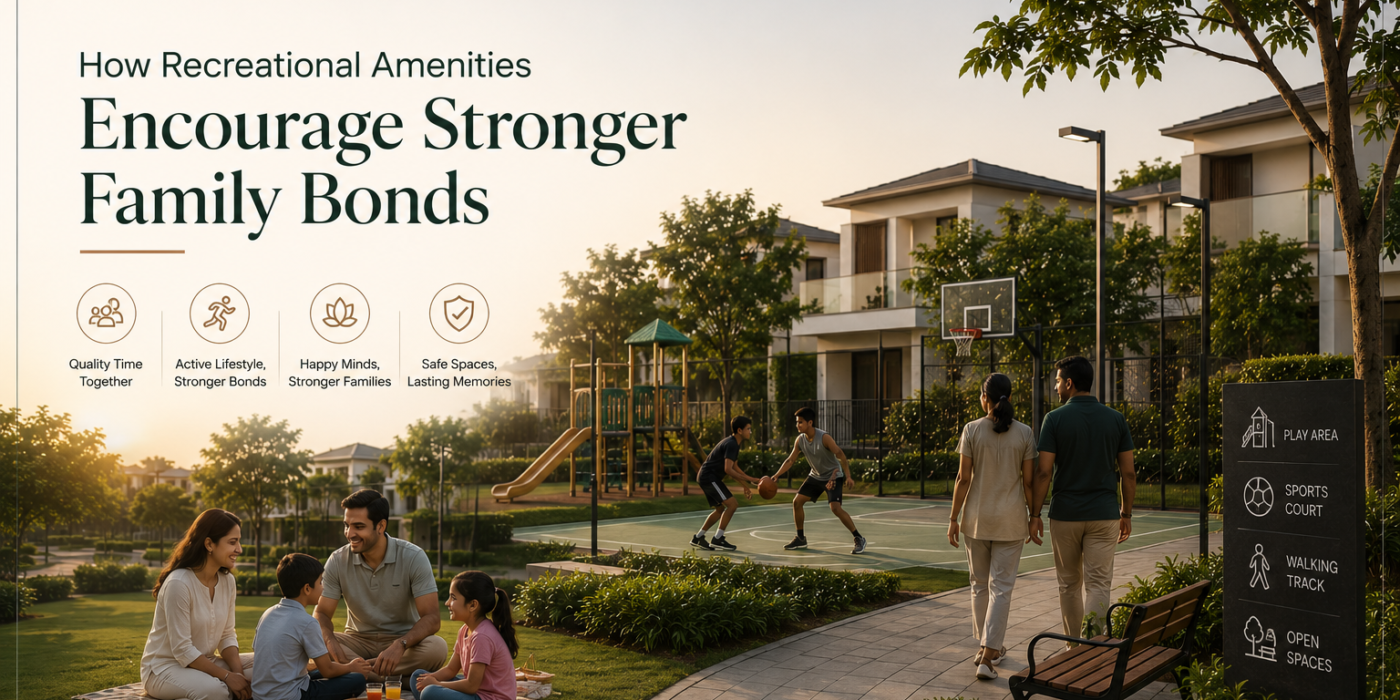
Recreational amenities in villa communities strengthen family bonds primarily by removing the one obstacle that most consistently prevents families from doing things together: friction. When a swimming pool, an open lawn, or a play area is a two-minute walk from the front door rather than a thirty-minute drive away, the threshold for using it drops dramatically. Families don’t need to plan for it, pack for it, or coordinate schedules around it. They just go, and they go often enough that shared activity becomes a natural part of daily life rather than an occasional outing.
This matters particularly for families choosing between a villa in a planned community and a standalone property or an urban apartment. The villa itself provides space, but the community’s recreational infrastructure determines how that space connects to daily family life. A home with a large garden but no shared amenities keeps family activity contained to the private plot. A well-planned villa community extends that to pools, courts, clubhouses, and open green areas that serve different family members in different ways, making the daily texture of home life genuinely richer rather than just physically larger.
In this blog, we will look at why proximity is the most underrated amenity factor, which specific facilities build family bonds most consistently, and how to evaluate whether a community’s amenity offering will actually deliver the family lifestyle it promises.
Why Proximity Is the Real Amenity
The difference between an amenity five minutes’ walk away and one that requires driving is not a minor convenience gap. It’s the difference between something families use spontaneously and something they use occasionally when they’ve specifically planned for it. Spontaneous use is where genuine family bonding happens: the unplanned evening swim after dinner, the weekend morning where children drift to the play area and parents follow with coffee, the impromptu cricket game on the lawn that runs longer than anyone expected.
External clubs, parks, and sports facilities can be excellent without generating this kind of spontaneous use, simply because the activation energy of getting there filters out all but the most deliberately planned visits. Community recreational amenities that sit within the daily footprint of the home don’t have this filter. They participate in family life in a way that external facilities, however well-appointed, rarely do.
The Amenities That Build Family Bonds Most Effectively
Not all amenities contribute equally to family connection. The ones that work best share a common trait: they accommodate multiple family members doing different things in the same space simultaneously rather than segregating activity by age or interest.
Swimming Pools for Cross-Age Family Activity
A pool is one of the few recreational spaces where young children, teenagers, and adults genuinely enjoy being at the same time rather than tolerating each other’s presence. Children play, teenagers socialise, and parents swim or simply watch from the edge, all within the same space and without anyone compromising their preferred activity. This simultaneity is exactly what makes pool time reliably family time rather than just recreation.
Open Lawns and Garden Spaces
Large, open green areas serve a similarly flexible function. Children use them freely, parents find them restful, and older family members or grandparents visiting for the day can sit comfortably while the rest of the family moves around them. Unstructured open space accommodates improvised games, picnics, festivals, and quiet evenings in a way that purpose-built facilities with fixed equipment often can’t.
Children’s Play Areas Within Sight of Adult Spaces
The placement of children’s play areas relative to adult seating and relaxation zones matters considerably to how much parents actually use the outdoor space. A play area visible from a shaded seating section means parents can be present and relaxed simultaneously rather than having to choose between supervising children and their own rest. This design detail, rarely mentioned in brochures, is one of the more significant factors in whether families spend genuine time in community outdoor spaces.
Sports Courts and Active Recreation
Badminton courts, basketball areas, and multi-purpose sports surfaces extend amenity relevance to older children and teenagers who have outgrown play equipment but haven’t yet reached the gym. They also create opportunities for parents and older children to play together rather than in parallel, which shifts the dynamic from supervision to shared activity.
Clubhouse Spaces for Shared Occasions
A well-designed clubhouse serves family bonding in a different register from outdoor amenities: it’s where birthday celebrations, family dinners, and festive gatherings happen without the logistical overhead of a venue booking. Hosting a child’s birthday party within the community rather than at an external venue keeps the event relaxed, keeps children within a familiar and safe space, and makes the effort of celebrating together considerably lower.
What Amenities Should a Good Family-Friendly Villa Community Have?
The most useful family amenities tend to be the ones that actually get used across multiple times a week rather than on special occasions only. A practical list for families evaluating a community:
- A swimming pool with a shallow section suitable for young children alongside adequate depth for adults
- Open lawn or garden space that accommodates unstructured outdoor activity without requiring booking or scheduling
- A children’s play area with age-appropriate equipment and a surface safe for falls
- At least one sports court suitable for older children and teenagers
- A clubhouse or multipurpose hall for larger family gatherings and community events
- Adequate lighting across outdoor amenity areas for evening use, since many family outdoor moments happen after the working day
Amenities like elaborate themed water features, mini golf installations, and similarly niche facilities photograph well but contribute less to daily family life than the basics above executed at a high standard.
How Community Lifestyle Amenities Create a Social Environment for Children
Recreational amenities in villa communities do something for families beyond the direct activity they enable: they create the conditions for children to build friendships within the community rather than relying entirely on school-based social connections. A child who uses the community pool and play area regularly meets the same group of neighbourhood children repeatedly, and those repeated encounters build genuine friendships that extend back to the home environment rather than staying school-specific.
This matters to families more than it’s often articulated during a property search, because the social environment children grow up in shapes their experience of home as much as the home itself does. A community where children have friends within walking distance produces a different childhood experience from one where all social life requires coordination and travel.
Amenities Across Life Stages: What Families Need at Different Points
A villa community’s amenity offering serves a family differently depending on where the family is in its life stage. Young children with primary-school-age kids prioritise safe play areas and pool access. Families with teenagers need sports courts, open spaces for informal gathering, and enough variety to hold adolescent interest. Families at a stage where grandparents visit regularly value accessible, shaded seating and low-impact activity options alongside more active amenities.
Communities with varied provision serve families better across longer timeframes because the amenity set remains relevant as children grow rather than becoming less useful once the play equipment is outgrown. Geown Properties designs the recreational amenity mix within their 3 and 4 BHK villa communities with exactly this cross-stage family lifestyle in mind, ensuring that what the community offers remains genuinely useful rather than just impressive at the point of sale. More detail about current projects is available at www.geownproperties.com.
Do Villa Community Amenities Actually Get Used or Are They Just for Show?
This is one of the most useful questions a buyer can ask during a site visit, and the answer is usually visible with a little attention. A few indicators that distinguish well-used amenities from ones that look better in renders than in practice:
- The pool and play area show signs of regular use: mild wear on surfaces, towel hooks being used, children present during the visit
- Maintenance quality reflects active use management rather than a freshly cleaned show space that rarely sees residents
- Residents using outdoor spaces during the visit rather than all amenities sitting empty on a weekend afternoon
- Resident association activity around amenity scheduling and maintenance decisions, which suggests genuine engagement rather than passive ownership
- The clubhouse shows evidence of recent events: a notice board with upcoming activities, or minor setup in progress, rather than a pristine room that’s clearly rarely opened
Conclusion
Recreational amenities in villa communities earn their value by making shared family activity the easy choice rather than the effortful one. When good facilities are close enough to use spontaneously, families use them consistently, and consistent shared activity is where genuine family bonds form and strengthen over time rather than in the occasional planned outing.
The families who get the most from a villa community’s recreational offering are the ones who chose a community where amenities were planned for daily use rather than sales impression. The difference between the two shows up in how residents actually spend their time together, and that’s ultimately the measure that matters most when the home is where family life happens.