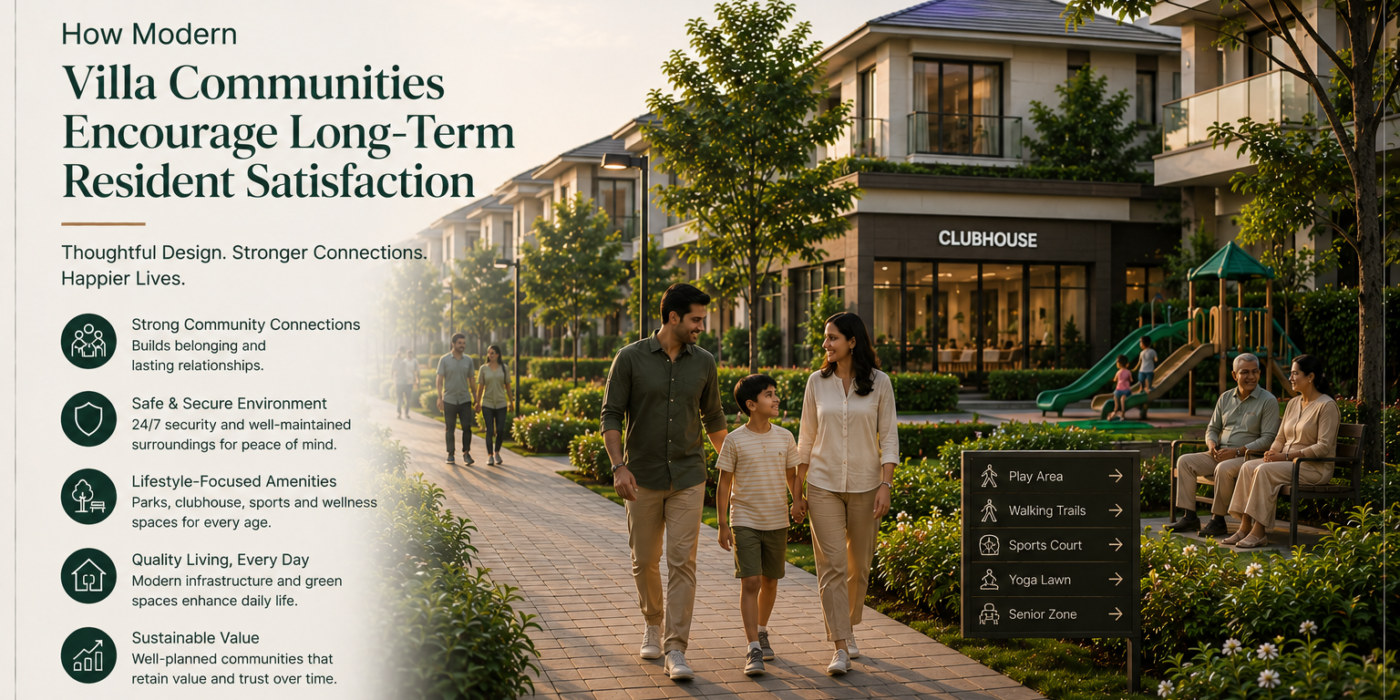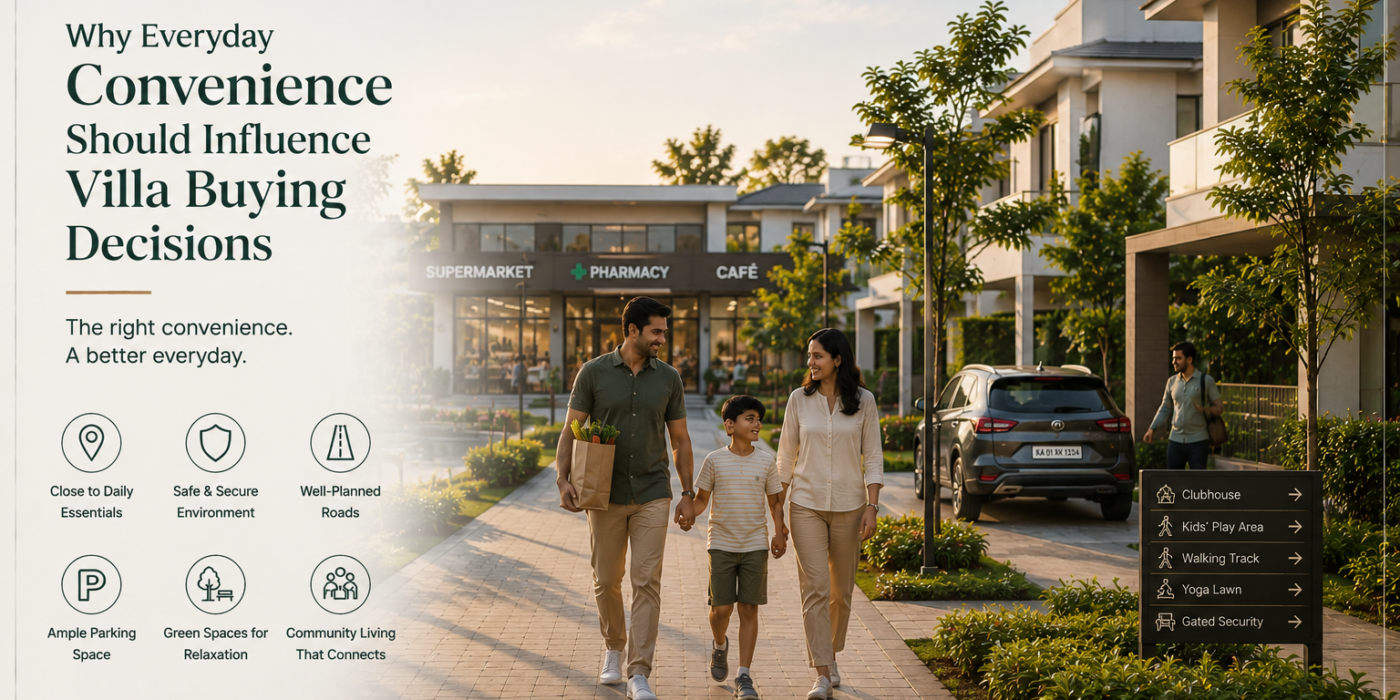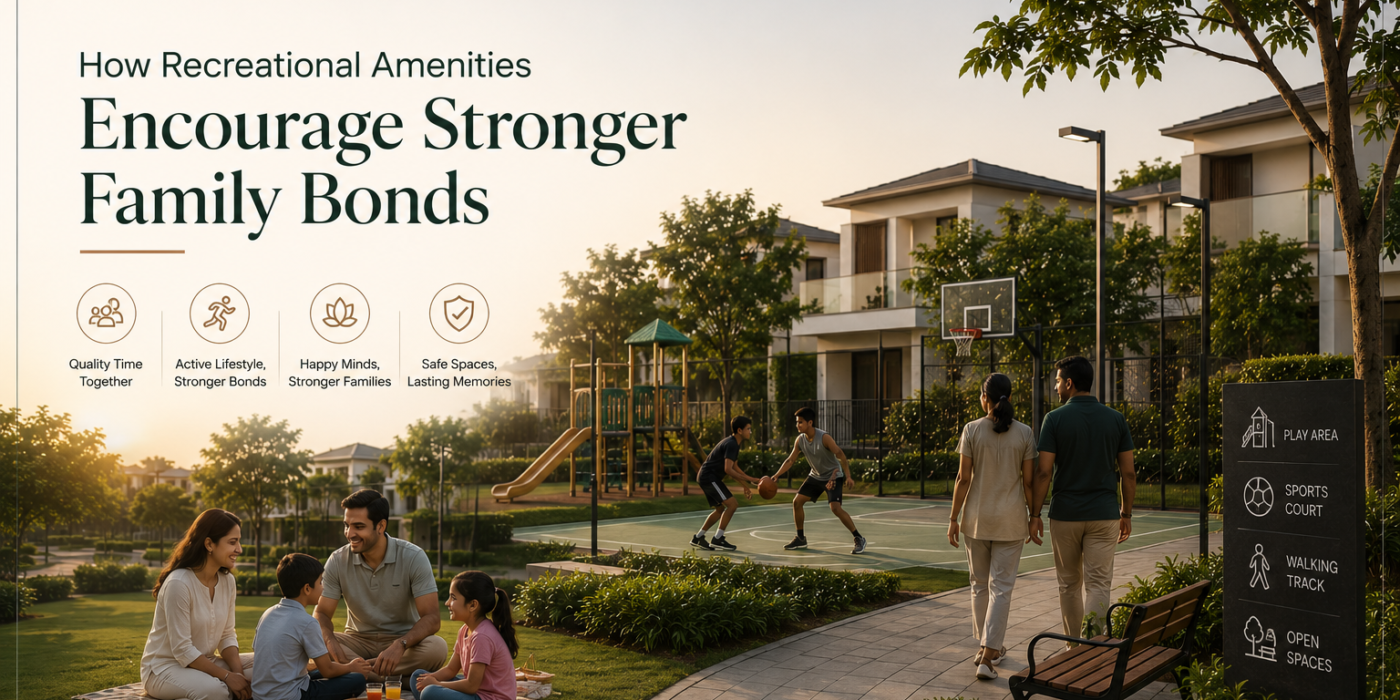
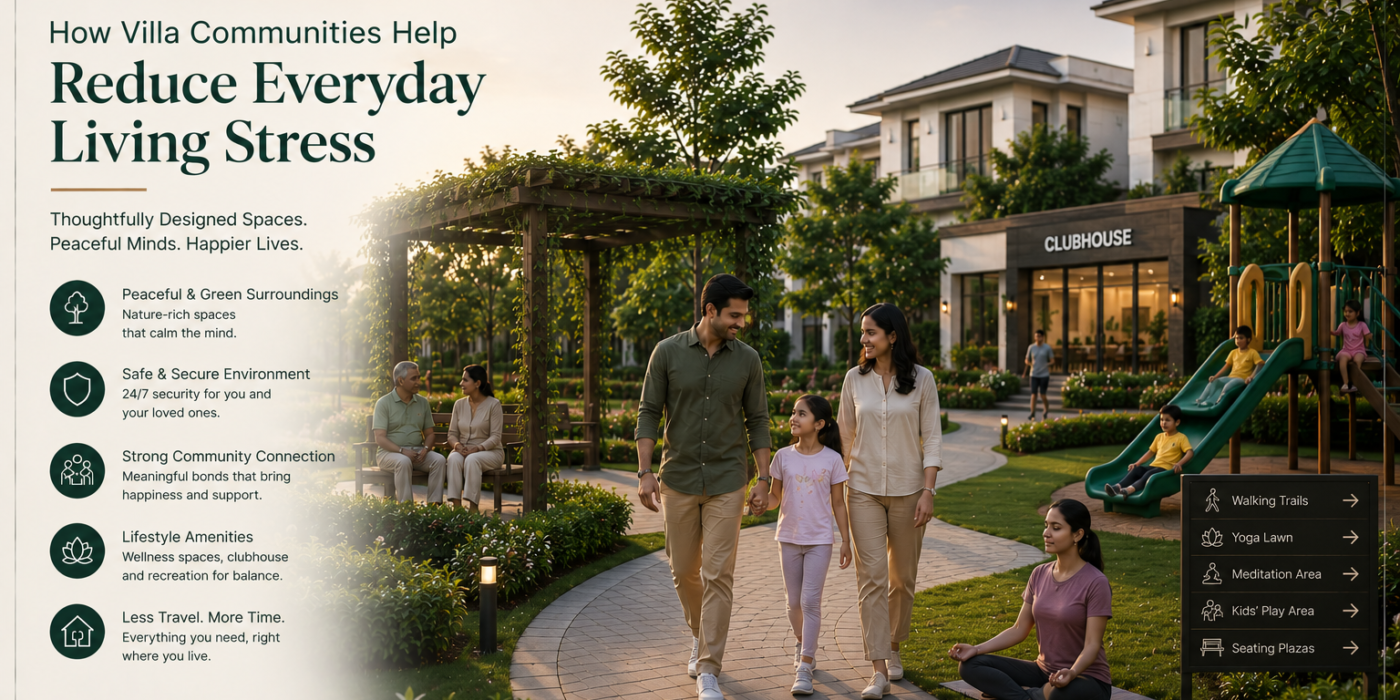
Residents enjoying walking and cycling in a green villa community with landscaped pathways and modern homes.
CategoriesUncategorized

How Villa Communities Encourage Healthier Outdoor Lifestyles

The way a community is designed quietly affects everyday life. More than people usually notice. Homes surrounded by greenery, walking spaces, and open air naturally encourage better routines, healthier movement, and calmer living. That’s one of the biggest reasons many families today are choosing villa communities focused on healthy villa living instead of crowded residential spaces with limited outdoor access.

Honestly, daily habits change faster when the environment supports them. A peaceful morning walk becomes easier when pathways are right outside the door. Children play outdoors more when there’s space to run safely. Even evenings feel lighter when families can step outside instead of staying boxed indoors after work or school.

This blog explores how villa communities encourage outdoor activity, healthier routines, family bonding, and a more balanced everyday lifestyle.

Open Spaces Naturally Change Routines

People spend more time outdoors when outdoor spaces actually feel inviting. Simple truth.

Large green areas, walking paths, and landscaped surroundings gently encourage movement without making it feel like effort. Residents begin taking short walks after dinner. Children start playing outside regularly. Weekend mornings become slower, calmer.

That’s one of the most noticeable advantages of healthy outdoor living inside villa communities. The lifestyle starts changing naturally, almost without realizing it.

Walking and Jogging Feel Easier Here

In many busy city areas, outdoor exercise becomes difficult. Traffic, noise, lack of safe walking areas… it adds up quickly.

Villa communities usually solve that problem through better internal layouts and open recreational zones.

Many communities include:

  • Jogging tracks
  • Walking pathways
  • Cycling areas
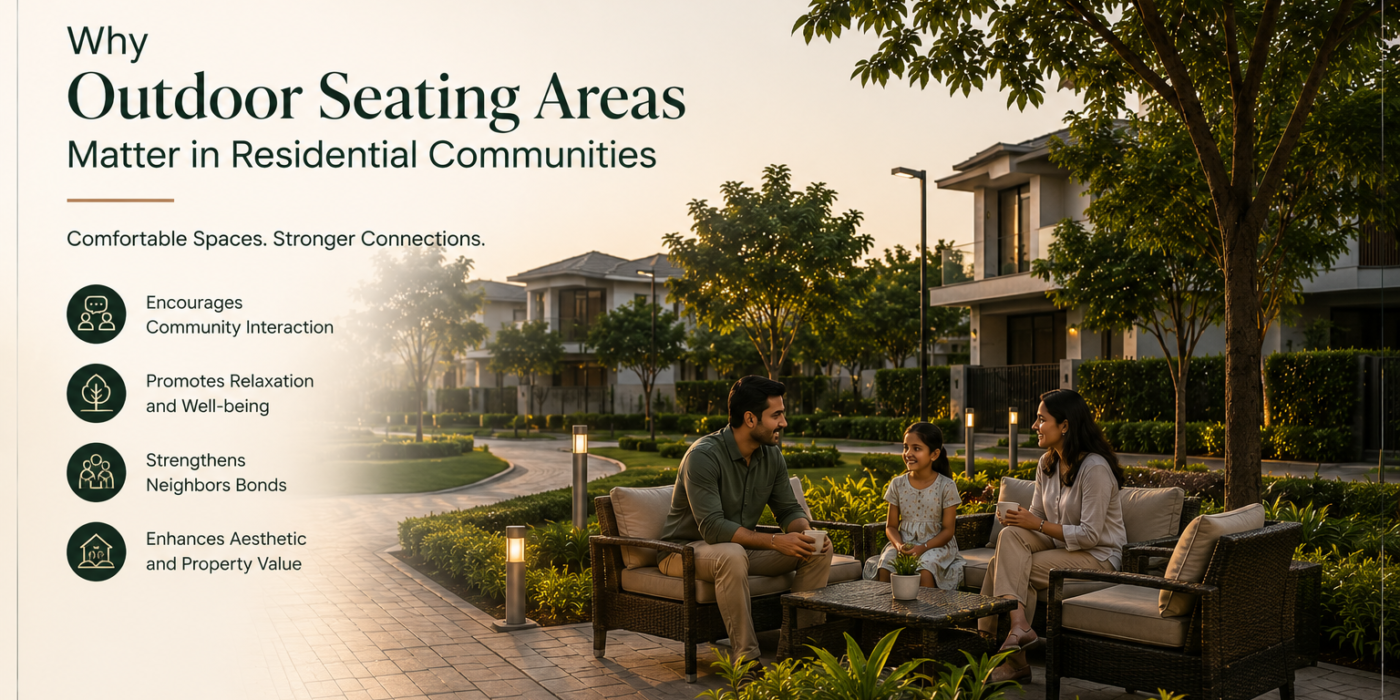
  • Outdoor seating zones
  • Landscaped parks

These spaces make healthy villa living feel practical instead of something people constantly postpone until “next Monday.”

And honestly, consistency matters more than extreme fitness routines.

Children Spend Less Time Indoors

This is probably one of the biggest differences families notice after moving into villa communities.

Children actually want to go outside again.

Instead of sitting indoors with screens all evening, many kids naturally move toward:

  • Playgrounds
  • Open lawns
  • Basketball courts
  • Cycling paths
  • Activity areas

A well-planned gated villa lifestyle creates safer outdoor environments where parents feel comfortable letting children explore, play, and interact with neighbors more freely.

Those experiences matter more than people think.

Green Spaces Quietly Improve Mental Wellness

Fresh air changes the mood of a day. Really.

Even something simple, like sitting near landscaped gardens after work, creates a different kind of calm. People feel less mentally crowded. Less drained. Villa communities with open greenery often feel slower in a good way.

Residents who experience healthy outdoor living regularly talk about better relaxation, peaceful evenings, and reduced daily stress compared to denser residential surroundings.

Not dramatic changes overnight. Just steady improvement over time.

Outdoor Spaces Bring Families Together

One interesting thing about outdoor-friendly communities… people naturally spend more time together.

Families walk after dinner. Children play while parents sit nearby talking. Weekend activities happen outside instead of inside separate rooms.

A thoughtful gated villa lifestyle often encourages:

  • Evening family walks
  • Outdoor games
  • Community interaction
  • Shared recreational activities
  • Relaxed weekend routines

These small moments slowly become part of everyday life. And honestly, those routines often become the memories people value most later.

Amenities Encourage More Active Living

Modern gated villa communities increasingly focus on wellness-centered amenities. Not just decorative features.

Common outdoor amenities now include:

  1. Swimming pools
  2. Sports courts
  3. Outdoor fitness zones
  4. Jogging tracks
  5. Meditation spaces
  6. Cycling areas

These amenities support healthy villa living because they make physical activity easier to maintain consistently.

That’s important. When fitness feels accessible, people are more likely to continue with it long term.

Why Outdoor Living Feels Different in Villa Communities

Villa living creates an interesting balance. Residents enjoy private home comfort while still staying connected to outdoor community spaces nearby.

A peaceful balcony. Green pathways. Children laughing outdoors in the evening. Morning joggers passing through landscaped trails. Small things… but they shape the atmosphere completely.

That’s why many families choosing a gated villa lifestyle say the environment itself feels healthier and more comfortable compared to dense apartment zones.

And honestly, that feeling becomes difficult to ignore once experienced daily.

Questions Buyers Commonly Ask

Do villa communities really improve outdoor lifestyles?

Yes. Open spaces, walking tracks, parks, and sports amenities naturally encourage more physical activity and outdoor time.

Are outdoor amenities actually used regularly?

Usually, yes. Residents tend to use jogging paths, parks, and recreational areas frequently because they’re close and easily accessible.

Why do families prefer outdoor-focused communities?

Because better outdoor access improves children’s activity levels, family interaction, and overall lifestyle comfort.

Better Environment, Better Daily Living

The environment around a home quietly affects energy, habits, and routines every single day. People living in outdoor-focused communities often become more active without forcing major lifestyle changes.

Morning walks become regular. Children spend more time outdoors. Families interact more naturally. Even mental relaxation improves gradually.

That’s the subtle strength of healthy outdoor living. The surroundings gently encourage healthier behavior without making life feel restricted or structured too heavily.

Conclusion

Villa communities offer more than spacious homes and modern amenities. They create environments that naturally support movement, outdoor activity, wellness, and stronger family connections. Open green spaces, jogging paths, play areas, and community-focused layouts all contribute to a healthier and more balanced lifestyle over time.

As buyers increasingly prioritize comfort, mental well-being, and everyday lifestyle quality, the appeal of thoughtfully planned communities continues growing steadily. That’s exactly why healthy villa living has become an important part of modern homebuying decisions. Sometimes, the right environment changes routines, energy, and overall happiness more quietly than expected.

modern-country-houses-construction
CategoriesBlog Uncategorized

What Are the Key Features of High-Quality Villa Construction

Understanding how to check construction quality of villas is something many buyers don’t really think about at first. The focus usually goes to design, location, maybe even interiors. Fair enough. That’s what you see. But the real value of a villa sits beneath all that in how it’s built.

A home can look perfect on day one. Fresh paint, clean lines, nice lighting. But what happens after a year? Or five? That’s where construction quality shows up. Quietly. In the strength of the walls, the comfort of the space, and the absence of constant fixes.

This is exactly what this blog is going to talk about.

Strong Structural Foundation

Everything starts here. Always.

A strong structure isn’t visible, but it’s felt. The home feels stable. Solid. No strange vibrations or hollow sounds.

Builders focused on quality villa construction usually get this right by sticking to proper engineering standards.

Key things that matter:

  • High-grade cement and steel
  • Proper curing process
  • Balanced structural design

No drama here. Just strength that lasts.

Materials That Actually Hold Up

Here’s something simple. Materials decide how your home ages.

Good materials age gracefully. Poor ones… don’t.

That’s why premium villa construction features often begin with material choices. Not just what looks good, but what performs well.

Look for:

  • Branded cement and reinforcement steel
  • Uniform bricks or blocks
  • Strong waterproofing layers
  • Reliable electrical and plumbing materials

These aren’t flashy decisions. But they make a big difference later.

Workmanship Shows in the Details

This part is easy to notice. Just slow down during a visit.

Check the small things. Really.

  • Are tiles aligned properly?
  • Do doors close without effort?
  • Are corners neat or slightly messy?

These little details tell a bigger story. Good workmanship usually means the builder cared throughout the process, not just at the end.

And that’s a strong sign of quality villa construction.

Ventilation and Natural Light

Ever walked into a house and instantly felt comfortable? No reason, just a feeling.

That’s not random. That’s planning.

Homes built with proper ventilation and light feel more open, more breathable. You don’t feel boxed in.

That’s why premium villa construction features often include:

  • Well-placed windows
  • Open layouts
  • Smart spacing between homes

It’s not about size. It’s about how space is used.

Waterproofing and Drainage

This is one area where mistakes show up… slowly.

First, a small patch. Then dampness. Then bigger issues.

Good construction avoids all that from the beginning.

Check for:

  • Proper terrace waterproofing
  • Bathroom slopes for water flow
  • External wall protection
  • Clean drainage systems

Builders serious about quality villa construction don’t treat this lightly.

Electrical and Plumbing Basics

Not the most exciting part. But definitely one of the most important.

Poor wiring or plumbing can cause daily frustration. And fixing it later? Complicated.

What to look for:

  • Branded switches and fittings
  • Smooth water flow
  • No visible leaks
  • Logical placement of switches

These are core premium villa construction features that quietly improve everyday living.

How to Check Construction Quality of Villas During Visit

Now the practical side of things.

If someone is thinking about how to check construction quality of villas, the answer isn’t complicated. It just needs attention.

Here’s what helps:

  1. Look at wall finishes closely
  2. Check for cracks or uneven paint
  3. Open and close doors and windows
  4. Observe bathroom fittings and water flow
  5. Notice how everything feels, tight or loose

No technical knowledge needed. Just careful observation.

Questions That Usually Come Up

Is design more important than construction?

Design attracts. Construction sustains. Both matter, but quality comes first.

Can quality be judged after completion?

To an extent, yes. Finishing gives clues. But deeper quality depends on how the home was built.

Do premium features always mean better construction?

Not always. Real premium villa construction features combine both good design and strong structure.

Why Construction Quality Matters Over Time

A well-built villa doesn’t demand attention all the time. That’s the beauty of it.

Fewer repairs. Lower maintenance. Better comfort.

People who understand how to check construction quality of villas usually end up making smarter choices. They don’t just buy what looks good. They choose what works long-term.

And that difference shows over time.

Conclusion

High-quality villa construction is not about one single factor. It’s a mix of structure, materials, workmanship, and thoughtful planning. Each part matters, even the ones you don’t immediately notice.

When buyers take time to understand how to check construction quality of villas, their perspective shifts. It’s no longer just about design or first impressions. It becomes about long-term value, comfort, and reliability.

Because in the end, a well-built home doesn’t just stand strong. It supports life, quietly and consistently, every single day.


Families walking, jogging, and cycling within a villa community featuring green pathways, parks, and recreational spaces.
CategoriesUncategorized

How Villa Communities Help Families Stay Active Every Day

For many families, staying active is not really about joining a gym or following a strict fitness plan. It often comes down to the environment they live in. Well-designed active lifestyle villa communities make physical activity feel natural, almost effortless, by creating spaces that encourage movement throughout the day.

This shift is becoming increasingly relevant as modern lifestyles grow more sedentary. Long work hours, screen-heavy routines, and limited access to outdoor spaces can make it difficult for both adults and children to stay physically engaged. A thoughtfully planned villa community can quietly solve some of those challenges without requiring major lifestyle changes.

This blog explores how villa communities encourage everyday movement and support healthier family routines over the long term.

Activity Becomes Part of Daily Life

One of the biggest advantages of living in a villa community is that activity is built into the environment.

Residents do not always need to schedule time specifically for exercise. Walking to community spaces, spending time outdoors, cycling within the neighborhood, or accompanying children to play areas naturally increases daily movement.

Small activities matter.

In fact, health experts often point out that consistent moderate movement throughout the day can be just as valuable as occasional intense workouts. Villa communities create more opportunities for this kind of regular activity.

Safe Outdoor Spaces Encourage More Movement

Safety plays a surprisingly important role in physical activity.

Families are generally more willing to spend time outdoors when they feel comfortable doing so. Well-planned gated villacommunity layouts, internal roads, pedestrian pathways, and dedicated recreational zones make outdoor activity more accessible.

Some common features include:

  • Walking and jogging tracks
  • Landscaped open spaces
  • Children’s play areas
  • Cycling-friendly pathways
  • Community parks
  • Sports courts

When these facilities are nearby, residents tend to use them more often.

The barrier to getting active becomes much lower.

Why Children Benefit the Most

Children are often the biggest beneficiaries of active community environments.

Unlike confined living spaces where play opportunities may be limited, villa communities provide room to explore, socialize, and stay physically engaged. Outdoor play becomes a regular part of daily life rather than an occasional weekend activity.

Common benefits for children include:

  • Increased physical activity
  • Reduced screen time
  • Better social interaction
  • Improved motor skill development
  • Stronger connection with outdoor environments

That said, parents benefit too. Many appreciate being able to supervise children in a safer and more community-oriented setting.


The result is a healthier routine for the entire household.

Walking Becomes a Lifestyle Habit

Many people underestimate the impact of walkability.

A community that encourages walking naturally promotes healthier habits. Residents may choose to take evening walks, stroll through landscaped pathways, or simply spend more time outdoors because the environment feels inviting.

Here’s where it gets interesting.

People are far more likely to maintain physical activity when it feels enjoyable rather than mandatory. Walking through green surroundings often feels less like exercise and more like relaxation.

That subtle difference can have a significant impact on long-term consistency.

Recreational Amenities Support Wellness

Physical activity does not always need to revolve around traditional exercise.

Many villa communities now incorporate recreational facilities that make movement enjoyable for different age groups and interests.

Some examples include:

  • Swimming pools
  • Multi-purpose sports courts
  • Outdoor fitness stations
  • Yoga decks
  • Clubhouses with fitness facilities
  • Open lawns for recreational activities

These wellness amenities in villas provide flexibility. Residents can choose activities that suit their preferences and schedules rather than following a one-size-fits-all approach.

This variety often increases participation.

Family Activities Become Easier

One challenge many families face is finding opportunities to spend active time together.

Villa communities help address this by providing shared spaces that support family-oriented activities. Whether it is an evening walk, a game of badminton, cycling with children, or simply spending time outdoors, these experiences become more convenient.

At the same time, they strengthen family connections.

The healthiest routines are often the ones that fit naturally into daily life. Family activities within the community tend to become habits because they are easy to access and enjoyable to repeat.

The Connection Between Green Spaces and Activity

Green spaces influence behavior more than many people realize.

Research consistently suggests that people spend more time outdoors when attractive natural surroundings are available. Landscaped gardens, tree-lined pathways, and open recreational areas create environments where movement feels inviting rather than forced.

Why Green Spaces Encourage Activity

  • They create visual appeal
  • They reduce stress
  • They improve outdoor comfort
  • They encourage longer walks
  • They support recreational activities

In most cases, people simply enjoy being outdoors more when the surroundings feel pleasant.

And when people spend more time outdoors, physical activity often follows naturally.

Supporting Healthy Habits Across Different Age Groups

One of the strengths of villa communities is their ability to support residents at different stages of life.

Young children need safe play spaces. Teenagers benefit from sports and recreational facilities. Adults appreciate walking paths and fitness options. Older residents often enjoy peaceful outdoor areas that encourage light activity and social interaction.

A well-designed community can accommodate all of these needs simultaneously.

This is where the idea of healthy family living becomes especially relevant. Wellness is not limited to a single age group. It involves creating an environment that supports everyone.

Consistency Matters More Than Intensity

There is often a tendency to associate health with structured exercise programs.

Yet daily movement may be even more important.

Walking to community amenities, spending time in outdoor spaces, engaging in recreational activities, and participating in neighborhood events all contribute to a more active lifestyle. These activities may seem small individually, but their cumulative impact can be substantial.

Many residents find themselves becoming more active simply because the environment encourages it.

No elaborate plan required.

Conclusion

Villa communities do more than provide homes. They create environments that influence how people live every day. Through walkable layouts, outdoor recreational spaces, family-friendly amenities, and thoughtfully designed green areas, they make physical activity a natural part of daily routines rather than an added responsibility.

As families increasingly prioritize health, wellness, and quality of life, active lifestyle villa communities continue to stand out as a practical solution. They support movement across all age groups, encourage outdoor engagement, and help establish habits that can benefit residents for years. Sometimes, staying active starts with choosing the right place to live.


Modern residential development with excellent transport connectivity highlighting the impact of location on real estate demand.
CategoriesUncategorized

Why Location Connectivity Continues to Drive Real Estate Demand

When it comes to buying property, location remains one of the strongest decision-making factors, and a major reason is the relationship between gated connectivity and property value. People may be attracted by architecture, amenities, or pricing, but how easily they can reach workplaces, schools, healthcare facilities, and daily necessities often has a greater influence on long-term satisfaction and investment potential.

This trend has remained remarkably consistent despite changes in buyer preferences over the years. Larger homes, lifestyle amenities, and community living have all gained importance, yet accessibility continues to sit near the top of the priority list. After all, a beautiful property loses some of its appeal if daily commuting becomes exhausting.

This blog explores why location connectivity continues to shape real estate demand and influence property values across growing urban markets.

Connectivity Is About More Than Convenience

Many people associate connectivity simply with shorter travel times.

That is certainly part of it, but the concept goes much deeper.

A well-connected location allows residents to move efficiently between different parts of their lives. Work, education, healthcare, shopping, recreation, and social activities all become easier when transportation networks and road infrastructure support smooth mobility.

The result is not just convenience. It is improved quality of life.

In most cases, buyers are not only purchasing a home. They are investing in a daily routine.

Why Homebuyers Prioritize Connected Locations

The reasons are fairly practical.

Properties located near major roads, employment hubs, and essential services often provide advantages that continue for years after purchase.

Some of the key benefits include:

  • Reduced commuting time
  • Easier access to schools and colleges
  • Better healthcare accessibility
  • Improved public transportation options
  • Faster emergency response access
  • Stronger long-term resale demand

These factors affect everyday life in tangible ways.

A few extra minutes saved during a daily commute may not sound significant. Over months and years, however, those savings become meaningful.

The Connection Between Accessibility and Property Appreciation

One of the most important drivers of real estate growth is infrastructure development.

Road expansions, metro networks, flyovers, and improved transportation corridors often increase demand in surrounding areas. As accessibility improves, more buyers become interested in those locations.

This increased demand frequently supports higher property values.

Why Connected Areas Often Appreciate Faster

  1. They attract a wider range of buyers
  2. Businesses and services develop nearby
  3. Employment opportunities become more accessible
  4. Rental demand tends to strengthen
  5. Future infrastructure investments often follow existing growth patterns

That said, appreciation is never guaranteed. Multiple factors influence real estate performance.

Still, connectivity consistently remains one of the strongest contributors to long-term demand.

Workplaces Continue to Influence Buying Decisions

Remote work has changed some aspects of residential preferences, but employment centers still matter.

Quite a lot, actually.

Many professionals continue to work in hybrid environments that require regular office visits. Even those working remotely often prefer locations that maintain reasonable access to business districts and commercial zones.

This is one reason why villas near IT hubs Bangalore continue to attract attention from homebuyers. The ability to combine spacious living with manageable commuting distances creates an appealing balance.

People may work from home several days a week. They still need to reach the office when required.

Infrastructure Creates Confidence

Buyers often view infrastructure as a signal of future growth.

When governments and urban development authorities invest in transportation networks, connectivity improvements, and public services, confidence in the surrounding real estate market typically increases.

Here’s where it gets interesting.

The impact is not always immediate. Sometimes infrastructure projects influence demand years before completion because buyers anticipate future benefits.

This expectation alone can affect market activity and pricing trends.

Areas with visible infrastructure development often generate stronger buyer interest simply because they appear poised for growth.

Everyday Lifestyle Benefits Matter More Than People Expect

Investment potential is important, but daily convenience remains equally valuable.

A well-connected location can reduce stress, improve time management, and create more opportunities for leisure and family activities.

Consider what strong connectivity often provides:

  • Faster access to entertainment destinations
  • Easier grocery and shopping trips
  • Better healthcare access during emergencies
  • More flexibility in choosing schools
  • Greater social mobility

These benefits accumulate quietly.

Most homeowners may not consciously think about connectivity every day. They notice its absence immediately when travel becomes difficult.

Why Connectivity Supports Stronger Resale Demand

Future buyers evaluate many of the same factors current buyers consider.

This is one reason connected locations often maintain stronger market appeal over time.

A property with excellent access to transportation networks, employment centers, and social infrastructure usually appeals to a broader audience. More potential buyers often means stronger demand when the time comes to sell.

At the same time, connected areas frequently attract both end-users and investors, creating additional market activity.

That broader demand base can support long-term value stability.

The Growing Importance of Emerging Corridors

Urban expansion continuously creates new growth corridors.

As city centers become denser, buyers increasingly explore developing areas that offer a combination of lifestyle benefits and future connectivity improvements.

One example frequently discussed in Bangalore’s real estate market is Sarjapur Road connectivity. Continued infrastructure development, proximity to major employment zones, and expanding social infrastructure have strengthened interest in this corridor over the years.

The appeal extends beyond current accessibility.

Many buyers are also considering future growth potential.

How Buyers Can Evaluate Connectivity

Not all connected locations offer the same advantages.

Before purchasing property, buyers should assess several factors:

Questions worth asking:

  • How close are major employment hubs?
  • What schools and hospitals are nearby?
  • Are road networks improving?
  • What future infrastructure projects are planned?
  • How accessible are public transportation options?

Looking beyond current conditions often provides a clearer picture of long-term value.

In many cases, future connectivity improvements become just as important as existing infrastructure.

Conclusion

Real estate markets evolve, buyer preferences shift, and new lifestyle trends emerge. Yet location well gated connectivity continues to remain one of the most influential factors driving demand. It affects daily convenience, commuting efficiency, lifestyle quality, future growth potential, and resale appeal. Few property characteristics have such a broad and lasting impact.


The relationship between connectivity and property value remains strong because accessibility influences both how people live and how markets perform. While amenities and design certainly matter, a well-connected location often delivers benefits that homeowners continue to appreciate year after year. In real estate, convenience rarely goes out of style.


Premium villa community featuring modern amenities, landscaped spaces, and lifestyle facilities.
CategoriesUncategorized

What Role Do Amenities Play in Premium Villa Communities?

In premium residential developments, amenities are no longer treated as optional add-ons. They are part of the core offering. Buyers exploring villa amenities in Bangalore often look beyond the villa itself and assess how the overall community supports their lifestyle. The expectation has shifted from basic infrastructure to a more complete living environment.

This shift is not surprising. As urban life becomes more demanding, people are choosing homes that help them balance work, health, and personal time. Amenities quietly fill this gap. They influence how residents spend their mornings, how families unwind in the evenings, and how communities interact over time.

This blog explores how amenities shape lifestyle, influence property value, and define the experience of living in premium villa communities.

Amenities as an Extension of Living Space

In villa communities, private space is already a given. What amenities do is extend that experience beyond the home. They create shared environments that residents can access without stepping too far from their daily routine.

Consider how this plays out:

  • A morning walk becomes easier when there are landscaped pathways
  • Fitness goals feel more achievable with an on-site gym
  • Social gatherings shift from occasional events to regular interactions

These are not dramatic changes. They are subtle improvements that accumulate over time. A well-planned set of gated community facilities allows residents to use their surroundings more actively, rather than simply occupying them.

Lifestyle Integration, Not Just Convenience

Amenities are often described in terms of convenience, but their role goes deeper. They shape habits. When facilities are easily accessible, people are more likely to use them.

For example:

  • A swimming pool encourages regular physical activity
  • A clubhouse creates opportunities for social connection
  • Play areas give children a structured space to spend time outdoors

These patterns gradually influence how residents experience their home. The property becomes more than a place to return to at the end of the day. It becomes a space that supports multiple aspects of life.

In this sense, amenities are less about luxury and more about integration.

What Defines Meaningful Amenities

Not all amenities contribute equally. The value lies in how relevant and usable they are for residents.

Some commonly valued features in premium villa communities include:

  1. Health and wellness spaces: Gyms, yoga zones, and walking tracks encourage daily use. These are often among the most actively used areas.
  2. Social and recreational areas: Clubhouses, party halls, and indoor games rooms create opportunities for interaction without requiring external venues.
  3. Outdoor and green spaces: Parks, landscaped gardens, and open lawns support relaxation and improve overall visual appeal.
  4. Children’s play zones: Safe, dedicated spaces allow children to spend time outdoors within a controlled environment.
  5. Sports facilities: Tennis courts, badminton courts, or basketball areas add variety to physical activity.

The key difference in luxury villa amenities lies in their design and execution. It is not just about having these features, but about how thoughtfully they are integrated into the layout.

Impact on Property Value

Amenities contribute to property value in both direct and indirect ways. Directly, they enhance the appeal of the project. Indirectly, they influence how the community evolves over time.


A well-equipped community tends to:

  • Attract a wider range of buyers
  • Support higher resale interest
  • Maintain competitive pricing in the market

Buyers often compare projects with similar villa configurations. In such cases, the quality and usability of amenities can become a deciding factor. A community with thoughtfully planned facilities tends to create a stronger impression.

Over time, this impression translates into better value retention.

Daily Experience and Community Building

One aspect that is often overlooked is how amenities contribute to community culture. Shared spaces naturally bring people together. This interaction builds familiarity among residents.

A few everyday scenarios highlight this:

  • Parents meeting regularly at play areas
  • Neighbors interacting during evening walks
  • Residents connecting during community events

These interactions may seem small, but they contribute to a sense of belonging. A connected community tends to be more stable. Stability, in turn, supports long-term desirability.

In many cases, buyers are drawn not just to the villa, but to the environment created around it.

Maintenance and Long-Term Sustainability

Amenities also come with responsibility. Their long-term value depends on how well they are maintained.

Well-planned communities consider:

  • Ease of maintenance while designing facilities
  • Durability of materials used
  • Efficient use of space to avoid underutilized areas

Poorly maintained amenities can have the opposite effect. They may increase costs without delivering real value. Over time, this can impact buyer perception.

Developers who focus on usability and maintenance from the beginning tend to create communities that age well.

The Role of Amenities in Decision-Making

When buying an villa projects, amenities often serve as a reflection of the developer’s approach. Thoughtful planning suggests attention to detail. It indicates that the project has been designed with real usage in mind.

This becomes particularly relevant when comparing multiple options. While the villa layout may remain similar across projects, the surrounding environment can vary significantly.

Amenities help bridge that gap. They provide context to the living experience. Buyers start to visualize how their day would unfold within that space.

Balancing Quantity and Quality

There is often a tendency to focus on the number of amenities. While variety is important, quality and usability matter more.

A smaller set of well-designed facilities can be more effective than a long list of underutilized ones. The goal is not to include everything, but to include what residents will genuinely use.

Developments that strike this balance tend to perform better in the long run. They create environments that feel purposeful rather than excessive.

Conclusion

Amenities play a significant role in shaping the identity and value of premium villa communities. From influencing daily routines to supporting long-term property appreciation, their impact is both immediate and lasting. Buyers exploring villa amenities in Bangalore are increasingly looking for spaces that align with their lifestyle, not just their housing needs.

When planned thoughtfully, amenities go beyond convenience. They become part of how residents experience their home, interact with their community, and evaluate their investment over time. In a competitive market, this makes a meaningful difference.

Ultimately, the role of amenities is not just to enhance a project on paper. It is to create a living environment that continues to deliver value, day after day.


Premium villa property highlighting plot size, open space, and long-term investment value.
CategoriesUncategorized

Why Plot Size Matters More Than Built-Up Area

When people start searching for homes, the first number they usually look at is built up area. More square feet sounds impressive. It feels like more value. Bigger living room, extra bedroom, maybe even that home office everyone talks about. Simple math, right?

But here’s where things get interesting. In places like Bangalore, especially when evaluating villa plot size Bangalore, the land under the house often matters more than the structure sitting on it. Built-up area shows what exists today. Plot size shows what’s possible tomorrow. And that difference quietly shapes comfort, flexibility, and long-term returns.

This blog is about why plot size often matters more than built-up area, especially when thinking long term.

Land Is What Truly Stays

Buildings change. Land doesn’t.

Over time, paint fades, tiles wear out, and layouts feel outdated. But the land remains constant. That’s why land value appreciation plays such a strong role in property growth. Construction usually depreciates. Land, especially in growing corridors, tends to gain value.

A bigger structure on a small plot may look attractive at first glance. But years later, the true strength of ownership lies in how much land is actually held. That’s the part that grows quietly in value.

Flexibility That Built Up Area Can’t Offer

Life changes. Families grow. Work shifts home. Needs evolve.

A larger plot gives breathing room for those changes. Want to extend the living area? Add a garden studio? Create a larger outdoor seating space? With sufficient land, those ideas stay possible.

With limited plot space, options shrink. It becomes difficult to modify without compromising structure or aesthetics.

Extra land allows:

  • Future room additions
  • Outdoor decks or pergolas
  • Expanded garden or lawn space

Flexibility is freedom. And plot size quietly gives that freedom.

Privacy Is Not About Interiors Alone

Many people think privacy comes from smart interior layouts. That’s only half the story.

True privacy depends on the spacing between homes. Wider setbacks. Open boundaries. Air between structures. In communities with well-planned independent villa plots, the experience feels calmer. Less visual intrusion. Less noise spillover.

Even a spacious house can feel tight if it sits too close to neighboring walls. Plot width and depth influence how open or confined the home feels. That subtle space outside makes a noticeable difference inside.

Outdoor Living Needs Real Ground

Balconies are nice. Terraces are useful. But ground-level open space? That changes everything.

A larger plot supports gardens, play areas, small lawns, maybe even a private seating corner under a tree. These aren’t luxury extras. They become part of the daily routine.

Morning tea outdoors. Children playing within safe boundaries. Weekend gatherings that don’t feel cramped.

Built-up area focuses on enclosed living. Plot size creates an outdoor lifestyle. And once experienced, it’s hard to go back.

Light and Air Flow Better With Space

Natural light and ventilation depend heavily on surrounding clearance.

When houses sit tightly packed, windows often face walls. Air movement reduces. Light feels blocked. But on a larger plot, openings face open sky or green areas. Cross ventilation improves. Rooms feel brighter.

This is where villa plot size Bangalore discussions become practical, not theoretical. Adequate plot dimensions improve daily comfort without extra technology. Better airflow means less dependency on artificial cooling and lighting.

Space outside quietly improves the quality inside.

Land Drives Long-Term Returns

Investment perspective matters too. Especially in fast-growing areas.

Construction costs may rise, but structures age. Land, on the other hand, often benefits from infrastructure growth. Roads expand. Commercial it hubs develop. Connectivity improves. And land value appreciation follows that progress.

Homes built on generous plots typically attract stronger resale interest. Buyers recognize potential. Even if the structure feels modest, the land offers future adaptability.

Over time, land becomes the core driver of value.

Maintenance Isn’t Always About Size

A larger built-up area can look impressive. But it also brings higher maintenance responsibility.

More flooring. More walls. More plumbing points. More surfaces to repaint and repair.

In contrast, land itself doesn’t require structural upkeep. Landscaping requires attention, yes. But structural repairs remain tied to built up area.

Balancing a reasonable home size on a comfortable plot often keeps long-term costs manageable. Bigger interiors don’t always mean better ownership experience.

Psychological Space Matters Too

There’s something about having space around a home. It changes how it feels.

Crowded surroundings can create subtle stress. Limited breathing room between structures can feel restricting over time. But open space, even if unused daily, provides comfort.

Well-planned independent villa plots often create that sense of freedom. Room to plant trees. Room to redesign entryways. Room to adapt.

Plot size measures potential. And potential brings peace of mind.

Conclusion

Built-up area defines today’s comfort. Plot size defines tomorrow’s possibilities. While interior square footage influences immediate usability, land shapes privacy, flexibility, long-term value, and lifestyle expansion.

When evaluating properties, especially in competitive markets, looking closely at villa plot size Bangalore makes practical sense. It determines how well the property adapts to change, supports future modifications, and benefits from steady land value appreciation.

At the end of the day, walls can be rebuilt. Interiors can be redesigned. But land remains constant. And in the long run, it’s the land beneath the home that often carries the real weight of value.

maintenance, and long-term investment value.
CategoriesUncategorized

Real Cost of Owning a Villa in Bangalore: Beyond the Price Tag

Buying a villa in Bangalore often begins with excitement. Bigger spaces, private gardens, and the freedom to live without shared walls feel like a dream for many families. The focus usually starts with price listings, loan approvals, and location advantages. But the real story goes deeper. The true villa cost for buying in Bangalore includes many layers that only become visible after the buying process begins. From ongoing expenses to lifestyle upgrades, ownership brings responsibilities that shape both finances and daily routines.

A villa can be incredibly rewarding, but only when expectations match reality. Some expenses feel obvious; others quietly appear later. Understanding the complete financial picture helps avoid surprises and allows buyers to enjoy villa living without unnecessary stress. 

This blog explores the real costs behind owning a villa beyond just the purchase price.

Initial Purchase Costs and Hidden Financial Layers

The listed price is just the starting point. Many buyers plan for the down payment but underestimate additional charges that arise during the transaction.

Registration fees, stamp duty, legal verification, and interior finishing often add high costs. Some communities include advanced gated community charges or infrastructure fees that must be paid early. Landscaping or minor upgrades can also stretch budgets unexpectedly.

Careful planning helps keep finances balanced. A villa purchase becomes smoother when buyers account for all upfront expenses rather than focusing only on the headline price.

Maintenance Responsibilities and Real Ownership Costs

Owning a villa means full responsibility for upkeep. That freedom feels great, but it also means planning for regular expenses that maintain the property’s condition.

Common aspects of villa maintenance costs include:

  • Exterior painting and repairs
  • Garden and landscape upkeep
  • Plumbing and electrical servicing

Unlike apartments, where maintenance is shared, villas require direct involvement. Ignoring small issues often leads to larger expenses later. Budgeting for annual maintenance makes ownership more predictable and prevents sudden financial pressure.

Utilities and Everyday Living Expenses

Daily operational costs increase with space. Larger homes usually mean higher electricity use, more water consumption, and additional appliances.

Outdoor lighting, air conditioning, and home automation systems can raise monthly bills. Some communities include shared utility arrangements through gated community charges, while independent villas require personal management. Monitoring usage habits and choosing energy-efficient systems helps control recurring expenses.

For many families, this becomes an important part of calculating the actual villa cost in Bangalore, since monthly spending affects long-term affordability more than expected.

Security and Safety Considerations

Security feels different when moving from an apartment to a villa. Shared apartment systems often provide centralized monitoring, but villas may require personalized solutions.

Security investments may include:

  • CCTV cameras and smart monitoring
  • Access control systems
  • Additional lighting or boundary enhancements

Planned communities may include basic security through gated community charges, while standalone villas require independent planning. These investments add to ownership costs but also provide peace of mind, especially for families prioritizing safety.

Lifestyle Upgrades and Personalization Costs

One of the biggest joys of villa living is customization. Walls can change. Gardens evolve. Spaces adapt to lifestyle needs.

Common upgrades contributing to buying a villa maintenance cost over time include:

  • Interior redesign and furniture upgrades
  • Outdoor seating areas or pergolas
  • Smart home automation features

The temptation to upgrade immediately can be strong. Taking a phased approach helps maintain financial balance. Gradual improvements allow families to understand how the space is actually used before investing heavily in changes.

Long-Term Value and Investment Perspective

Villas often attract buyers because of land ownership and long-term growth potential. But appreciation depends on more than market trends.

Location development, infrastructure expansion, and community planning all influence future value. Evaluating villa cost in Bangalore from an investment perspective requires looking at resale demand, maintenance quality, and neighborhood growth.

Well-maintained properties typically hold value better. However, appreciation is never guaranteed. Careful research and realistic expectations help balance emotional decisions with financial planning.

Lifestyle Benefits Beyond Financial Numbers

Numbers matter, but lifestyle experiences shape satisfaction. Villas provide space, privacy, and flexibility that many families find deeply rewarding.

Private outdoor areas encourage relaxation. Larger interiors allow multi-purpose living, whether for work-from-home setups or family gatherings. The sense of independence often becomes the biggest advantage.

However, independence also means responsibility. Managing villa maintenance costs and occasional gated community charges becomes part of everyday ownership. For families prepared for that balance, villa living can feel both freeing and fulfilling.

Conclusion

Owning a villa involves much more than paying the purchase price. The real villa cost in Bangalore includes hidden transaction fees, ongoing maintenance responsibilities, utilities, security investments, and lifestyle upgrades. Understanding these factors early helps buyers avoid unexpected challenges and make confident decisions.

A villa offers privacy, space, and long-term potential, but success comes from thoughtful planning. When financial awareness meets lifestyle clarity, ownership becomes more than an expense. It becomes a comfortable and sustainable way of living that continues to deliver value over time.

Luxury premium villa with modern architecture, durable construction materials, elegant exterior design, and upscale residential surroundings.
CategoriesUncategorized

Understanding the Materials That Separate Premium Villas from Ordinary Builds

At first glance, most villas know how to impress. Shiny floors, warm lighting, furniture staged just right. It’s easy to assume they’re all built the same way. But live in one for a few years, and the truth slowly shows itself. Cracks appear. Floors lose their finish. Moisture creeps in where it shouldn’t.

That’s where premium villas quietly stand apart. The difference isn’t always what’s visible. It’s hidden inside walls, under floors, and beneath the surface. 

This blog breaks down how material choices define long-term comfort, durability, and peace of mind, long after the first impression fades.

Structural Materials That Decide How a Villa Ages

Every villa begins with its structure, and this is where ordinary and premium ones start moving in very different directions.

Strong foundations rely on properly tested concrete mixes, reliable reinforcement steel, and accurate execution. These aren’t exciting things to look at, but they decide whether a home stays steady or slowly develops issues over time. Settlement problems, uneven floors, and deep cracks usually trace back to shortcuts taken here.

In well-built homes, foundations and structural elements are designed to handle not just current loads, but years of use, seasonal changes, and natural movement. That foresight is what allows a villa to feel solid even after a decade of living.

Walls That Do More Than Hold Paint

Walls are often treated as background elements. But they influence how a home sounds, feels, and even smells.

In thoughtfully built villas, wall systems are chosen for performance, not just cost. Thicker blocks or bricks help regulate temperature and reduce outside noise. Over time, that translates into calmer interiors and lower energy dependence.

Finishing layers matter too. Proper plastering using quality building materials prevents early cracking and damp patches. When walls are built and finished correctly, paint stays fresh longer, surfaces remain even, and moisture problems stay away.

Flooring That Lives With You, Not Against You

Floors take a beating. Foot traffic. Furniture movement. Daily wear that adds up quietly.

Premium villas choose flooring materials that don’t panic under pressure. Natural stone, engineered wood, and high-grade tiles are selected not just for looks, but for how they perform over years of use. These surfaces resist fading, scratching, and staining far better than cheaper alternatives.

Equally important is what lies underneath. Proper subfloor preparation using quality building materials prevents hollow sounds, tile lifting, and uneven surfaces. When floors are built properly from the base up, they age gracefully instead of demanding constant fixes.

Doors and Windows That Keep Their Promise

Doors and windows are used every single day. Their materials decide whether they continue to function smoothly or slowly become annoying.

In better-built villas, frames are made from seasoned wood, treated aluminium, or engineered composites that resist warping and corrosion. Glass is thicker, safer, and often better insulated. The result is doors that close properly, windows that don’t rattle, and frames that stay aligned.

Hardware quality plays a quiet role too. Hinges, locks, and handles made from durable alloys don’t loosen or rust easily. In ordinary builds, these elements are often replaced early. In premium villas, they simply work, year after year.

Waterproofing That Works Silently in the Background

Some of the most critical materials in a villa are never meant to be seen.

Waterproofing systems protect terraces, balconies, bathrooms, and roofs from slow damage. When done right using tested membranes and coatings, they prevent seepage, mould, and structural deterioration. When done poorly, they create long-term headaches.

Protective layers on external walls and roofs also matter. They shield the structure from heat, rain, and humidity, especially in challenging climates. Homes built with proper waterproofing rarely talk about it. Homes without it never stop dealing with it.

Finishes That Are More Than Surface-Level

Finishes often carry the burden of first impressions. But in quality construction, they’re chosen for endurance as much as appearance.

Paints that resist fading. Laminates that don’t peel. Cabinet boards that don’t sag under weight. Countertops that handle heat and stains without complaint. These details make daily life smoother.

The difference lies in consistency. Using quality building materials across finishes ensures that spaces age evenly instead of falling apart in patches. Over time, that consistency keeps the villa feeling cared for rather than worn out.

Plumbing and Electrical Materials That Don’t Demand Attention

A comfortable villa relies on systems that stay out of the way.

Pipes that don’t corrode. Wiring that doesn’t overheat. Fixtures that don’t leak after a few years. Premium construction invests in materials that support reliability rather than short-term savings.

In many ordinary builds, plumbing and electrical issues are blamed on usage. In reality, the root cause is often an inferior material choice. Reliable systems reduce disruptions and protect the structure itself from secondary damage.

Why Materials Decide Long-Term Value

It’s easy to fall in love during a site visit. Everything looks perfect then.

But materials reveal their true value slowly. Over the years. Over seasons. Over daily routines. Homes built with better materials cost less to maintain, feel more comfortable to live in, and retain value far longer.

That’s why premium villas tend to age better than ordinary builds. Not because they chase trends, but because they’re built to last.

Conclusion

The real difference between ordinary homes and premium villas isn’t found in décor alone. It lives in the materials chosen at every stage, from foundations to finishes.

Strong structural systems, durable wall and flooring materials, reliable waterproofing, and dependable services all work together to create homes that feel stable, comfortable, and low-stress over time. These choices don’t shout for attention, but they quietly shape everyday living.

Understanding the role of materials helps buyers look beyond surface appeal. In the end, it’s not just about how a villa looks when it’s new. It’s about how it lives with you over the years, and that’s where true quality shows itself.

CategoriesUncategorized

Why Water Management Planning Is Critical in Villa Communities

Water is one of those things nobody notices when it works. The tap flows. The garden stays green. The road dries up after rain. Life moves on. But the moment something slips, a dry borewell, flooded pathways, low pressure during peak hours, everything else suddenly takes a back seat with proper villa water management planning. That’s when water stops being background noise and becomes the main issue.

In today’s villa communities, where scale is larger and expectations are higher, sustainable groundwater use has quietly become one of the most important foundations of livability. 

This blog talks about why water planning deserves far more attention than it usually gets, and how it shapes daily comfort, long-term value, and peace of mind.


Villa Communities Don’t Use Water Like Other Homes

A villa community behaves very differently from an apartment block or a standalone house. The water demand is layered and constant.

Each home typically has gardens, balconies, multiple bathrooms, and outdoor wash areas. Then come shared spaces. Landscaped parks. Internal roads. Clubhouses. Pools. All of this adds up. When water planning is treated as a checklist item rather than a design decision, the cracks show up fast.

That’s why responsible villa projects begin with a clear understanding of how water is actually used across the community, not just on paper, but in real daily life. Peak usage, seasonal changes, and future occupancy. Miss these, and even the best-looking development starts to struggle.


Rain Isn’t a Problem. It’s a Resource.

Rainwater often gets treated like an inconvenience. Something to drain away quickly before it causes trouble. That’s a missed opportunity.

Smart communities are designed for rain from day one. Slopes guide water gently. Drainage channels move it safely. Storage systems collect it. And yes, a well-designed rainwater harvesting system plays a key role here.

But harvesting alone isn’t enough. What matters is how rainwater is filtered, stored, reused, and allowed to recharge the ground. When done right, rain supports landscaping, reduces dependence on tankers, and protects roads and foundations from damage. When done poorly, it creates puddles, erosion, and long-term maintenance headaches.


Groundwater Is Not Unlimited

Many villa communities rely at least partly on groundwater. That reality can’t be ignored. Without planning, extraction happens faster than recharge. Borewells go deeper. Yields drop. Costs rise. And suddenly, water security becomes uncertain. Sustainable groundwater use is about slowing that cycle down before it becomes a crisis.

Recharge pits, percolation zones, and green open spaces aren’t decorative elements. They’re functional systems that help the ground recover. Combined with responsible usage and proper treatment of wastewater, they help communities stay resilient year after year.


Infrastructure That Doesn’t Interrupt Daily Life

Water problems rarely arrive with warnings. They show up in the middle of routines. Low pressure during morning hours. Overflow after heavy rain. Leaks that damage paving and walls. These are usually signs of undersized or poorly planned infrastructure.

Well-designed villa projects invest in capacity, not minimum compliance. Storage tanks are sized for real demand. Distribution lines are planned for pressure balance. Pumps are backed up. Systems are accessible for maintenance. The result is simple. Life continues uninterrupted, even when conditions aren’t ideal.


Landscaping That Knows Its Limits

Green spaces make villa living feel calmer and more breathable. But they can also become water guzzlers if designed carelessly.

The most livable communities choose native and climate-suited plants. Irrigation is controlled, often through drip systems. Watering schedules are zoned. And reused water is directed where it makes sense.

This approach reduces demand without sacrificing beauty. Over time, it also lowers maintenance costs and keeps landscapes looking healthy rather than stressed.


Wastewater Is Part of the Water Story

Water planning doesn’t stop at supply. What happens after use matters just as much. Modern villa projects integrate treatment systems that allow wastewater to be safely reused. Treated water supports landscaping and other non-drinking needs, easing pressure on freshwater sources. More importantly, it protects soil and groundwater from contamination.

When wastewater is treated as a closed-loop system rather than an afterthought, hygiene improves, sustainability strengthens, and long-term risk drops dramatically.


Designing for Unpredictable Weather

Weather patterns don’t follow old rules anymore. Sudden downpours. Longer dry spells. Sharp seasonal shifts.

Communities designed only for average conditions struggle when extremes hit. Good planning assumes variability. Storage systems allow flexibility. Drainage can handle overflow. Reuse systems bridge dry periods.

This is where sustainable groundwater use shows its real value, not as a buzzword, but as a buffer that keeps life running smoothly even when conditions change.


Water Planning and Long-Term Value

Buyers today ask different questions. Where does the water come from? How is it managed? What happens during summer?

Communities with strong water systems age better. Maintenance stays predictable. Living experience remains consistent. That stability directly affects resale value and resident satisfaction.

A well-integrated rainwater harvesting system and reliable reuse infrastructure aren’t just environmental features. They’re long-term value protectors.


The Difference Residents Feel Over Time

The real success of water planning isn’t dramatic. It’s quiet. Gardens stay green without tanker anxiety. Roads don’t flood every monsoon. Taps don’t sputter during peak hours. There’s no constant fixing, chasing, or worrying.

When water systems work silently, life feels easier. That ease becomes part of the community’s character. And that’s something residents notice deeply, even if they can’t always explain why.


Conclusion

Water management planning is not a technical extra. It’s a core pillar of livability in villa communities.

From drainage and reuse to treatment and recharge, every decision affects how comfortably a place functions over time. Sustainable groundwater use, when treated seriously, protects both daily routines and future security.

The most resilient villa projects aren’t the ones that react to shortages or flooding after they happen. They’re the ones that plan early, think long-term, and allow water systems to quietly support life without drawing attention to themselves. That quiet reliability is what truly defines a community built to last.


Modern luxury villa with efficient drainage planning, durable construction, landscaped surroundings, and premium residential architecture.
CategoriesUncategorized

The Importance of Drainage Design in Long-Term Villa Maintenance

When people talk about villa maintenance, they usually go straight for the dramatic stuff. Cracked paint. Damp walls. Tiles are popping up like they’re trying to escape. That one corner that always smells weird. But here’s the thing nobody wants to admit. Most of those “problems” aren’t the real problem. The real problem is water. Quiet, patient, stubborn water.

And if drainage design isn’t handled properly, even the most Infrastructure beautiful villa house design can slowly turn into a repair-and-repeat situation. Not overnight. Not in a week. Over months, then years.

This blog is going to talk about why drainage design matters so much for long-term villa maintenance, and how to get it right before it gets expensive.

Drainage is the silent protector nobody praises

Drainage isn’t exciting. It doesn’t get compliments. No guest walks in and says, “Wow your rainwater outlets are stunning.” But drainage is what decides whether a villa stays strong or starts falling apart piece by piece.

Think of it like this: water is always looking for a place to settle. It wants to sit in corners, soak into soil, sneak into tiny cracks, and quietly ruin materials that were never meant to stay wet.

A well-planned drainage system does two big jobs:

  • Moves water away fast (before it finds trouble)
  • Prevents water from collecting (because stagnant water is basically a villain)

And no, this isn’t just about heavy rain. Even small everyday moisture adds up. One wet patch becomes a bigger wet patch. Then mould arrives. And after that? The wallet starts crying.

The “small signs” are actually big warnings

Drainage issues don’t announce themselves like a loud leak. They whisper. And that’s why they’re dangerous.

Most drainage-related damage starts below the surface. Water gathers around the foundation. Soil softens. The ground shifts slightly. Nothing looks wrong… until suddenly it does.

Common warning signs people ignore for too long:

  • musty smells inside rooms
  • damp patches near skirting areas
  • paint bubbling or plaster flaking
  • floor tiles sounding hollow in spots
  • cracks around doors, corners, and windows

And once these show up, the water has already been working overtime.

Fixing symptoms without fixing drainage is like mopping a floor while the tap is still running. Feels productive. Isn’t.

Foundation damage: where drainage problems become expensive

Here’s the harsh truth: the foundation doesn’t forgive. Not easily, not cheaply.

Water around the foundation creates hydrostatic pressure. Basically, water presses against foundation walls and tries to force its way inside through tiny openings.

And it usually wins.

Over time, poor drainage can lead to:

  • widening foundation cracks
  • settlement problems (uneven floors, misaligned doors)
  • basement/low-level seepage (if applicable)
  • corrosion of steel reinforcement inside concrete

This is why good high quality villa planning isn’t only about style or layout. Even the best villa floor plan design struggles long-term if the foundation area stays damp.

A villa isn’t just built above ground. It’s supported by what’s happening below it. Drainage decides whether that support stays solid.

Roof and terrace drainage: pretty spaces, high risk

Terraces, balconies, and flat roofs look amazing. They also cause the most headaches.

One tiny slope mistake, one poorly placed outlet, one clogged pipe, and suddenly water starts pooling up top like it owns the place.

And terrace ponding is not “normal”. It’s not a harmless puddle. It’s long-term pressure on waterproofing layers.

Over time, standing water can cause:

  • waterproofing membrane breakdown
  • seepage into slab layers
  • ceiling damp spots (the worst surprise)
  • cracks that get worse with the seasons

Good roof drainage planning should include:

  • correct slope towards outlets (not “almost flat”)
  • enough rainwater outlets for the terrace size
  • leaf guards and filters
  • correctly sized downpipes
  • overflow outlets for extreme rain

A small anecdote many villa owners know too well: one storm night, one blocked pipe, and suddenly it’s bucket duty inside the house. Not fun.

This is also where villa design modern trends can accidentally create problems. Clean lines, hidden gutters, minimal visible outlets. Looks premium until water has nowhere to go.

Landscaping can either help drainage or destroy it

Landscaping is usually designed for beauty first. But drainage doesn’t care how pretty the garden is.

If the external slope is wrong, rainwater will flow towards the villa instead of away from it. That’s basically inviting trouble to stay.

Smart exterior drainage design focuses on:

  • ground sloping away from the structure
  • channel drains near patios and driveways
  • gravel beds around walls to reduce splash-back dampness
  • planning irrigation so sprinklers don’t keep soaking the base walls

And yes, irrigation matters a lot.

A lot of people water plants daily and accidentally soak the villa’s lower walls too. Every. Single. Day. That constant moisture slowly feeds mould, weakens plaster, and increases termite risk.

So when planning villa floor plan design, outdoor flow and drainage should be considered part of the plan, not an afterthought added when the garden guy shows up.

Common drainage mistakes that cause repeat repairs

Drainage failures aren’t always because of “bad weather.” Most times, it’s because of bad planning.

Here are some classic mistakes that look small now and feel painful later:

  • Undersized pipes and downspouts

Works fine in light rain, fails in real storms.

  • No access points (inspection chambers)

Blockage happens, and suddenly, tiles get broken.

  • Wrong terrace outlet placement

Water collects in corners and slowly finds entry points.

  • No subsurface drainage near foundations

Especially on clay soil or low-lying land, this becomes a serious issue.

  • Improper driveway slope

Water runs straight into entrances, garages, and lobby areas.


Once again, these problems are sneaky. They don’t “explode.” They just show up again and again.

And when they do, maintenance becomes a cycle: patch, repaint, replace. Patch again. Repeat forever.

Even in villa design modern projects, this happens when drainage is treated like a minor technical detail instead of a major protection system.

Better drainage also means easier maintenance 

Drainage isn’t only about preventing damage. It’s about making daily life simpler.

A villa with proper drainage will usually have:

  • fewer damp-related repainting jobs
  • less mould and humidity inside
  • fewer mosquito breeding spots outdoors
  • reduced termite risk
  • longer life for wooden doors, cabinets, and flooring
  • healthier gardens without waterlogging

Even service work becomes easier. If drainage lines have access chambers and cleaning points, regular maintenance becomes quick, not chaotic.

And let’s be honest. Nobody wants to dig up half the yard just to find a blocked pipe.

This is why drainage planning should sit right beside architecture and layout discussions. It’s part of villa house design longevity, not a separate “plumbing thing.”

Conclusion

A villa isn’t just meant to look good on move-in day. It’s meant to stay beautiful after years of rain, summers, humidity, and everything nature throws at it. And that only happens when water is managed properly.

Drainage protects foundations, terraces, walls, landscaping, and even indoor air quality. It keeps moisture where it belongs: away from the structure. It reduces repairs, prevents ugly surprises, and makes villa ownership feel calm instead of stressful.

So while planning a new build villas for renovating, don’t treat drainage like a boring side topic. Treat it like the quiet system holding everything together, from layout to lifestyle, and make sure it’s considered alongside your villa floor plan design from the start.

Because in the long run, great villa house design isn’t only about elegant spaces and perfect finishes. It’s also about smart systems that support villa design modern living, and keep the villa strong for years and years.